• Fri frakt över 249 kr
  • •
  • Snabba leveranser
  • •
  • Billiga böcker
Kundservice

Du är på sajten för privatpersoner.

Företag, bibliotek eller offentlig verksamhet?

Du handlar på classic.bokus.com, där alla dina funktioner finns intakta.
Till classic.bokus.com
Bokus logotyp. Gå till startsidan.
  • Erbjudanden
  • Nyheter
  • Student
  • Topplistor
  • Barn & ungdom
  • Bokus Play
  • E-böcker
  • Pocketböcker
  • Spel & pussel

10% rabatt på allt med kod: NYSTART10 →

Sidfot

Mina sidor

    Hjälp

    • Kundservice
    • Vanliga frågor och svar
    • Frakt och leverans
    • Retur vid ångerrätt
    • Reklamera vara
    • Betalning
    • Köpvillkor
    • Allmänna villkor
    • Information om webbplatsens tillgänglighet

    Om Bokus

    • Om oss
    • Pressrum
    • För studenter
    • För företag
    • För bibliotek och offentlig verksamhet
    • För leverantörer
    • Hållbarhet

    Populärt

    • Aktuella erbjudanden
    • Presentkort
    • Studentlitteratur
    • Nya böcker
    • Topplistor
    • Signerade böcker
    • Engelska böcker

    Inspiration

    • Boktips
    • BookTok
    • Populära bokserier
    • Barnbokskaraktärer
    • Populära författare
    Logotyp för Bokus
    Följ oss på Facebook (extern länk)Följ oss på Instagram (extern länk)Följ oss på YouTube (extern länk)Följ oss på TikTok (extern länk)
    bokus @ CookiesAnpassa cookiesIntegritetspolicyKöpvillkor
    Till Citymail hemsida (extern länk)Till Budbee hemsida (extern länk)Till Postnord hemsida (extern länk)Till Schenker hemsida (extern länk)Till Early Bird hemsida (extern länk)Till Walleys hemsida (extern länk)
    1. Samhälle och politik
    2. Samhälle och kultur
    3. Kultur och medier
    4. Medievetenskap

    Grid and the Village

    Losing Electricity, Finding Community, Surviving Disaster

    AvStephen Doheny-Farina,Abbott Gleason

    Inbunden, Engelska, 2001

    814 kr

    Beställningsvara. Skickas inom 5-8 vardagar. Fri frakt över 249 kr.

    Beskrivning

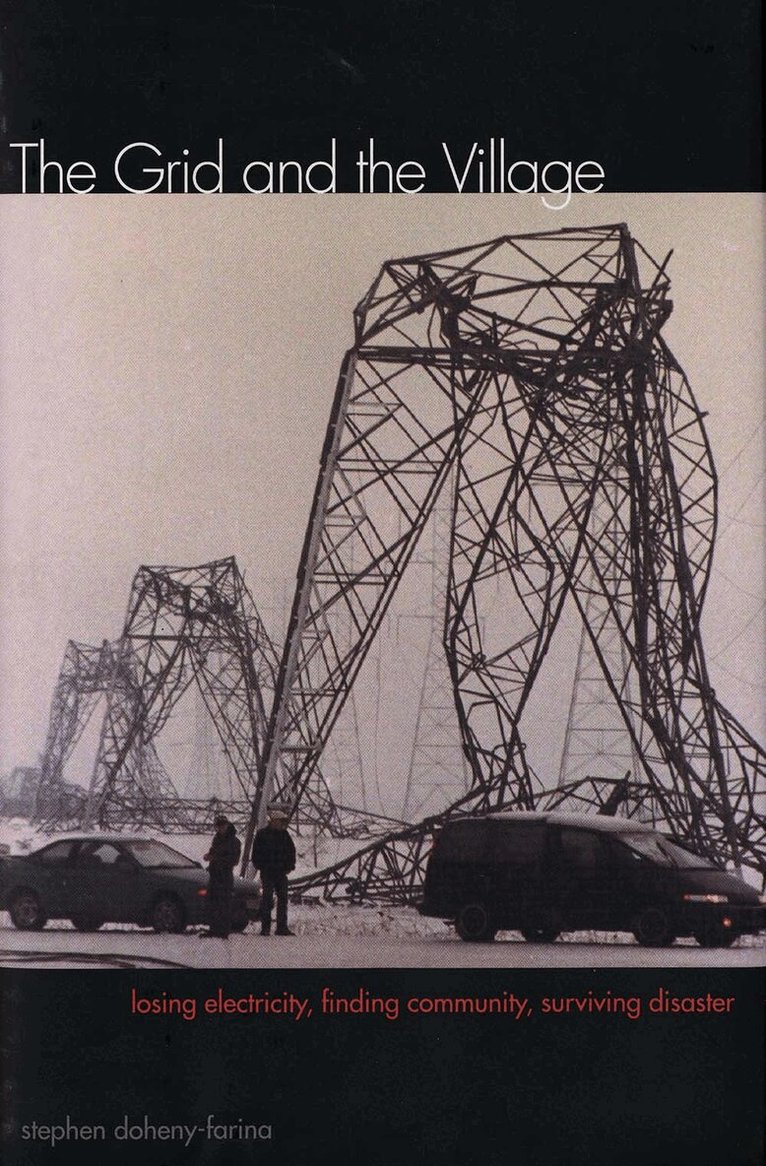
    In January 1998 a massive ice storm descended on New York, New England, and eastern Canada. It crushed power grids from the Great Lakes to the North Atlantic, forcing thousands of people into public shelters and leaving millions of others in their homes without electricity. In this riveting book Stephen Doheny-Farina presents an insider’s account of these events, describing the destruction of the electric network in his own village and the emergence of the face-to-face interactions that took its place. His stories examine the impact of electronic communications on community, illuminating the relationship between electronic and human connections and between networks and neighborhoods, and exploring why and how media portrayals of disasters can distort authentic experience. Doheny-Farina begins by discussing the disaster and tracing the origins of the storm. He then goes back two hundred years to tell how this particular electric grid was built, showing us the sacrifices people made to create the grids that (usually) connect us to one another. Today’s power grid, says Doheny-Farina, has become more vulnerable than we realize, as demand begins to outstrip capacity in urban centers around the nation. His book reminds us what those grids mean—both positively and negatively—to our electronically saturated lives.

    Produktinformation

    • Utgivningsdatum:2001-10-05
    • Mått:140 x 210 x 20 mm
    • Vikt:435 g
    • Format:Inbunden
    • Språk:Engelska
    • Antal sidor:224
    • Förlag:Yale University Press
    • ISBN:9780300089776

    Utforska kategorier

    • Medievetenskap inom Samhälle och politik
    • Energiteknik inom Naturvetenskap och teknik
    • Naturvetenskap:allmänt inom Naturvetenskap och teknik

    Mer om författaren

    Stephen Doheny-Farina, professor of technical communications at Clarkson University, is also the author of The Wired Neighborhood, published by Yale University Press. He is a frequent commentator on new kinds of media communications in newspapers, magazines, radio, and Web sites.

    Recensioner i media

    "An enjoyable exploration of the complex relationship between a man, his town, and their moments of crisis, and the way this is reflected in the media." Robert Krulwich, correspondent, ABC News