• Fri frakt över 249 kr
  • •
  • Snabba leveranser
  • •
  • Billiga böcker
Kundservice

Du är på sajten för privatpersoner.

Företag, bibliotek eller offentlig verksamhet?

Du handlar på classic.bokus.com, där alla dina funktioner finns intakta.
Till classic.bokus.com
Bokus logotyp. Gå till startsidan.
  • Erbjudanden
  • Student
  • Topplistor
  • Barn & ungdom
  • Bokus Play
  • E-böcker
  • Ljudböcker
  • Pocketböcker
  • Spel & pussel

10% rabatt på allt med kod NYSTART10 →

Sidfot

Mina sidor

    Hjälp

    • Kundservice
    • Vanliga frågor och svar
    • Frakt och leverans
    • Retur vid ångerrätt
    • Reklamera vara
    • Betalning
    • Köpvillkor
    • Allmänna villkor
    • Information om webbplatsens tillgänglighet

    Om Bokus

    • Om oss
    • Pressrum
    • För studenter
    • För företag
    • För bibliotek och offentlig verksamhet
    • För leverantörer
    • Hållbarhet

    Populärt

    • Aktuella erbjudanden
    • Presentkort
    • Studentlitteratur
    • Nya böcker
    • Topplistor
    • Signerade böcker
    • Engelska böcker

    Inspiration

    • Boktips
    • BookTok
    • Populära bokserier
    • Barnbokskaraktärer
    • Populära författare
    Logotyp för Bokus
    Följ oss på Facebook (extern länk)Följ oss på Instagram (extern länk)Följ oss på YouTube (extern länk)Följ oss på TikTok (extern länk)
    bokus @ CookiesAnpassa cookiesIntegritetspolicyKöpvillkor
    Till Citymail hemsida (extern länk)Till Budbee hemsida (extern länk)Till Postnord hemsida (extern länk)Till Schenker hemsida (extern länk)Till Early Bird hemsida (extern länk)Till Walleys hemsida (extern länk)
    1. Historia och arkeologi
    2. Historia
    3. Historia: särskilda händelser och ämnen
    4. Socialhistoria och kulturhistoria

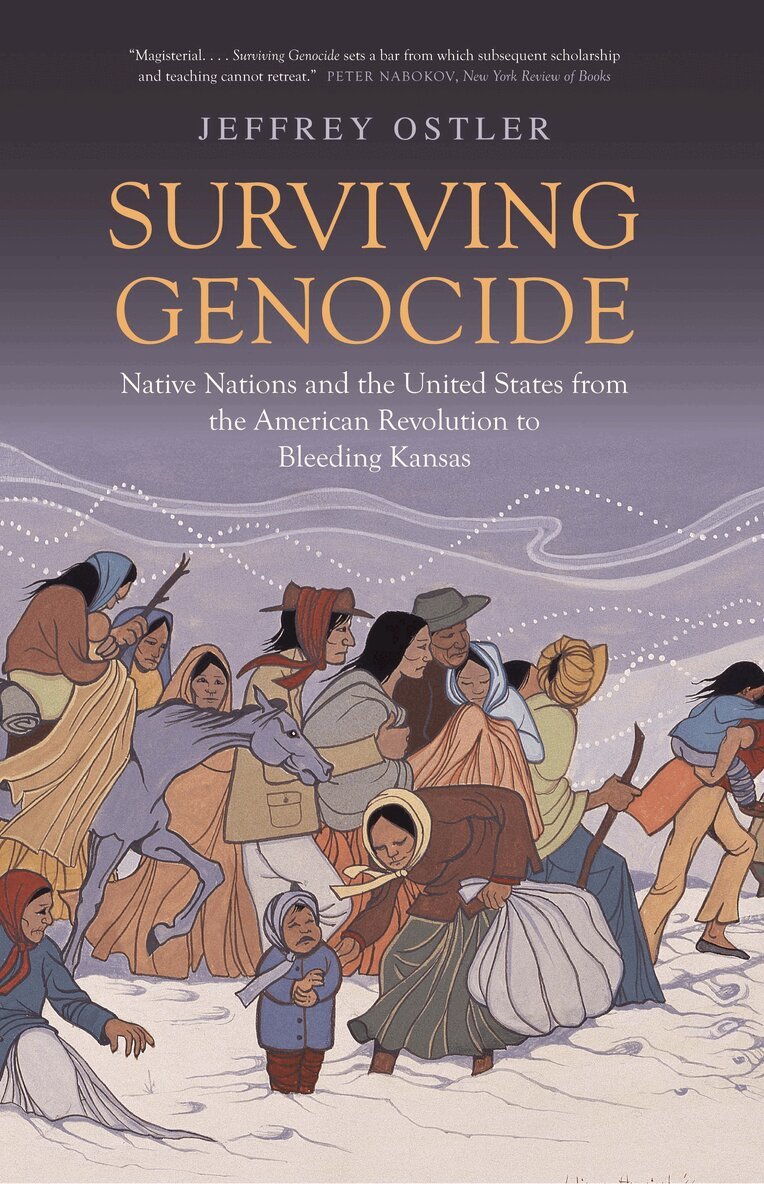
    Surviving Genocide

    Native Nations and the United States from the American Revolution to Bleeding Kansas

    AvJeffrey Ostler

    Häftad, Engelska, 2020

    242 kr

    Beställningsvara. Skickas inom 5-8 vardagar. Fri frakt över 249 kr.

    Beskrivning

    The first part of a sweeping multivolume history of the devastation brought to bear on Indian nations by U.S. expansion “An elegant, organized narrative of the United States’ dispossession of Native lands east of the Mississippi. . . . A remarkable book in its breadth and scope.”—Ashley Riley Sousa, Canadian Journal of History “Intense and well-researched, . . . ambitious, . . . magisterial. . . . Surviving Genocide sets a bar from which subsequent scholarship and teaching cannot retreat.”—Peter Nabokov, New York Review of Books In this book, Jeffrey Ostler investigates how American democracy relied on Indian dispossession and the federally sanctioned use of force to remove or slaughter Indians in the way of U.S. expansion. He charts the losses that Indians suffered from relentless violence and upheaval and the attendant effects of disease, deprivation, and exposure. This volume centers on the eastern United States from the 1750s to the start of the Civil War. An authoritative contribution to the history of the United States’ violent path toward building a continental empire, this ambitious and well-researched book deepens our understanding of the seizure of Indigenous lands, including the use of treaties to create the appearance of Native consent to dispossession. Ostler also documents the resilience of Native people, showing how they survived genocide by creating alliances, defending their towns, and rebuilding their communities.

    Produktinformation

    • Utgivningsdatum:2020-11-10
    • Mått:156 x 235 x 34 mm
    • Vikt:694 g
    • Format:Häftad
    • Språk:Engelska
    • Antal sidor:544
    • Förlag:Yale University Press
    • ISBN:9780300255362

    Utforska kategorier

    • Socialhistoria och kulturhistoria inom Historia och arkeologi
    • Diskriminering och rättvisa inom Samhälle och politik
    • Amerikas historia inom Historia och arkeologi

    Mer om författaren

    Jeffrey Ostler is Beekman Professor of Northwest and Pacific History at the University of Oregon.

    Recensioner i media

    “Intense and well-researched, . . . ambitious, . . . magisterial. . . . Ostler’s swift-paced yet meticulous coverage of the wars and diasporas, great and small, and attendant fluctuations in native populations has been assembled as if he intends it to be his academic generation’s manifesto. . . . For many of us, I suspect, who have researched and taught Indian–white relations most of our lives, Surviving Genocide sets a bar from which subsequent scholarship and teaching cannot retreat.”—Peter Nabokov, New York Review of BooksWinner of the Ray Allen Billington Prize, sponsored by the Organization of American HistoriansSelected for Choice’s 2019 Outstanding Academic Titles List“Jeffrey Ostler’s Surviving Genocide covers a full century and a huge swath of territory but is never less than comprehensive. This is benchmark history at its best.”—John Mack Faragher, Yale University“Stunning in its depth of research and scope of learning, Surviving Genocide brings a new level of sophistication to the study of the United States’ ‘Indian wars,’ revealing the genocidal impulse at the core of the conflicts as well as the Native ingenuity that prevented an even more profound loss of life and land.”—Karl Jacoby, author of Shadows at Dawn: A Borderlands Massacre and the Violence of History“Surviving Genocide provides a panoramic survey of American-Indian relations and takes a hard look at U.S. policies that were predicated, one way or another, on the removal of Native people; at the same time, it offers important testimony on the resilience of Native people who refused to disappear.”—Colin G. Calloway, author of The Indian World of George Washington“A landmark book essential to understanding American history, Surviving Genocide is an act of courage. Ostler’s brilliant concept of reconstructing ‘an Indigenous consciousness of genocide’ is significant for its insight into how American Indians understood, discussed, and resisted genocidal threats to their families, communities, and nations. His modern vocabulary of ‘atrocities’ and ‘killing fields’ is not for political effect but appropriate to the brutal reality of Indian policy in American history.”—Brenda Child, Northrop Professor of American Studies, University of Minnesota