• Fri frakt över 249 kr
  • •
  • Snabba leveranser
  • •
  • Billiga böcker
Kundservice

Du är på sajten för privatpersoner.

Företag, bibliotek eller offentlig verksamhet?

Du handlar på classic.bokus.com, där alla dina funktioner finns intakta.
Till classic.bokus.com
Bokus logotyp. Gå till startsidan.
  • Erbjudanden
  • Nyheter
  • Student
  • Topplistor
  • Barn & ungdom
  • Bokus Play
  • E-böcker
  • Pocketböcker
  • Spel & pussel

10% rabatt på allt med kod: NYSTART10 →

Sidfot

Mina sidor

    Hjälp

    • Kundservice
    • Vanliga frågor och svar
    • Frakt och leverans
    • Retur vid ångerrätt
    • Reklamera vara
    • Betalning
    • Köpvillkor
    • Allmänna villkor
    • Information om webbplatsens tillgänglighet

    Om Bokus

    • Om oss
    • Pressrum
    • För studenter
    • För företag
    • För bibliotek och offentlig verksamhet
    • För leverantörer
    • Hållbarhet

    Populärt

    • Aktuella erbjudanden
    • Presentkort
    • Studentlitteratur
    • Nya böcker
    • Topplistor
    • Signerade böcker
    • Engelska böcker

    Inspiration

    • Boktips
    • BookTok
    • Populära bokserier
    • Barnbokskaraktärer
    • Populära författare
    Logotyp för Bokus
    Följ oss på Facebook (extern länk)Följ oss på Instagram (extern länk)Följ oss på YouTube (extern länk)Följ oss på TikTok (extern länk)
    bokus @ CookiesAnpassa cookiesIntegritetspolicyKöpvillkor
    Till Citymail hemsida (extern länk)Till Budbee hemsida (extern länk)Till Postnord hemsida (extern länk)Till Schenker hemsida (extern länk)Till Early Bird hemsida (extern länk)Till Walleys hemsida (extern länk)
    1. Naturvetenskap och teknik
    2. Matematik och naturvetenskap
    3. Biologi
    4. Biokemi

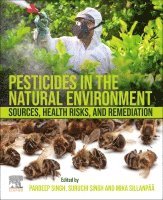
    Pesticides in the Natural Environment

    Sources, Health Risks, and Remediation

    AvPardeep Singh,Suruchi Singh

    Häftad, Engelska, 2022

    1 581 kr

    Beställningsvara. Skickas inom 10-15 vardagar. Fri frakt över 249 kr.

    Beskrivning

    Pesticides in the Natural Environment: Sources, Health Risks, and Remediation presents the direct and indirect impacts of the use of pesticides on the environment, human health, and agriculture. The book explores sustainable alternatives to pesticide use, along with policies for regulations and remediation techniques. Bridging the gap between regulations and the tangible environmental threat, the book proposes practical solutions while also providing important context on the hazards of pesticides. It highlights the influence on climate change, offering a holistic perspective for researchers in environmental science, policymakers, and land managers.
    The book introduces pesticides and their applications, then goes on to cover their impact on various ecosystems in the natural environment. Health risks are covered, followed by various remediation techniques, such as biological processes, phytoremediation, and chemical treatments.


    • Describes the impact of pesticides on the environment, human health and the food chain as well as regulations and policies to address the impact
    • Presents remediation strategies and techniques for pesticides in a variety of ecosystems, along with potential alternatives
    • Includes case studies to illustrate the proper management of pesticides and intervention

    Produktinformation

    • Utgivningsdatum:2022-05-20
    • Mått:191 x 235 x 36 mm
    • Vikt:450 g
    • Format:Häftad
    • Språk:Engelska
    • Antal sidor:616
    • Förlag:Elsevier Science
    • ISBN:9780323904896

    Utforska kategorier

    • Biokemi inom Naturvetenskap och teknik
    • Miljövetenskap och miljöpolitik inom Naturvetenskap och teknik
    • Folkhälsa och hälsopedagogik inom Medicin

    Mer om författaren

    Dr Pardeep Singh is presently working as an Assistant Professor at the Department of Environmental Science, PGDAV College, University of Delhi, India. He obtained his master's degree from the Department of Environmental Science at Banaras Hindu University, Varanasi India in 2011. He obtained his doctorate from the Indian Institute of Technology (Banaras Hindu University) Varanasi in the year 2017. The area of his doctoral research is the degradation of organic pollutants through various indigenous isolated microbes and by using various types of photocatalytic. He has published more than 35 papers in international journals in the field of waste management.Dr. Suruchi Singh is presently working as Faculty in the Department of Botany, Sunbeam College for Women, India. She obtained her PhD from Banaras Hindu University, India in Botany with Environmental Science as major field. Dr Singh received her postdoctoral experiences in Department of Botany, Banaras Hindu University under Council of Scientific and Industrial Research and Department of Science and Technology. She has published articles in various international journals and books series (>40 peer reviewed articles). In her research, she has identified processes and activities where environmental efficiencies of selected crop plants must be increased against UV-B and tropospheric Ozone. Mika Sillanpää is a professor at the University of Johannesburg, South Africa. His research centers on chemical treatment in environmental engineering, environmental monitoring, and resource recovery from waste streams.Sillanpää received his M.Sc. (Eng.) and D.Sc. (Eng.) degrees from the Aalto University where he also completed an MBA degree in 2013. Since 2000, he has been a full professor/adjunct professor at the University of Oulu, the University of Eastern Finland, the LUT University, the University of Eastern Finland and the University of Johannesburg.He has received numerous awards for research and innovation. He is the first Laureate of Scientific Committee on the Problems of the Environment (SCOPE)’s Young Investigator Award, which was delivered at the UNESCO Conference in Shanghai 2010 for his “significant contributions, outstanding achievements and research leadership in Environmental Technological Innovations to address present water pollution problems worldwide, especially with regard to wastewater treatment and reuse”. In 2011, he was invited to act as a Principal Scientific Reviewer in the GEO-5 report of the United Nations Environmental Programme (UNEP). In 2012, he received Tapani Järvinen Environmental Technology Award and Publication Award of the Lappeenranta University of Technology. In 2014, he received the Science Award of the Lappeenranta University of Technology and Pro Mikkeli Award. In 2018, he was invited as a Member of the Finnish Academy of Sciences and Letters and Technology Academy of Finland. He also received Literature award from the Water Association of Finland in 2018.

    Innehållsförteckning

    • Chapter 1: Classification of pesticides and loss of crops due to creepy crawlersChapter 2: Ecological impacts of pesticides on soil and water ecosystems and its natural degradation processChapter 3: Fate and assessment of pesticide in aquatic ecosystemChapter 4: Fate and adverse effects of pesticides in the environmentChapter 5: Towards understanding the impact of pesticides on freshwater ecosystemChapter 6: Persistence of pesticides and their impacts on human health and environmentChapter 7: Complex approaches to assessing the pesticides risk on human health and environmentChapter 8: Neurodevelopmental and reproductive impacts of pesticides on pregnant womenChapter 9: Pesticides and human health: The noxious impact on maternal system and fetal developmentChapter 10: Сytogenetical bioindication of pesticidal contaminationChapter 11: Modulation of soil microbiome and related alterations in response to pesticidesChapter 12: Botanical pesticides as alternatives for more sustainable crops and healthy foodsChapter 13: The potential use of essential oils as natural biocides against plant pathogensChapter 14: Sustainable and eco-friendly alternatives to reduce the use of pesticidesChapter 15: Strategies for sustainable and ecofriendly pest management in AgroecosystemChapter 16: Pesticides removal from aqueous streams through anaerobic and aerobic biological treatment processesChapter 17: Metal organic frameworks for the removal of pesticidesChapter 18: Removal pesticides by advanced techniques based on nanomaterialsChapter 19: Pesticides removal techniques from the aquatic environmentChapter 20: Perspective of sustainable and intensified developments in treatment of pesticides from aqueous streamsChapter 21: Biomonitoring and biomarkers of pesticide exposure and human health risk assessment