• Fri frakt över 249 kr
  • •
  • Snabba leveranser
  • •
  • Billiga böcker
Kundservice

Du är på sajten för privatpersoner.

Företag, bibliotek eller offentlig verksamhet?

Du handlar på classic.bokus.com, där alla dina funktioner finns intakta.
Till classic.bokus.com
Bokus logotyp. Gå till startsidan.
  • Erbjudanden
  • Nyheter
  • Student
  • Topplistor
  • Barn & ungdom
  • Bokus Play
  • E-böcker
  • Pocketböcker
  • Spel & pussel

10% rabatt på allt med kod: NYSTART10 →

Sidfot

Mina sidor

    Hjälp

    • Kundservice
    • Vanliga frågor och svar
    • Frakt och leverans
    • Retur vid ångerrätt
    • Reklamera vara
    • Betalning
    • Köpvillkor
    • Allmänna villkor
    • Information om webbplatsens tillgänglighet

    Om Bokus

    • Om oss
    • Pressrum
    • För studenter
    • För företag
    • För bibliotek och offentlig verksamhet
    • För leverantörer
    • Hållbarhet

    Populärt

    • Aktuella erbjudanden
    • Presentkort
    • Studentlitteratur
    • Nya böcker
    • Topplistor
    • Signerade böcker
    • Engelska böcker

    Inspiration

    • Boktips
    • BookTok
    • Populära bokserier
    • Barnbokskaraktärer
    • Populära författare
    Logotyp för Bokus
    Följ oss på Facebook (extern länk)Följ oss på Instagram (extern länk)Följ oss på YouTube (extern länk)Följ oss på TikTok (extern länk)
    bokus @ CookiesAnpassa cookiesIntegritetspolicyKöpvillkor
    Till Citymail hemsida (extern länk)Till Budbee hemsida (extern länk)Till Postnord hemsida (extern länk)Till Schenker hemsida (extern länk)Till Early Bird hemsida (extern länk)Till Walleys hemsida (extern länk)
    1. Naturvetenskap och teknik
    2. Teknik och industri
    3. Biokemisk teknik

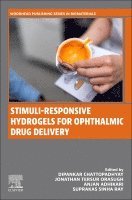
    Stimuli-Responsive Hydrogels for Ophthalmic Drug Delivery

    AvDipankar Chattopadhyay,Jonathan Tersur Orasugh

    Häftad, Engelska, 2024

    Del i serien Woodhead Publishing Series in Biomaterials

    2 439 kr

    Beställningsvara. Skickas inom 10-15 vardagar. Fri frakt över 249 kr.

    Beskrivning

    Stimuli-Responsive Hydrogels for Ophthalmic Drug Delivery covers fundamental aspects in the preparation of polymeric in-situ, stimuli-responsive hydrogels, including properties, characterization, chemistry, and fabrication of these hydrogels. The book will help the reader select the most appropriate material and design for the desired application. The book goes on to review applications in ophthalmic drug delivery, covering in vitro and in vivo models, animal models, preclinical testing, patents, and more. This is a must-have reference for researchers and academics in the fields of materials science, biomaterials, pharmacology and polymer science, with an interest in clinical aspects of hydrogel design and application.


    • Provides step-by-step coverage for engineering in-situ and stimuli-responsive hydrogels, from design, characterization, and toxicity considerations to fabrication, process optimization, and drug release kinetics
    • Utilizes an interdisciplinary approach, bringing together authors from pharmacology, polymer science, and medical backgrounds
    • Details the advantages and challenges of using stimuli-responsive hydrogels for ophthalmic drug delivery, with a focus on clinical translation

    Produktinformation

    • Utgivningsdatum:2024-05-10
    • Mått:152 x 229 x 35 mm
    • Vikt:1 000 g
    • Format:Häftad
    • Språk:Engelska
    • Serie:Woodhead Publishing Series in Biomaterials
    • Antal sidor:672
    • Förlag:Elsevier Science
    • ISBN:9780323991568

    Utforska kategorier

    • Biokemisk teknik inom Naturvetenskap och teknik
    • Biomedicinsk teknik inom Medicin
    • Maskinteknik och material inom Naturvetenskap och teknik

    Mer om författaren

    Prof. Dipankar Chattopadhyay is an eminent professor currently working in the Department of Polymer Science & Technology, University of Calcutta, India since 2006 and also a former HOD. Earlier, he worked as a lecturer at the Vidhyasagar University and Shahid Bhagat Singh College, Punjab, India. He obtained his B.Tech in Plastics & Rubber Technology from University of Calcutta, India and M.Tech in Polymer Science and Engineering, IIT, New Delhi with Ph.D. (Polymer Science) from the IACS, India. He is an experienced research professional with expertise in polymers nanocomposites, biomaterials, and nanomaterials. He has ~22 years of research experience with completed 10 research project and collaborative projects with industries. He is an active reviewer for various Journals and supervised >20 scholars and five post-doctorate students. He has 127 publications and has 3 patents. He is an Executive Member in the Society for Polymer Science, India; MRSI, Calcutta Chapter and many more. Dr. Jonathan Tersur Orasugh is currently a postdoctoral researcher at the Department of Chemical Sciences, University of Johannesburg, Doornfontein 2028, Johannesburg, South Africa, and Centre for Nanostructures and Advanced Materials, DSI-CSIR Nanotechnology Innovation Centre, Council for Scientific & Industrial Research, CSIR, Pretoria 0001, South Africa. His research focus is in nanoscience and nanotechnology, Textiles, and Fibres. Presently, Dr. Jonathan is working on EMI shielding materials design and fabrication at CSIR, Pretoria in affiliation with the University of Johannesburg. He has also, carried out successful research work on synthesis of nano crystalline cellulose and its application in edible packaging, transdermal and ophthalmic drug delivery, and published articles in reputed high impact factor scientific journals along with several, presentation at international conferences. Dr. Jonathan has Ph.D. (Nanoscience and Nanotechnology) and MTech (Technical Textiles: Fibre Technology) from University of Calcutta, Kolkata, and B.Tech. (Textile Technology) from Kaduna Polytechnic, Kaduna, Nigeria. He has published more than 10 research articles in diverse international journals along with several books and book chapters with publishers of high repute. He is an active editor with few international journals and a reviewer with different international journals. He has more than 7yrs of research experience in the field of polymer composites and nanocomposites, synthesis, and surface treatment of nanomaterials along with their potential applications. He has carried out industrial-based research at to a satisfactory and implementable stage at the pilot plant scale. He is also an executive board member and research head at EL-YOTEK NIG. LTD. He is also a research consultant with AMER-SIL KETEX PVT LTD., India.Dr. Anjan Adhikari is a practicing medical doctor and Head of Pharmacology Department at the Coochbehar Govt. Medical College & Hospital. Dr A. Adhikari is a member of several medical and pharmacological committees, including the Pharmacovigilance and Institutional Ethics committees at Coochbehar Government Medical College & Hospital; he is also a member of the Pharmacovigilance Programme of India (PvPI), Indian Pharmacopeia Commission, Govt. of India, Gaziabad, India and of the Subject Expert Committee (SEO), Central Drug Standard Control Organization (CDSCO), Govt. of India, New Delhi. Dr. Adhikari is a part of the Indian Council of Medical Research (ICMR), New Delhi. Dr. A. Adhikari is the Editor of the Rational Drug Bulletin, India and a reviewer for the Indian Journal of Pharmacology, as well as a number of National and International Journals. Professor Suprakas Sinha Ray is a Chief Research Scientist and Manager of the Centre for Nanostructures and Advanced Materials, and Director of the DSTI-CSIR Nanotechnology Innovation Centre, Council for Scientific and Industrial Research, Pretoria, South Africa. He received his PhD degree in Physical Chemistry at the University of Calcutta, India, in 2001, and was a recipient of the ‘‘Sir P. C Ray Research Award’’ for the best PhD work. Prof. Ray’s current research focuses on the applications of advanced nanostructured & polymeric materials. He is one of the most active and highly cited authors (h-index of 99) in the field of polymer nanocomposite materials, and he has recently been ranked by Thomson Reuters among the Top 1% most impactful and influential scientists and among the top 50 high-impact chemists. He has delivered more than 77 plenary/keynote/invited presentations at international conferences and has organised or co-organised several events. He authored 16 books, co-authored 13 edited books, wrote 65 book chapters on various aspects of polymer-based nano-structured materials and their applications, and published 687 articles in high-impact international journals. His work also includes 14 articles in peer-reviewed international conference proceedings and 30 articles in national and international conference proceedings. Additionally, he holds nine patents (registered or pending) and has developed 13 new technologies, which he has shared with colleagues, collaborators, and industry partners. His team has commercialised several products and supported SMMEs. Over the past 19 years, he has mentored 27 postdoctoral fellows and supervised 48 PhD and 17 Master’s students. In 2016, he was honored with South Africa’s most prestigious NSTF Award.

    Innehållsförteckning

    • Part I: Properties and Preparation1. Introduction to polymeric in-situ forming hydrogels2. Biopolymers for in-situ forming hydrogels: synthesis, characterization, and toxicity3. Chemistry and applications of biopolymer stimuli-responsive in-situ gels4. Design, engineering, and fabrication of biopolymer in-situ forming hydrogels5. Process optimization for design and fabrication of biopolymer stimuli-responsivehydrogels6. Properties of biopolymeric in-situ hydrogels7. Swelling and drug release kinetics of biopolymer in-situ forming hydrogels8. Structural and load-bearing characteristics of biopolymer in-situ forming hydrogels9. Functionalization of in-situ forming biopolymer hydrogelsPart II: Applications in Ophthalmic Drug Delivery10. Eye anatomy, physiology, and ocular barriers11. In vitro and in vivo models in ophthalmic drug delivery12. Formulation and ocular drug delivery routes13. Clinical indications of stimuli-responsive hydrogels in ophthalmic drug delivery14. Natural and synthetic materials for stimuli-responsive hydrogels in ophthalmic drug delivery15. Characteristics and kinetics of in-situ forming hydrogels in ophthalmic drug delivery16. Cell-laden stimuli-responsive hydrogels in ophthalmic drug delivery17. Animal models and preclinical tests for evaluation of stimuli-responsive hydrogels in ophthalmic drug delivery18. Biopolymer-based in-situ forming hydrogels: from laboratory to practical application19. Commercially available stimuli-responsive hydrogels for ophthalmic drug delivery20. Advantages and challenges of biopolymer in-situ hydrogels for ophthalmic drug delivery21. Patents for biopolymer in-situ hydrogels for ophthalmic drug delivery