Inbunden, Engelska, 2026
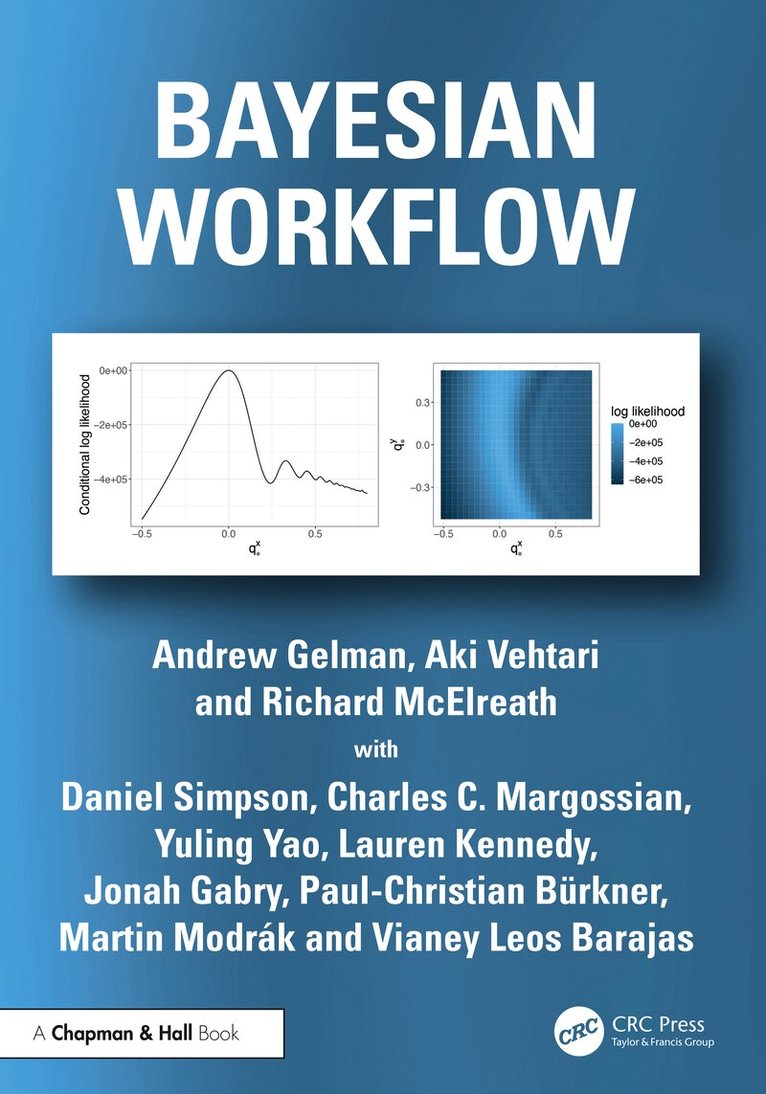
Bayesian Workflow
Av Andrew Gelman, Aki Vehtari, Richard McElreath, Daniel Simpson, Charles C. Margossian, Yuling Yao, Lauren Kennedy, Jonah Gabry, Paul-Christian Bürkner, Martin Modrák, Vianey Leos Barajas
1806 kr
Beställningsvara. Skickas inom 10-15 vardagar. Fri frakt över 249 kr.
Beskrivning
Bayesian statistics and statistical practice have evolved over the years, driven by advancements in theory, methods, and computational tools. Bayesian Workflow explores the intricate workflows of applied Bayesian statistics, aiming to uncover the tacit knowledge often overlooked in published papers and textbooks. By systematizing the process of Bayesian model development, the book seeks to improve applied analyses and inspire future innovations in theory, methods, and software. It emphasizes the importance of iterative model building, model checking, computational troubleshooting, and simulated-data experimentation, offering a comprehensive perspective on statistical analysis.Through detailed examples and practical guidance, the book bridges the gap between theory and application, empowering practitioners and researchers to navigate the complexities of Bayesian inference. It is not a checklist or cookbook but a flexible framework for understanding and resolving challenges in statistical modeling and decision-making under uncertainty.FeaturesCovers all aspects of Bayesian statistical workflow, including model building, inference, validation, troubleshooting, and understandingDemonstrates iterative model development and computational problem-solving through real-world case studiesExplores computational challenges, calibration checking, and connections between modeling and computationHighlights the importance of checking models under diverse conditions to understand their limitations and improve their robustnessDiscusses how Bayesian principles apply to non-Bayesian methods in statistics and machine learningIncludes code snippets, exercises, and links to full datasets and code in R and Stan, with applicability to other programming environments like Python and JuliaThis book is designed for practitioners of applied Bayesian statistics, particularly users of probabilistic programming languages such as Stan, as well as developers of methods and software tailored to these users. It also targets researchers in Bayesian theory and methods, offering insights into understudied aspects of statistical workflows. Instructors and students will find adaptable exercises and case studies to enhance their learning experience. Beyond Bayesian inference, the book’s principles are relevant to users of non-Bayesian methods, making it a valuable resource for statisticians, data scientists, and machine learning professionals seeking to improve their modeling and decision-making processes.
Produktinformation
- Utgivningsdatum: 2026-06-25
- Mått: 259 x 36 x 188 mm
- Vikt: 1 350 g
- Format: Inbunden
- Språk: Engelska
- Antal sidor: 538
- Förlag: Taylor & Francis Ltd
- ISBN: 9780367490188
Utforska kategorier
Betyg & recensioner
0 recensioner
Inga recensioner tillgängliga.