• Fri frakt över 249 kr
  • •
  • Snabba leveranser
  • •
  • Billiga böcker
Kundservice

Du är på sajten för privatpersoner.

Företag, bibliotek eller offentlig verksamhet?

Du handlar på classic.bokus.com, där alla dina funktioner finns intakta.
Till classic.bokus.com
Bokus logotyp. Gå till startsidan.
  • Erbjudanden
  • Nyheter
  • Student
  • Topplistor
  • Barn & ungdom
  • Bokus Play
  • E-böcker
  • Pocketböcker
  • Spel & pussel

10% rabatt på allt med kod: NYSTART10 →

Sidfot

Mina sidor

    Hjälp

    • Kundservice
    • Vanliga frågor och svar
    • Frakt och leverans
    • Retur vid ångerrätt
    • Reklamera vara
    • Betalning
    • Köpvillkor
    • Allmänna villkor
    • Information om webbplatsens tillgänglighet

    Om Bokus

    • Om oss
    • Pressrum
    • För studenter
    • För företag
    • För bibliotek och offentlig verksamhet
    • För leverantörer
    • Hållbarhet

    Populärt

    • Aktuella erbjudanden
    • Presentkort
    • Studentlitteratur
    • Nya böcker
    • Topplistor
    • Signerade böcker
    • Engelska böcker

    Inspiration

    • Boktips
    • BookTok
    • Populära bokserier
    • Barnbokskaraktärer
    • Populära författare
    Logotyp för Bokus
    Följ oss på Facebook (extern länk)Följ oss på Instagram (extern länk)Följ oss på YouTube (extern länk)Följ oss på TikTok (extern länk)
    bokus @ CookiesAnpassa cookiesIntegritetspolicyKöpvillkor
    Till Citymail hemsida (extern länk)Till Budbee hemsida (extern länk)Till Postnord hemsida (extern länk)Till Schenker hemsida (extern länk)Till Early Bird hemsida (extern länk)Till Walleys hemsida (extern länk)
    1. Psykologi och pedagogik
    2. Pedagogik
    3. Utbildningsstrategier och utbildningspolitik

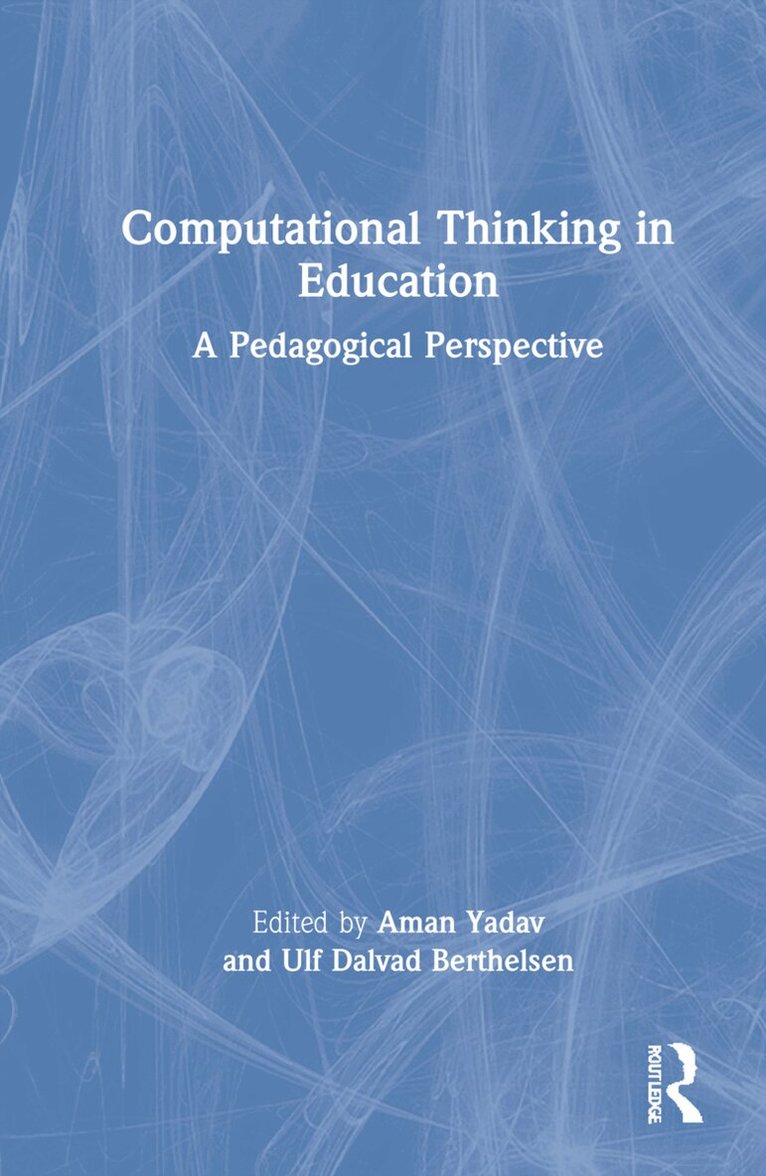
    Computational Thinking in Education

    A Pedagogical Perspective

    AvAman Yadav,Ulf Berthelsen

    Inbunden, Engelska, 2021

    2 355 kr

    Beställningsvara. Skickas inom 10-15 vardagar. Fri frakt över 249 kr.

    Beskrivning

    Computational Thinking in Education explores the relevance of computational thinking in primary and secondary education. As today’s school-aged students prepare to live and work in a thoroughly digitized world, computer science is providing a wealth of new learning concepts and opportunities across domains. This book offers a comprehensive overview of computational thinking, its history, implications for equity and inclusion, analyses of competencies in practice, and integration into learning, instruction, and assessment through scaffolded teacher education. Computer science education faculty and pre- and in-service educators will find a fresh pedagogical approach to computational thinking in primary and secondary classrooms.

    Produktinformation

    • Utgivningsdatum:2021-11-23
    • Mått:152 x 229 x 17 mm
    • Vikt:462 g
    • Format:Inbunden
    • Språk:Engelska
    • Antal sidor:216
    • Förlag:Taylor & Francis Ltd
    • ISBN:9780367564469

    Utforska kategorier

    • Utbildningsstrategier och utbildningspolitik inom Psykologi och pedagogik
    • Skolan och förskolan inom Psykologi och pedagogik
    • Lärarutbildning inom Psykologi och pedagogik

    Mer om författaren

    Aman Yadav is a Professor of Educational Psychology and Educational Technology in the College of Education at Michigan State University, USA.Ulf Dalvad Berthelsen is an Associate Professor in the School of Communication and Culture at Aarhus University, Denmark.

    Recensioner i media

    "As computational thinking becomes part of compulsory education, school systems will be considering how it fits into the system as a whole. This book uniquely offers a system-wide view of computational thinking, from preparing teachers to choosing computational thinking instruction to implementing a district strategy. It provides an excellent opportunity to learn from top educators and researchers in the field about their perspectives of the implementation and future of computational thinking."—Lauren Margulieux, Assistant Professor and Computer Science Endorsement Director at Georgia State University, USA"As computer science education moves into school classrooms around the globe, this book addresses central questions of what computational thinking should mean in K-12 education. The contributing chapters address critical issues in district initiatives, teacher professional development, student assessment, and subject matter integration."—Yasmin B. Kafai, Lori and Michael Milken President’s Distinguished Professor at University of Pennsylvania, USA"Currently, the prevailing belief in most countries is that a compulsory education in computer science is indispensable for all children and young people in order to enable them to lead autonomous, self-determined and responsible lives in the information society. Computational thinking represents the currently best-known and most widely accepted didactical approach to this end. This book finally offers a comprehensive analysis of the pedagogical aspects of this approach, which is urgently needed for implementation in schools. It is a must-read for all researchers and practitioners who are serious about computational thinking."—Peter Hubwieser, Professor for Computer Science Education at the Technical University of Munich, Germany"This is a great, essential book for a field that is both fresh and long-established. Some of itsauthors are among the world's most esteemed researchers in the field, and others are emerging with exiting new ideas. The book addresses a wealth of very important issues, from questions about the raison d'etre altogether of teaching computational thinking to innovative considerations of hard-nosed problems of how to prepare pre- and in-service teachers for the task. I highly recommend this book to everyone interested in the broad field of technology in education."—Jeppe Bundsgaard, Professor of Education in the Danish School of Education at Aarhus University, Denmark

    Innehållsförteckning

    • 1 Computational Thinking: A Professional and Historical PerspectiveMatti Tedre & Peter J. Denning2 Computational Thinking TodayShuchi Grover3 A Computational Thinking Integration Model for Primary and Secondary ClassroomsSteven Azeka & Aman Yadav 4 Democracy and Computation: A Normative Perspective on the Magic of the New MillenniumUlf Dalvad Berthelsen & Carsten Fogh Nielsen5 Computational Thinking as Subject Matter: As an Independent Subject or Integrated across Subjects?Morten Tannert, Rasmus Fink Lorentzen, and Ulf Dalvad Berthelsen 6 Assessment of Computational ThinkingDavid Weintrop, Daisy Rutstein, Marie Bienkowski, and Steven McGee7 Ethnocomputing and Computational ThinkingMichael Lachney, Briana Green, Madison C. Allen, and Lakisha Foy8 Professional Development as a Bridge between Teacher Competencies and Computational Thinking IntegrationSecil Caskurlu, Aman Yadav, Kyle Dunbar, and Rafi Santo9 Preparing the Next Generation of Teachers: Revamping Teacher Education for the 21st CenturyAnne Leftwich, Aman Yadav, and Chrystalla Mouza10 Integrating Computing through Task-Specific Programming for Disciplinary Relevance: Considerations and ExamplesMark Guzdial & Tamara Shreiner11 Computational Thinking as District Strategy: Moving the CS vs CT Debate from the Ivory Tower to the SchoolhouseRafi Santo, June Ahn, and Leigh Ann DeLyser