• Fri frakt över 249 kr
  • •
  • Snabba leveranser
  • •
  • Billiga böcker
Kundservice

Du är på sajten för privatpersoner.

Företag, bibliotek eller offentlig verksamhet?

Du handlar på classic.bokus.com, där alla dina funktioner finns intakta.
Till classic.bokus.com
Bokus logotyp. Gå till startsidan.
  • Erbjudanden
  • Nyheter
  • Student
  • Topplistor
  • Barn & ungdom
  • Bokus Play
  • E-böcker
  • Pocketböcker
  • Spel & pussel

10% rabatt på allt med kod: NYSTART10 →

Sidfot

Mina sidor

    Hjälp

    • Kundservice
    • Vanliga frågor och svar
    • Frakt och leverans
    • Retur vid ångerrätt
    • Reklamera vara
    • Betalning
    • Köpvillkor
    • Allmänna villkor
    • Information om webbplatsens tillgänglighet

    Om Bokus

    • Om oss
    • Pressrum
    • För studenter
    • För företag
    • För bibliotek och offentlig verksamhet
    • För leverantörer
    • Hållbarhet

    Populärt

    • Aktuella erbjudanden
    • Presentkort
    • Studentlitteratur
    • Nya böcker
    • Topplistor
    • Signerade böcker
    • Engelska böcker

    Inspiration

    • Boktips
    • BookTok
    • Populära bokserier
    • Barnbokskaraktärer
    • Populära författare
    Logotyp för Bokus
    Följ oss på Facebook (extern länk)Följ oss på Instagram (extern länk)Följ oss på YouTube (extern länk)Följ oss på TikTok (extern länk)
    bokus @ CookiesAnpassa cookiesIntegritetspolicyKöpvillkor
    Till Citymail hemsida (extern länk)Till Budbee hemsida (extern länk)Till Postnord hemsida (extern länk)Till Schenker hemsida (extern länk)Till Early Bird hemsida (extern länk)Till Walleys hemsida (extern länk)
    1. Medicin
    2. Medicin: allmänt
    3. Samhällsmedicin och preventiv medicin
    4. Folkhälsa och hälsopedagogik

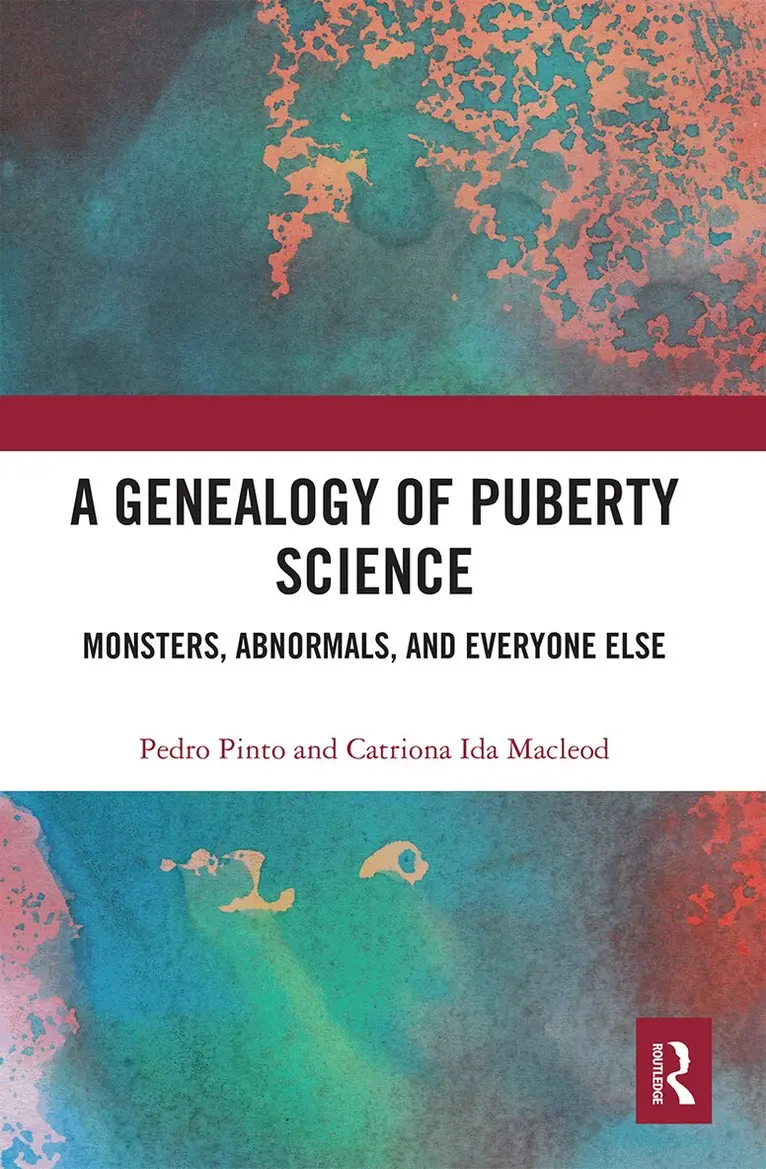
    Genealogy of Puberty Science

    Monsters, Abnormals, and Everyone Else

    AvPedro Pinto,Catriona Macleod

    Häftad, Engelska, 2020

    715 kr

    Beställningsvara. Skickas inom 10-15 vardagar. Fri frakt över 249 kr.

    Fler format och utgåvor

    Inbunden

    2 493 kr

    Beskrivning

    A Genealogy of Puberty Science explores the modern invention of puberty as a scientific object. Drawing on Foucault’s genealogical analytic, Pinto and Macleod trace the birth of puberty science in the early 1800s and follow its expansion and shifting discursive frameworks over the course of two centuries.Offering a critical inquiry into the epistemological and political roots of our present pubertal complex, this book breaks the almost complete silence concerning puberty in critical theories and research about childhood and adolescence. Most strikingly, the book highlights the failure ​of ongoing medical debates on early puberty to address young people’s sexual and reproductive embodiment and citizenships.A Genealogy of Puberty Science will be of great interest to academics, researchers and postgraduate students in the fields of child and adolescent ​health research, critical psychology, developmental psychology, health psychology, ​feminist and gender studies, ​medical history, science and technology studies, and sexualities and reproduction studies.

    Produktinformation

    • Utgivningsdatum:2020-09-30
    • Mått:156 x 234 x 28 mm
    • Vikt:450 g
    • Format:Häftad
    • Språk:Engelska
    • Antal sidor:234
    • Förlag:Taylor & Francis Ltd
    • ISBN:9780367661434

    Utforska kategorier

    • Folkhälsa och hälsopedagogik inom Medicin
    • Psykoterapi som behandlingsmetod inom Medicin
    • Barnpsykologi och utvecklingspsykologi inom Psykologi och pedagogik

    Mer om författaren

    Pedro Pinto is an independent science and technology studies scholar from Lisbon. His previous research work focused on post-feminist discourse, embodiment, and the industrialisation of sexual and gender difference.Catriona Ida Macleod is Distinguished Professor of Psychology, SARChI Chair of Critical Studies in Sexualities and Reproduction at Rhodes University, South Africa, and editor-in-chief of Feminism & Psychology.

    Recensioner i media

    "Pinto and Macleod not only show the gaps in the scientific construction of ‘early puberty’ but also these instigate and rely upon ideological tropes of gender and racialized differences, both intersected by class. Not only is this a really important work of scholarship in its genealogical analysis of original historical documents, but the emerging critique convincingly highlights, through the attention to the so-called crisis in puberty, how science masks its own ambiguities at the expense of normalizing and pathologizing the pubertal child and her/his parents. The most supposedly natural and biological of developmental processes, puberty, is so rendered only by most unnatural knowledge generation practices. Pinto and Macleod take the specific example of puberty and brilliantly show how it exemplifies and illuminates wider axes and processes governing the management of young bodies and minds."Erica Burman, Professor of Education, The University of Manchester; author of Deconstructing Developmental Psychology and other books)"This book is a real tour de force – an eloquent, thought-provoking and detailed genealogical analysis of puberty science. It traces the way that medical science gradually got to grips with the phenomenon of puberty, and, especially the threats it was seen to pose to social and moral order. Its focus on ‘precocious puberty’ traces a historical story of the successive ways in which puberty has been problematized. It is elegantly drawn, and highly informative."Wendy Stainton Rogers, Emeritus Professor, The Open University; co-author of Stories of Childhood: Shifting Agendas of Child Concern and other books)."Meticulously researched and written with much gusto, this book provides a gripping account of the history of pubertal science. Filling a major gap in Foucault's account of the history of modern sex, it demonstrates genealogy's enduring importance in addressing the significant questions of our age."Professor Celia Roberts, ANU College of Arts and Social Sciences.

    Innehållsförteckning

    • 1. Introduction: Towards a history of the presentPART 1 PRECOCIOUS LITTLE MONSTERS2. Child monstrosity and the dilemma of nature3. The monster, the modest girl, and the masturbating boy4. Accounting for the mature-immature bodyPART 2 FROM BIOLOGICAL TO CULTURAL MONSTROSITIES5. From the world of the naturalists to the first population studies6. The biosocial reconfigured: Puberty onset and the emergence of epidemiological riskPART 3 THE SURVEILLANCE OF ALL7. A most dangerous condition: Puberty science and the surveillance of all8. The birth of the ‘normal’ pubertal body (and its dilemmas)9. Conclusion: Puberty in crisis