• Fri frakt över 249 kr
  • •
  • Snabba leveranser
  • •
  • Billiga böcker
Kundservice

Du är på sajten för privatpersoner.

Företag, bibliotek eller offentlig verksamhet?

Du handlar på classic.bokus.com, där alla dina funktioner finns intakta.
Till classic.bokus.com
Bokus logotyp. Gå till startsidan.
  • Erbjudanden
  • Nyheter
  • Student
  • Topplistor
  • Barn & ungdom
  • Bokus Play
  • E-böcker
  • Pocketböcker
  • Spel & pussel

10% rabatt på allt med kod: NYSTART10 →

Sidfot

Mina sidor

    Hjälp

    • Kundservice
    • Vanliga frågor och svar
    • Frakt och leverans
    • Retur vid ångerrätt
    • Reklamera vara
    • Betalning
    • Köpvillkor
    • Allmänna villkor
    • Information om webbplatsens tillgänglighet

    Om Bokus

    • Om oss
    • Pressrum
    • För studenter
    • För företag
    • För bibliotek och offentlig verksamhet
    • För leverantörer
    • Hållbarhet

    Populärt

    • Aktuella erbjudanden
    • Presentkort
    • Studentlitteratur
    • Nya böcker
    • Topplistor
    • Signerade böcker
    • Engelska böcker

    Inspiration

    • Boktips
    • BookTok
    • Populära bokserier
    • Barnbokskaraktärer
    • Populära författare
    Logotyp för Bokus
    Följ oss på Facebook (extern länk)Följ oss på Instagram (extern länk)Följ oss på YouTube (extern länk)Följ oss på TikTok (extern länk)
    bokus @ CookiesAnpassa cookiesIntegritetspolicyKöpvillkor
    Till Citymail hemsida (extern länk)Till Budbee hemsida (extern länk)Till Postnord hemsida (extern länk)Till Schenker hemsida (extern länk)Till Early Bird hemsida (extern länk)Till Walleys hemsida (extern länk)
    1. Psykologi och pedagogik
    2. Pedagogik
    3. Högskola och universitet
    4. Lärarutbildning

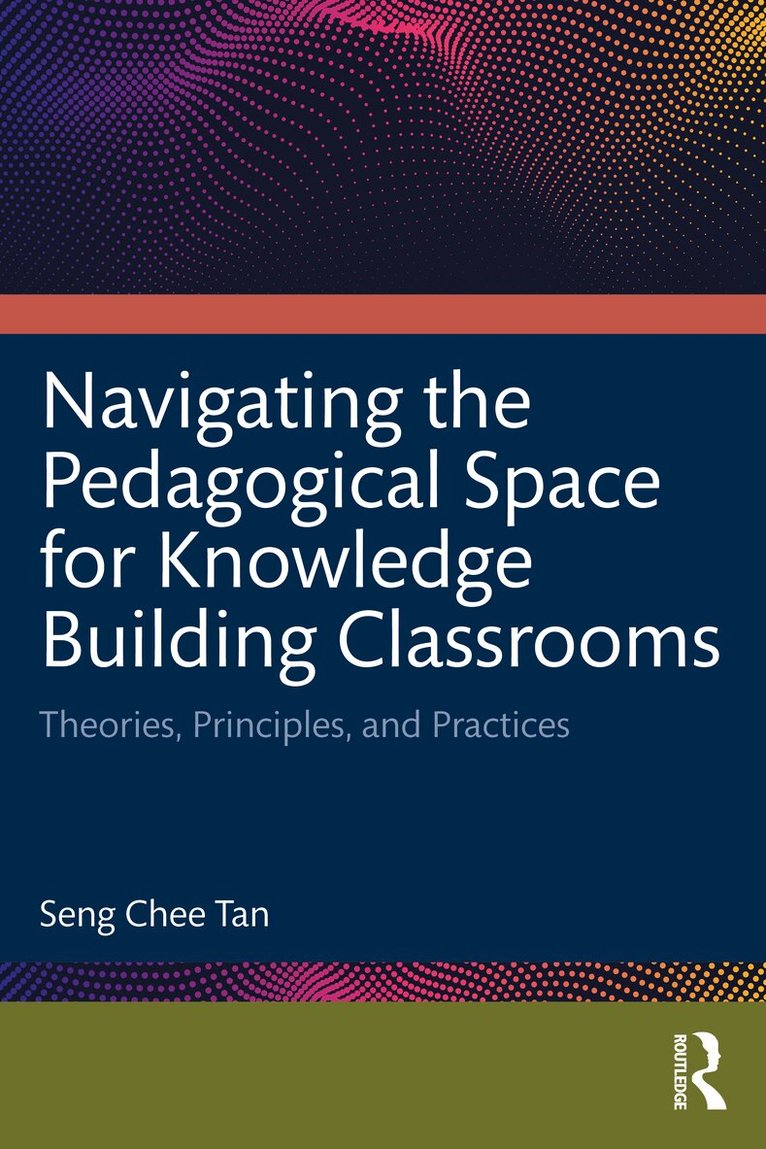
    Navigating the Pedagogical Space for Knowledge Building Classrooms

    Theories, Principles, and Practices

    AvSeng Chee Tan

    Häftad, Engelska, 2022

    553 kr

    Beställningsvara. Skickas inom 10-15 vardagar. Fri frakt över 249 kr.

    Fler format och utgåvor

    Inbunden

    2 000 kr

    E-bok

    652 kr

    E-bok

    654 kr

    Beskrivning

    Showcasing the design and implementation of knowledge building pedagogy, this book for educators and education researchers illuminates this future-oriented instructional and learning approach. In this Knowledge Age, innovation and creative knowledge works are central to the progress of a society; increasing the productivity of knowledge workers remains the main priority of competitive societies. Consequently, developing knowledge building capacity among students becomes one main goal of education. Knowledge building aims to transform school education in a radical way by developing the culture of innovation and knowledge creation in classrooms, from preschools to universities. Knowledge building pedagogy focuses on sustaining idea improvement among students, who develop the collective cognitive responsibility to add value to the learning community. Developed since the 1990s, knowledge building is now a model of instructions researched and advanced with an international network of researchers, teachers, educators, engineers, and policymakers. Implementing the knowledge building approach requires educators to make decisions based on principles, rather than following prescriptive procedures that characterized most instructional models. Tan highlights the key pedagogical principles and discusses the critical design considerations. He also identifies the emerging research directions and developmental works related to knowledge building. A must-read book for educators and education researchers who are interested in the design and implementation of knowledge building pedagogy.

    Produktinformation

    • Utgivningsdatum:2022-11-01
    • Mått:156 x 234 x 15 mm
    • Vikt:420 g
    • Format:Häftad
    • Språk:Engelska
    • Antal sidor:194
    • Förlag:Taylor & Francis Ltd
    • ISBN:9780367705534

    Utforska kategorier

    • Lärarutbildning inom Psykologi och pedagogik
    • Pedagogisk metodik inom Psykologi och pedagogik
    • Material och digital teknik i undervisningen inom Psykologi och pedagogik

    Mer om författaren

    Seng Chee Tan is Associate Dean (Graduate Education by Research), Office of Graduate Studies and Professional Learning, National Institute of Education, Nanyang Technological University. His research interests include knowledge building and the use of emerging technologies for education.

    Recensioner i media

    "I am delighted to see the publication of this book by Seng Chee Tan, who has been working on knowledge building pedagogy for more than 20 years. I first met Tan in early 2000s in Singapore, and have been witnessing how the knowledge building community in Singapore grows over the years. Today, Singapore researchers and teachers are part of the Knowledge Building International, contributing to advancing research, practice, and public awareness of knowledge building. This book reflects Tan’s experience working with teachers, teaching graduate classes, and conducting research in K-12 schools and institutes of higher education. He has chosen the topics for this book—such as principle-based versus procedural-based design, and curriculum for knowledge building—based on his experience and understanding of challenges and struggles that teachers face when they are learning, designing and implementing knowledge building in their classrooms. These are issues pertinent to educators and educational researchers who are interested in knowledge building."-Marlene Scardamalia, Ontario Institute for Studies in Education, University of Toronto"Seng Chee Tan and I share similar interest in innovative pedagogies and educational technology. I know that he has been experimenting with knowledge building in Singapore for more than two decades. His insights into the design and implementing issues related to knowledge building will be useful to other educators."-Chin-Chung Tsai, Chair Professor and Dean, National Taiwan Normal University

    Innehållsförteckning

    • Section A: Introduction to Knowledge Building 1. Why Knowledge Building? 2. Images of Knowledge Building Classrooms 3. Design Principles of Knowledge Building 4. Technologies for Knowledge Building 5. Designing Knowledge Building Classrooms Section B: Navigating Challenges of Designing and Implementing Knowledge Building 6. Knowledge Building and Learning 7. Principle-Based Versus Procedural-Based Lesson Design 8. Knowledge Building and School Curriculum 9. Developing Student Epistemic Agency 10. Collaboration for Knowledge Building 11. Teacher Learning, Professional Development, and Knowledge Building 12. Knowledge Building of Knowledge Building