• Fri frakt över 249 kr
  • •
  • Snabba leveranser
  • •
  • Billiga böcker
Kundservice

Du är på sajten för privatpersoner.

Företag, bibliotek eller offentlig verksamhet?

Du handlar på classic.bokus.com, där alla dina funktioner finns intakta.
Till classic.bokus.com
Bokus logotyp. Gå till startsidan.
  • Erbjudanden
  • Nyheter
  • Student
  • Topplistor
  • Barn & ungdom
  • Bokus Play
  • E-böcker
  • Pocketböcker
  • Spel & pussel

10% rabatt på allt med kod: NYSTART10 →

Sidfot

Mina sidor

    Hjälp

    • Kundservice
    • Vanliga frågor och svar
    • Frakt och leverans
    • Retur vid ångerrätt
    • Reklamera vara
    • Betalning
    • Köpvillkor
    • Allmänna villkor
    • Information om webbplatsens tillgänglighet

    Om Bokus

    • Om oss
    • Pressrum
    • För studenter
    • För företag
    • För bibliotek och offentlig verksamhet
    • För leverantörer
    • Hållbarhet

    Populärt

    • Aktuella erbjudanden
    • Presentkort
    • Studentlitteratur
    • Nya böcker
    • Topplistor
    • Signerade böcker
    • Engelska böcker

    Inspiration

    • Boktips
    • BookTok
    • Populära bokserier
    • Barnbokskaraktärer
    • Populära författare
    Logotyp för Bokus
    Följ oss på Facebook (extern länk)Följ oss på Instagram (extern länk)Följ oss på YouTube (extern länk)Följ oss på TikTok (extern länk)
    bokus @ CookiesAnpassa cookiesIntegritetspolicyKöpvillkor
    Till Citymail hemsida (extern länk)Till Budbee hemsida (extern länk)Till Postnord hemsida (extern länk)Till Schenker hemsida (extern länk)Till Early Bird hemsida (extern länk)Till Walleys hemsida (extern länk)
    1. Psykologi och pedagogik
    2. Pedagogik
    3. Pedagogisk teori och filosofi

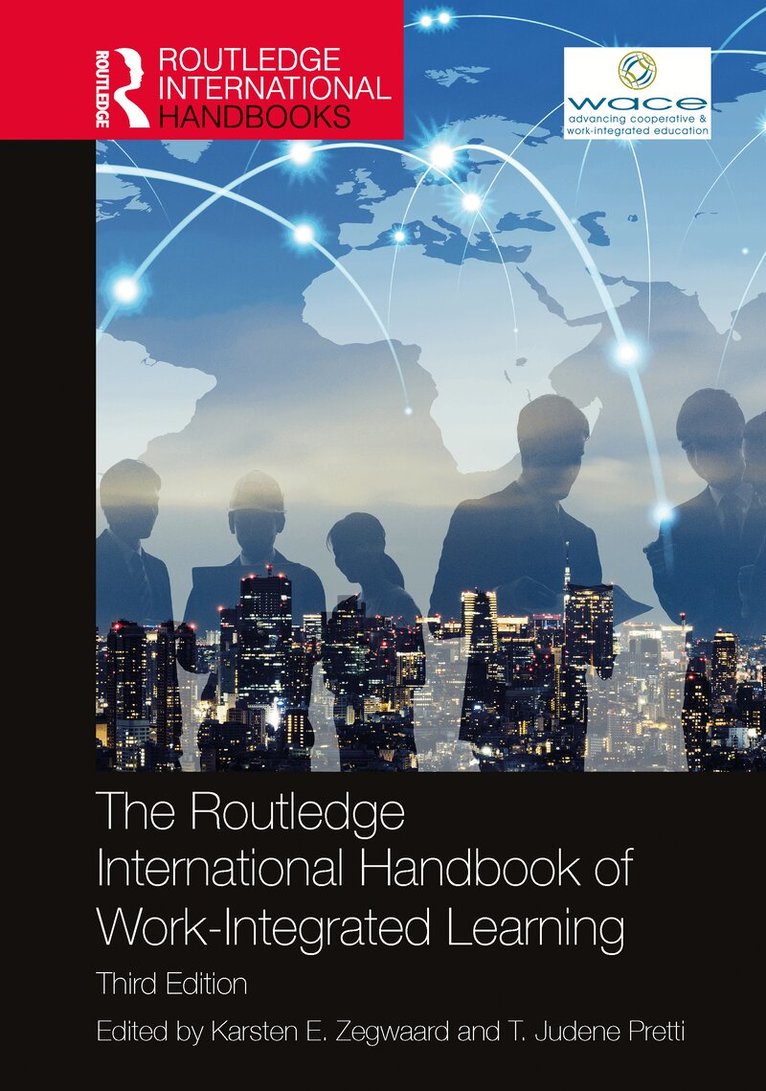
    Routledge International Handbook of Work-Integrated Learning

    AvKarsten E. Zegwaard,T. Judene Pretti

    Inbunden, Engelska, 2023

    Del i serien Routledge International Handbooks of Education

    1 991 kr

    Skickas . Fri frakt över 249 kr.

    Beskrivning

    The Routledge International Handbook of Work-Integrated Learning, third edition, provides an extensive overview of work-integrated learning (WIL) for practitioners and educators, and contains practical insights on how to improve everyday application of it.WIL is a diverse and complex subject, with much debate around what constitutes good practice. In this Handbook, well-established international WIL, an extensive compilation of relevant literature related to its application, and examples of good practice. The third edition has been substantively revised and restructured, presenting 11 different models of WIL along with supporting literature and examples, and discusses developing and managing WIL within a qualification and across the institution. The Handbook also presents evidence-based benefits for stakeholders and explores topics such as stakeholder engagement, risk management, and the role of national and international associations. This Handbook presents discussions on defining the practice of WIL and explores the current literature on theoretical thinking of WIL, wellbeing, equity and inclusion, assessment, and quality indicators.Bringing together scholars and specialists from around the world, this Handbook is essential reading for practitioners, educators, researchers, higher education leaders, and policy makers.

    Produktinformation

    • Utgivningsdatum:2023-06-06
    • Mått:174 x 246 x 40 mm
    • Vikt:1 240 g
    • Format:Inbunden
    • Språk:Engelska
    • Serie:Routledge International Handbooks of Education
    • Antal sidor:618
    • Upplaga:3
    • Förlag:Taylor & Francis Ltd
    • ISBN:9780367741761

    Utforska kategorier

    • Pedagogisk teori och filosofi inom Psykologi och pedagogik
    • Undervisning i specifika ämnen inom Psykologi och pedagogik

    Mer om författaren

    Karsten E. Zegwaard is Associate Professor and Director of Work-Integrated Learning Research at the University of Waikato, New Zealand. Karsten is Editor-in-Chief for the International Journal of Work-Integrated Learning, President of Work-Integrated Learning NZ, Executive Board member of the World Association of Cooperative Education, and a recipient of several international awards.T. Judene Pretti is Director of Business Services for Co-operative and Experiential Education, and Senior Advisor for the Work-Learn Institute at the University of Waterloo, Canada. Judene is a recipient of the Dr. Graham Branton Award for research excellence, Associate Editor for the International Journal of Work-Integrated Learning, and President-Elect for Co-operative Education and Work-Integrated Learning Canada.

    Innehållsförteckning

    • Section 1: History, definition and theoretical background of work-integrated learning1. Contemporary challenges and diverse practices of work-integrated learning in higher educationKarsten E. Zegwaard and T. Judene Pretti2. Work-integrated learning: A U.S. history with lessons learnedE. Sam Sovilla and Jim Varty3. Defining work-integrated learningKarsten E. Zegwaard, T. Judene Pretti, Anna D. Rowe and Sonia J. Ferns4. Applying educational thinking in work-integrated learningJared Carpendale and Ian Mitchell5. Organizational theory: Leveraging its explanatory potential for work-integrated learningPatrice Twomey and T. Judene PrettiSection 2: Benefits for stakeholders6. Benefits of work-integrated learning for studentsDenise Jackson and Elizabeth J. Cook7. Benefits of work-integrated learning for host organizationsJenny Fleming, Sonia J. Ferns and Karsten E. Zegwaard8. Benefits of work-integrated learning for educational institutionsKerry Aprile, Ian Sladen and James StellarSection 3: Models of work-integrated learning9. The practice of cooperative educationAnne-Marie Fannon10. The practice of block placementsKathryn Hay, Jo Borren, Jane Maidment, Raewyn Tudor and Dominic Chilvers11. Work-integrated learning through the practice of sandwich degreesJulie Udell, Vicki O’Brien, Sarah Flynn, Helen Hooper and Francesca Walker-Martin12. The practice of short-term and part-time work placementsAnna D. Rowe, Sonia J. Ferns, Patricia R. Lucas, Leanne Piggott and Theresa Winchester-Seeto13. The practice of apprenticeships as work-integrated learningSally Smith, Ella Taylor-Smith, Khristin Fabian and David Klotz14. The practice of entrepreneurship education and start-up creationAlon Eisenstein15. The practice of service learning as work-integrated learningFaith Valencia-Forrester16. The practice of non-placement work-integrated learningLaura Rook and Bonnie Amelia Dean17. The practice of simulations as work-integrated learningBelinda Judd, Jennie Brentnall, Anna Phillips and Melanie Aley18. The practice of online internshipsJoy Perkins and Amy Irwin19. The practice of international work-integrated learningKarima Ramji, Shabnam Surjitsingh Ivković, Nicole Miller, Farzana Karim-Haji and Sherilyn TrompetterSection 4: Developing and managing work-integrated learning programs20. Establishing a new work-integrated learning program in a degreeBonnie McBain, Paul Stolk, Kylie Twyford and Liam Phelan21. Establishing and managing a blended approach to institutional work-integrated learningMohna Baichoo, Jennifer Fane, Tania Loken and Aurelea Mahood22. Quality indicators of work-integrated learningMatthew Campbell and T. Judene Pretti23. Accreditation and quality in work-integrated learning: An international comparisonSonia J. Ferns and Christine Arsenault24. Learning ecosystems: Enhancing student understanding and agency through work-integrated learningNorah McRae and Jennifer Woodside25. Building sustainable partnerships and managing expectations of work-integrated learning stakeholdersElyce Green, Rebecca Barry, Jayne Lawrence, Brent Smith, Alicia Carey, Melanie Peelgrane and Zara Crawford26. Risk management of work-integrated learningCraig Cameron, Jenny Fleming, Kathryn Hay and Anne Hewitt27. Understanding the national context of work-integrated learningPhilip S. RoseSection 5: Topical challenges, opportunities and future directions28. Preparing students to thrive in work-integrated learningTheresa Winchester-Seeto and Anna D. Rowe29. Using instrumental mentoring to prepare students for work-integrated learningDawn Bennett and Cindy Ann Smith30. Learner assessment in work-integrated learning Jennie Brentnall, Belinda Judd, Jacqueline Raymond and Emma Ashcroft31. Adapting to an accelerating, disruptive future: Melding work and learning through the role of the T-ProfessionalPhilip Gardner and April L. Perry32. Applying principles of equity, diversity, inclusion, and access in work-integrated learningAinsley S. Goldman, Gifty MacKay, Vicki L. Lowes, Letitia Henville, Jewell Gillies, Cynthia Jairam-Persaud, Susan Soikie, Njamba J. M. Koffi, Naeemah Shah and Julie Walchli33. Supporting the wellbeing of students: A framework for work-integrated learning programsIro Konstantinou, Trevor Gerhardt and Elizabeth Miller34 Paid and unpaid work-integrated learning: Challenges and opportunitiesKatharine Hoskyn, Craig Cameron, Patricia R. Lucas, Franziska Trede, Loletta Yuen, Sally Rae, Holly Capocchiano and Michelle J. Eady35. Address complex global challenges: Developing cultural intelligence in work-integrated learningNorah McRae, Karima Ramji and Shabnam Surjitsingh Ivković36. Establishing sustainable national and global networks for promoting work-integrated learningJudie Kay, Norah McRae, Nancy Johnston and James Stellar37. Future directions for advancing work-integrated learning pedagogyKarsten E. Zegwaard and T. Judene Pretti