• Fri frakt över 249 kr
  • •
  • Snabba leveranser
  • •
  • Billiga böcker
Kundservice

Du är på sajten för privatpersoner.

Företag, bibliotek eller offentlig verksamhet?

Du handlar på classic.bokus.com, där alla dina funktioner finns intakta.
Till classic.bokus.com
Bokus logotyp. Gå till startsidan.
  • Erbjudanden
  • Nyheter
  • Student
  • Topplistor
  • Barn & ungdom
  • Bokus Play
  • E-böcker
  • Pocketböcker
  • Spel & pussel

10% rabatt på allt med kod: NYSTART10 →

Sidfot

Mina sidor

    Hjälp

    • Kundservice
    • Vanliga frågor och svar
    • Frakt och leverans
    • Retur vid ångerrätt
    • Reklamera vara
    • Betalning
    • Köpvillkor
    • Allmänna villkor
    • Information om webbplatsens tillgänglighet

    Om Bokus

    • Om oss
    • Pressrum
    • För studenter
    • För företag
    • För bibliotek och offentlig verksamhet
    • För leverantörer
    • Hållbarhet

    Populärt

    • Aktuella erbjudanden
    • Presentkort
    • Studentlitteratur
    • Nya böcker
    • Topplistor
    • Signerade böcker
    • Engelska böcker

    Inspiration

    • Boktips
    • BookTok
    • Populära bokserier
    • Barnbokskaraktärer
    • Populära författare
    Logotyp för Bokus
    Följ oss på Facebook (extern länk)Följ oss på Instagram (extern länk)Följ oss på YouTube (extern länk)Följ oss på TikTok (extern länk)
    bokus @ CookiesAnpassa cookiesIntegritetspolicyKöpvillkor
    Till Citymail hemsida (extern länk)Till Budbee hemsida (extern länk)Till Postnord hemsida (extern länk)Till Schenker hemsida (extern länk)Till Early Bird hemsida (extern länk)Till Walleys hemsida (extern länk)
    1. Samhälle och politik
    2. Samhälle och kultur
    3. Kultur och medier
    4. Medievetenskap

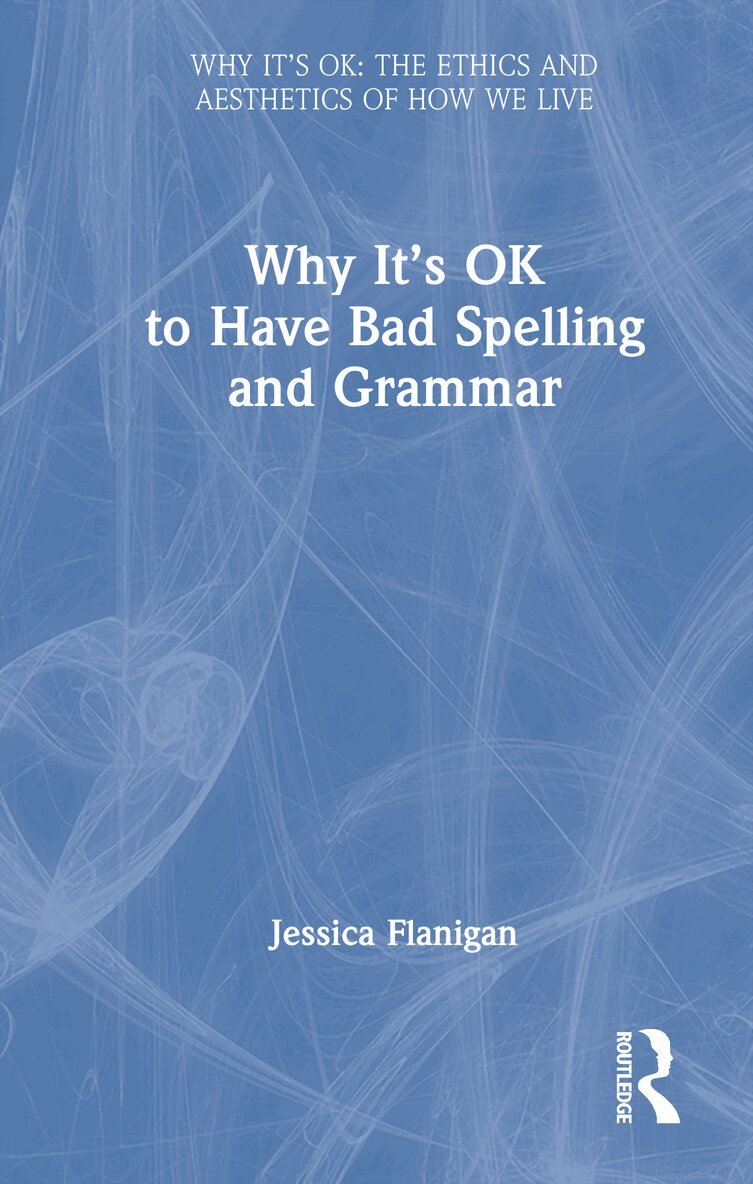
    Why It's OK to Have Bad Spelling and Grammar

    AvJessica Flanigan

    Inbunden, Engelska, 2025

    Del i serien Why It's OK

    2 421 kr

    Beställningsvara. Skickas inom 10-15 vardagar. Fri frakt över 249 kr.

    Fler format och utgåvor

    Häftad

    288 kr

    E-bok

    326 kr

    E-bok

    326 kr

    Beskrivning

    Grammatical errors and orthographic mishaps are often played for laughs, but this subtle sanctioning by the sticklerocracy can have real social consequences too. Attention to prescriptive spelling and grammar rules is insidious and harmful.As Jessica Flanigan argues in Why It’s OK to Have Bad Spelling and Grammar, grammarianism often maintains hierarchies, entrenches the advantages of privileged groups, and imposes arbitrary barriers to knowledge production and innovation. For example, the stigmatization of bad spelling and grammar disadvantages linguistic minorities, non-native speakers, and people with disabilities. Spelling and grammar norms are also frequently arbitrary and unnecessary. The petty grammandos among us, who cling to pedantic linguistic conventions, are standing in the way of innovative forms of communication and efficient speech, such as the emoji ☺. For these reasons, Flanigan argues that bad spelling and grammar are OK. It’s time to break free from the tyranny of the grammilitia in the name of comprehension and creativity. As long as speakers and writers can effectively communicate to charitable listeners and readers, people shouldn’t care about bad spelling and grammar.Key FeaturesExplains why spelling tests and spelling bees are counterproductive in achieving literacy and better communicationEngages with the history of language policing and the brave anti-grammarian resistanceDescribes some of the key benefits of linguistic liberalismProposes a political agenda to resist the sticklerocracy and overthrow a world of word nerds

    Produktinformation

    • Utgivningsdatum:2025-02-28
    • Mått:129 x 198 x undefined mm
    • Vikt:420 g
    • Format:Inbunden
    • Språk:Engelska
    • Serie:Why It's OK
    • Antal sidor:264
    • Förlag:Taylor & Francis Ltd
    • ISBN:9780367897727

    Utforska kategorier

    • Medievetenskap inom Samhälle och politik
    • Språkvetenskap och lingvistik inom Språk och ordböcker
    • Filosofiska discipliner inom Filosofi och religion

    Mer om författaren

    Jessica Flanigan is the Richard L. Morrill Chair in Ethics and Democratic Values at the University of Richmond, where she teaches Leadership Ethics, Ethical Decision Making in Healthcare, and Critical Thinking. Her research addresses the ethics of public policy, medicine, and business. In Pharmaceutical Freedom (2017), she defends rights of self-medication. In Debating Sex Work (2019), she defends the decriminalization of sex work.

    Recensioner i media

    “We are surrounded by the grammar police, and for most of my life I have been inclined to surrender peacefully with my hands up. Jessica Flanigan’s vigorous defense of grammatical anarchism is the intervention I didn’t know I needed. This book is essential reading for grammatical sticklers and deviants alike!” -- Matthew Strohl, University of Montana“Tackling everything from spelling and grammar to sanctions and style, Flanigan provides a fascinating foray into the evolving linguistic landscape of our digital age. An enjoyable and enlightening read!” -- Gregory Robson, Iowa State University“Jessica Flanigan takes no prisoners in this riposte to linguistic busybodies. She won’t change their minds. Nothing will. But those under their influence, including ordinary teachers who are ‘just trying to help,’ will now think long and hard before correcting a misplaced hyphen. For that, we must thank her. This is a welcome reminder that grammar, spelling, punctuation, and so on, exist to serve humanity, not vice versa. Read and enjoy.” -- Alex Barber, The Open University

    Innehållsförteckning

    • Introduction 1.Grammarians And Grammar School 1.1 Education, Economics, And Citizenship 1.2 The Problems with Literacy Instruction 1.3 Disability and Disadvantage 1.4 Spelling Rituals and Parent Choice 1.5 The Style Guide 1.6 The Golden Age 1.7 Conclusion 2. Spellocratic Sanctioning 2.1 Language and Law 2.2 The Ethics of Social Sanctions 2.3 Advice 2.4 Manners 2.5 Grammarian Gaslighting 2.6 Offense 2.7 Conclusion 3. Sticklers And Stigma 3.1 Social Egalitarianism 3.2 Class 3.3 Gender 3.4 Sexuality and Sexual Identity 3.5 Race, Ethnicity, And Regionalism 3.6 Culture, Language, And Appropriation 3.7 Pronouns and Politics 3.8 Gender, Grammar, And Politics 3.9 Egalitarian Language Policing 3.10 Conclusion 4. Pedants And Progress 4.1 The Anarchic Origins of Language 4.2 Flexible Language Today 4.3 Linguistic Solidarity 4.4 Linguistic Innovation ¯\_(ツ)_/¯ 4.5 Linguistic Conservativism 4.6 Conclusion 5. A World Without Word-Warriors 5.1 Dispositions 5.2 Sticklerlessness 5.3 Is This Argument Self-Defeating? 5.4 Poor Spellers Untie! 5.5 Conclusion 6.