E-bok, Engelska, 2010
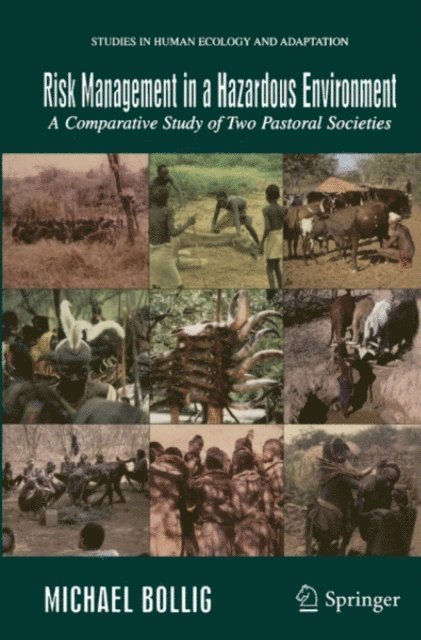
Risk Management in a Hazardous Environment
1416 kr
Läs direkt i Bokus Reader – eller ladda ned till din enhet (PDF kräver ofta zoom och scroll på små skärmar).
Beskrivning
A research focus on hazards, risk perception and risk minimizing strategies is relatively new in the social and environmental sciences. This volume by a prominent scholar of East African societies is a powerful example of this growing interest. Earlier theory and research tended to describe social and economic systems in some form of equilibrium. However recent thinking in human ecology, evolutionary biology, not to mention in economic and political theory has come to assign to "risk" a prominent role in predictive modeling of behavior. It turns out that risk minimalization is central to the understanding of individual strategies and numerous social institutions. It is not simply a peripheral and transient moment in a group’s history. Anthropologists interested in forager societies have emphasized risk management strategies as a major force shaping hunting and gathering routines and structuring institutions of food sharing and territorial behavior. This book builds on some of these developments but through the analysis of quite complex pastoral and farming peoples and in populations with substantial known histories. The method of analysis depends heavily on the controlled comparisons of different populations sharing some cultural characteristics but differing in exposure to certain risks or hazards.
The central questions guiding this approach are: 1) How are hazards generated through environmental variation and degradation, through increasing internal stratification, violent conflicts and marginalization? 2) How do these hazards result in damages to single households or to individual actors and how do these costs vary within one society? 3) How are hazards perceived by the people affected? 4) How do actors of different wealth, social status, age and gender try to minimize risks by delimiting the effect of damages during an on-going crisis and what kind of institutionalized measures do they design to insure themselves against hazards, preventing theiroccurrence or limiting their effects? 5) How is risk minimization affected by cultural innovation and how can the importance of the quest for enhanced security as a driving force of cultural evolution be estimated?
Produktinformation
- Utgivningsdatum: 2010-05-10
- Språk: Engelska
- Filformat: PDF
- Kopieringsskydd: LCP
- ISBN: 9780387275826
- Förlag: Springer US
Utforska kategorier
Betyg & recensioner
0 recensioner
Inga recensioner tillgängliga.