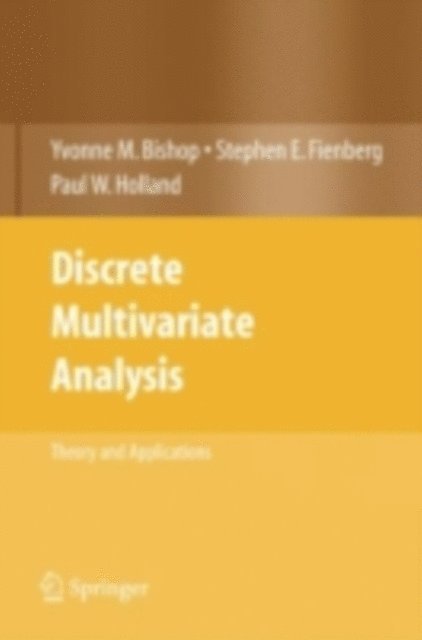
E-bok, Engelska, 2007
Discrete Multivariate Analysis
Av Paul W. Holland, Stephen E. Fienberg, Yvonne M. Bishop
1746 kr
Skickas måndag 12/10
Beskrivning
6. 2 The Two-Sample Capture-Recapture Problem . . . . . . . . . . . . . . . . . . . . . . . . . . . . . . . . 231 6. 3 Conditional Maximum Likelihood Estimation of N . . . . . . . . . . . . . . . . . . . . . . 236 6. 4 The Three-Sample Census . . . . . . . . . . . . . . . . . . . . . . . . . . . . . . . . . . . . . . . . . . . . . . . . . . . . . . . . . . . . . . 237 6. 5 The General Multiple Recapture Problem . . . . . . . . . . . . . . . . . . . . . . . . . . . . . . . . . . . . . . 246 6. 6 Discussion . . . . . . . . . . . . . . . . . . . . . . . . . . . . . . . . . . . . . . . . . . . . . . . . . . . . . . . . . . . . . . . . . . . . . . . . . . . . . . . . . . . . . . 254 7 MODELS FOR MEASURING CHANGE . . . . . . . . . . . . . . . . . . . . . . . . . . . . . . . . . . . . . . . . . . 257 7. 1 Introduction . . . . . . . . . . . . . . . . . . . . . . . . . . . . . . . . . . . . . . . . . . . . . . . . . . . . . . . . . . . . . . . . . . . . . . . . . . . . . . . . . . . 257 7. 2 First-Order Markov Models . . . . . . . . . . . . . . . . . . . . . . . . . . . . . . . . . . . . . . . . . . . . . . . . . . . . . . . . . . . 261 7. 3 Higher-Order Markov Models . . . . . . . . . . . . . . . . . . . . . . . . . . . . . . . . . . . . . . . . . . . . . . . . . . . . . . . . 267 7. 4 Markov Models with a Single Sequence of Transitions . . . . . . . . . . . . . . . . . . 270 7. 5 Other Models . . . . . . . . . . . . . . . . . . . . . . . . . . . . . . . . . . . . . . . . . . . . . . . . . . . . . . . . . . . . . . . . . . . . . . . . . . . . . . . . . 273 8 ANALYSIS OF SQUARE TABLES: SYMMETRY AND MARGINAL HOMOGENEITY . . . . . . . . . . . . . . . . . . . . . . . . . . . . . . . . . . . . . . . . . . . . . . . . . . . . . . . . . . 281 8. 1 Introduction . . . . . . . . . . . .. . . . . . . . . . . . . . . . . . . . . . . . . . . . . . . . . . . . . . . . . . . . . . . . . . . . . . . . . . . . . . . . . . . . . . . 281 8. 2 Two-Dimensional Tables . . . . . . . . . . . . . . . . . . . . . . . . . . . . . . . . . . . . . . . . . . . . . . . . . . . . . . . . . . . . . . . . 282 8. 3 Three-Dimensional Tables . . . . . . . . . . . . . . . . . . . . . . . . . . . . . . . . . . . . . . . . . . . . . . . . . . . . . . . . . . . . . . 299 8. 4 Summary . . . . . . . . . . . . . . . . . . . . . . . . . . . . . . . . . . . . . . . . . . . . . . . . . . . . . . . . . . . . . . . . . . . . . . . . . . . . . . . . . . . . . . . . 309 9 MODEL SELECTION AND ASSESSING CLOSENESS OF FIT: PRACTICAL ASPECTS . . . . . . . . . . . . . . . . . . . . . . . . . . . . . . . . . . . . . . . . . . . . . . . . . . . . . . . . . 311 9. 1 Introduction . . . . . . . . . . . . . . . . . . . . . . . . . . . . . . . . . . . . . . . . . . . . . . . . . . . . . . . . . . . . . . . . . . . . . . . . . . . . . . . . . . . 311 9. 2 Simplicity in Model Building . . . . . . . . . . . . . . . . . . . . . . . . . . . . . . . . . . . . . . . . . . . . . . . . . . . . . . . . . . 312 9. 3 Searching for Sampling Models . . . . . . . . . . . . . . . . . . . . . . . . . . . . . . . . . . . . . . . . . . . . . . . . . . . . . . 315 9. 4 Fitting and Testing Using the Same Data . . . . . . . . . . . . . . . . . . . . . . . . . . . . . . . . . . . . . . . 317 9. 5 Too Good a Fit . . . . . . . . . . . . . . . . . . . . . . . . . . . . . . . . . . . . . . . . . . . . . . . . . . . . . . . . . . . . . . . . . . . . . . . . . . . . . . 324 9. 6 Large Sample Sizes and Chi Square When the Null Model is False . . . . . . . . . . . . . . . . . . . . . . . . . . . . . . . . . . . . . . . . . . . . . . .. . . . . . . . . . . . . . . . . . . . . . . . . . . . . . . . . 329 9. 7 Data Anomalies and Suppressing Parameters . . . . . . . . . . . . . . . . . . . . . . . . . . . . . . . . 332 9. 8 Frequency of Frequencies Distribution . . . . . . . . . . . . . . . . . . . . . . . . . . . . . . . . . . . . . . . . . . 337 10 OTHER METHODS FOR ESTIMATION AND TESTING IN CROSS-CLASSIFICATIONS . . . . . . . . . . . . . . . . . . . . . . . . . . . . . . . . . . . . . . . . . . . . . . . . . . . . . . . . . . 343 10. 1 Introduction . . . . . . . . . . . . . . . . . . . . . . . . . . . . . . . . . . . . . . . . . . . . . . . . . . . . . . . . . . . . . . . . . . . . . . . . . . . . . . . . . . . 343 10. 2 The Information-Theoretic Approach . . . . . . . . . . . . . . . . . . . . . . . . . . . . . . . . . . . . . . . . . . . . 344 10. 3 Minimizing Chi Square, Modi? ed Chi Square, and Logit Chi Square . . . . . . . . . . . . . . . . . . . . . . . . . . . . . . . . . . . . . . . . . . . . . . . . . . . . . . . . . . . . . . . . . . . . . 348 10. 4 The Logistic Model and How to Use It . . . . . . . . . . . . . . . . . . . . . . . . . . . . . . . . . . . . . . . . . . 357 10. 5 Testing via Partitioning of Chi Square . . . . . . . . . . . . . . . . . . . . . . . . . . . . . . . . . . . . . . . . . . . 361 10. 6 Exact Theory for Tests Based on Conditional Distributions . . . . . . . . . . . . . . . . . . . . . . . . . . . . . . . . . . . . . . . . . . . . . . . . . . . . . . . . . . . . . . 364 10. 7 Analyses Based on Transformed Proportions . . . . . . . . . . . . . . . . . . . . . . . . . . . . . . . . .
Produktinformation
- Utgivningsdatum: 2007-07-31
- Format: E-bok
- Språk: Engelska
- Förlag: Springer New York
- ISBN: 9780387728063
Utforska kategorier
Betyg & recensioner
0 recensioner
Inga recensioner tillgängliga.