• Fri frakt över 249 kr
  • •
  • Snabba leveranser
  • •
  • Billiga böcker
Kundservice

Du är på sajten för privatpersoner.

Företag, bibliotek eller offentlig verksamhet?

Du handlar på classic.bokus.com, där alla dina funktioner finns intakta.
Till classic.bokus.com
Bokus logotyp. Gå till startsidan.
  • Erbjudanden
  • Nyheter
  • Student
  • Topplistor
  • Barn & ungdom
  • Bokus Play
  • E-böcker
  • Pocketböcker
  • Spel & pussel

10% rabatt på allt med kod: NYSTART10 →

Sidfot

Mina sidor

    Hjälp

    • Kundservice
    • Vanliga frågor och svar
    • Frakt och leverans
    • Retur vid ångerrätt
    • Reklamera vara
    • Betalning
    • Köpvillkor
    • Allmänna villkor
    • Information om webbplatsens tillgänglighet

    Om Bokus

    • Om oss
    • Pressrum
    • För studenter
    • För företag
    • För bibliotek och offentlig verksamhet
    • För leverantörer
    • Hållbarhet

    Populärt

    • Aktuella erbjudanden
    • Presentkort
    • Studentlitteratur
    • Nya böcker
    • Topplistor
    • Signerade böcker
    • Engelska böcker

    Inspiration

    • Boktips
    • BookTok
    • Populära bokserier
    • Barnbokskaraktärer
    • Populära författare
    Logotyp för Bokus
    Följ oss på Facebook (extern länk)Följ oss på Instagram (extern länk)Följ oss på YouTube (extern länk)Följ oss på TikTok (extern länk)
    bokus @ CookiesAnpassa cookiesIntegritetspolicyKöpvillkor
    Till Citymail hemsida (extern länk)Till Budbee hemsida (extern länk)Till Postnord hemsida (extern länk)Till Schenker hemsida (extern länk)Till Early Bird hemsida (extern länk)Till Walleys hemsida (extern länk)
    1. Naturvetenskap och teknik
    2. Matematik och naturvetenskap
    3. Matematik
    4. Matematisk statistik

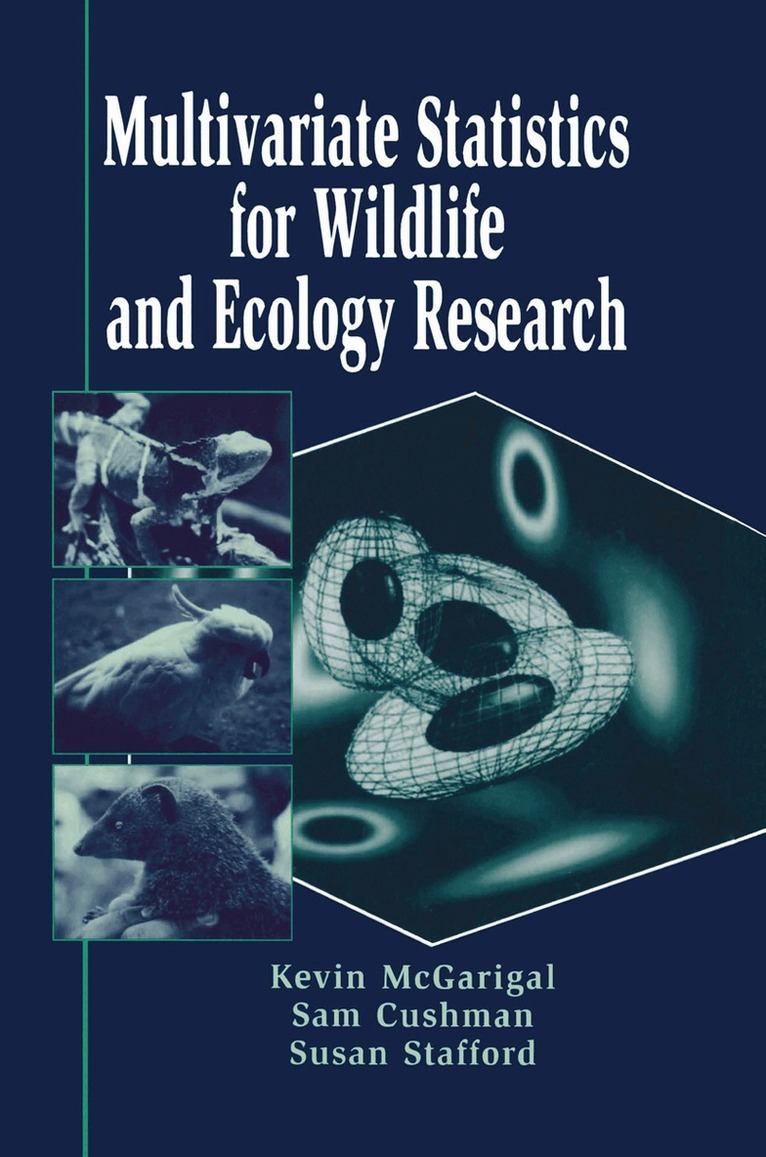
    Multivariate Statistics for Wildlife and Ecology Research

    AvKevin McGarigal,Samuel A. Cushman

    Häftad, Engelska, 2000

    546 kr

    Beställningsvara. Skickas inom 10-15 vardagar. Fri frakt över 249 kr.

    Fler format och utgåvor

    Inbunden

    546 kr

    Beskrivning

    Wildlife researchers and ecologists make widespread use of multivariate statistics in their studies. With its focus on the practical application of the techniques of multivariate statistics, this book shapes the powerful tools of statistics for the specific needs of ecologists and makes statistics more applicable to their course of study. Multivariate Statistics for Wildlife and Ecology Research gives the reader a solid conceptual understanding of the role of multivariate statistics in ecological applications and the relationships among various techniques, while avoiding detailed mathematics and underlying theory. More important, the reader will gain insight into the type of research questions best handled by each technique and the important considerations in applying each one. Whether used as a textbook for specialized courses or as a supplement to general statistics texts, the book emphasizes those techniques that students of ecology and natural resources most need to understand andemploy in their research. Detailed examples use real wildlife data sets analyzed using the SAS statistical software program. The book is specifically targeted for upper-division and graduate students in wildlife biology, forestry, and ecology, and for professional wildlife scientists and natural resource managers, but it will be valuable to researchers in any of the biological sciences.

    Produktinformation

    • Utgivningsdatum:2000-06-20
    • Mått:155 x 235 x 17 mm
    • Vikt:462 g
    • Format:Häftad
    • Språk:Engelska
    • Antal sidor:283
    • Förlag:Springer-Verlag New York Inc.
    • ISBN:9780387986425

    Utforska kategorier

    • Matematisk statistik inom Naturvetenskap och teknik
    • Miljövetenskap och miljöpolitik inom Naturvetenskap och teknik
    • Biovetenskap inom Naturvetenskap och teknik

    Innehållsförteckning

    • 1 Introduction and Overview.- 1.1 Objectives.- 1.2 Multivariate Statistics: An Ecological Perspective.- 1.3 Multivariate Description and Inference.- 1.4 Multivariate Confusion!.- 1.5 Types of Multivariate Techniques.- 2 Ordination: Principal Components Analysis.- 2.1 Objectives.- 2.2 Conceptual Overview.- 2.3 Geometric Overview.- 2.4 The Data Set.- 2.5 Assumptions.- 2.6 Sample Size Requirements.- 2.7 Deriving the Principal Components.- 2.8 Assessing the Importance of the Principal Components.- 2.9 Interpreting the Principal Components.- 2.10 Rotating the Principal Components.- 2.11 Limitations of Principal Components Analysis.- 2.12 R-Factor Versus Q-Factor Ordination.- 2.13 Other Ordination Techniques.- Appendix 2.1.- 3 Cluster Analysis.- 3.1 Objectives.- 3.2 Conceptual Overview.- 3.3 The Definition of Cluster.- 3.4 The Data Set.- 3.5 Clustering Techniques.- 3.6 Nonhierarchical Clustering.- 3.7 Hierarchical Clustering.- 3.8 Evaluating the Stability of the Cluster Solution.- 3.9 Complementary Use of Ordination and Cluster Analysis.- 3.10 Limitations of Cluster Analysis.- Appendix 3.1.- 4 Discriminant Analysis.- 4.1 Objectives.- 4.2 Conceptual Overview.- 4.3 Geometric Overview.- 4.4 The Data Set.- 4.5 Assumptions.- 4.6 Sample Size Requirements.- 4.7 Deriving the Canonical Functions.- 4.8 Assessing the Importance of the Canonical Functions.- 4.9 Interpreting the Canonical Functions.- 4.10 Validating the Canonical Functions.- 4.11 Limitations of Discriminant Analysis.- Appendix 4.1.- 5 Canonical Correlation Analysis.- 5.1 Objectives.- 5.2 Conceptual Overview.- 5.3 Geometric Overview.- 5.4 The Data Set.- 5.5 Assumptions.- 5.6 Sample Size Requirements.- 5.7 Deriving the Canonical Variates.- 5.8 Assessing the Importance of the Canonical Variates.- 5.9 Interpreting the Canonical Variates.- 5.10 Validating the Canonical Variates.- 5.11 Limitations of Canonical Correlation Analysis.- Appendix 5.1.- 6 Summary and Comparison.- 6.1 Objectives.- 6.2 Relationship Among Techniques.- 6.3 Complementary Use of Techniques.- Appendix: Acronyms Used in This Book.