• Fri frakt över 249 kr
  • •
  • Snabba leveranser
  • •
  • Billiga böcker
Kundservice

Du är på sajten för privatpersoner.

Företag, bibliotek eller offentlig verksamhet?

Du handlar på classic.bokus.com, där alla dina funktioner finns intakta.
Till classic.bokus.com
Bokus logotyp. Gå till startsidan.
  • Erbjudanden
  • Nyheter
  • Student
  • Topplistor
  • Barn & ungdom
  • Bokus Play
  • E-böcker
  • Pocketböcker
  • Spel & pussel

10% rabatt på allt med kod: NYSTART10 →

Sidfot

Mina sidor

    Hjälp

    • Kundservice
    • Vanliga frågor och svar
    • Frakt och leverans
    • Retur vid ångerrätt
    • Reklamera vara
    • Betalning
    • Köpvillkor
    • Allmänna villkor
    • Information om webbplatsens tillgänglighet

    Om Bokus

    • Om oss
    • Pressrum
    • För studenter
    • För företag
    • För bibliotek och offentlig verksamhet
    • För leverantörer
    • Hållbarhet

    Populärt

    • Aktuella erbjudanden
    • Presentkort
    • Studentlitteratur
    • Nya böcker
    • Topplistor
    • Signerade böcker
    • Engelska böcker

    Inspiration

    • Boktips
    • BookTok
    • Populära bokserier
    • Barnbokskaraktärer
    • Populära författare
    Logotyp för Bokus
    Följ oss på Facebook (extern länk)Följ oss på Instagram (extern länk)Följ oss på YouTube (extern länk)Följ oss på TikTok (extern länk)
    bokus @ CookiesAnpassa cookiesIntegritetspolicyKöpvillkor
    Till Citymail hemsida (extern länk)Till Budbee hemsida (extern länk)Till Postnord hemsida (extern länk)Till Schenker hemsida (extern länk)Till Early Bird hemsida (extern länk)Till Walleys hemsida (extern länk)
    1. Historia och arkeologi
    2. Historia
    3. Europas historia

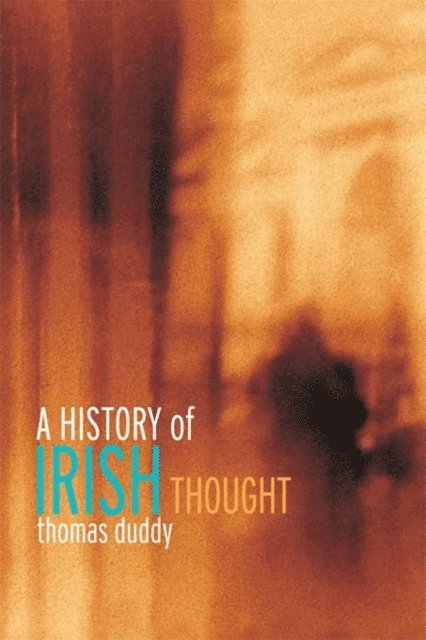
    History of Irish Thought

    AvThomas Duddy

    Häftad, Engelska, 2002

    614 kr

    Beställningsvara. Skickas inom 10-15 vardagar. Fri frakt över 249 kr.

    Fler format och utgåvor

    Inbunden

    2 493 kr

    E-bok

    704 kr

    E-bok

    704 kr

    Beskrivning

    The first complete introduction to the subject ever published, A History of Irish Thought presents an inclusive survey of Irish thought and the history of Irish ideas against the backdrop of current political and social change in Ireland.Clearly written and engaging, the survey introduces an array of philosophers, polemicists, ideologists, satirists, scientists, poets and political and social reformers, from the anonymous seventh-century monk, the Irish Augustine, and John Scottus Eriugena, to the twentieth century and W.B. Yeats and Iris Murdoch.Thomas Duddy rediscovers the liveliest and most contested issues in the Irish past, and brings the history of Irish thought up to date. This volume will be of great value to anyone interested in Irish culture and its intellectual history.
    Produktinformation

    • Utgivningsdatum:2002-04-26
    • Mått:156 x 234 x 29 mm
    • Vikt:580 g
    • Format:Häftad
    • Språk:Engelska
    • Antal sidor:384
    • Förlag:Taylor & Francis Ltd
    • ISBN:9780415206938

    Utforska kategorier

    • Europas historia inom Historia och arkeologi
    • Kulturvetenskap inom Samhälle och politik

    Mer om författaren

    Thomas Duddy teaches in the Department of Philosophy at the National University of Ireland, Galway. He is author of Mind, Self and Interiority (1995).

    Recensioner i media

    'This is an important pioneering work...its author has done a considerable service to anyone interested in the intellectual development of Ireland.' - P.J. McGrath, Irish Times'The ultimate refutation of the Irish joke ... a comprehensive summary of the varied patterns of thought as they have evolved through the ages.' - The Tuam Herald'This book is a significant contribution to the history of Irish thought, and contains much that will be of interest to all students of Irish culture.' - Eddie Hyland, Irish Studies Review'This book is a significant contribution to the history of Irish thought, and contains much that will be of interest to all students of Irish culture.''Lucidly written and timely ... an impressive achievement and deserves a wide audience, including all those interested in Irish culture.' - Dermot Moran, Notre Dame Philosophical Reviews'A marvellous book, clear comprehensive and a pleasure to read.' - Australian Journal of Irish-Australian Studies'Thomas Duddy ... has distilled a great mass of material (the bibliography is 25 pages long) into a marvellous book, clear, comprehensive and a pleasure to read.' - The Australian Irish Network' ... Duddy has presented us with quite a detailed history, which reveals something of the diversity and interest of the contributions made by the Irish ... Duddy's main virtues as an historian of thought are his sustained attempt to be as inclusive and as fair as possible to the thinkers he deals with, not forgetting the clarity of his prose style.' - Tijdschrift Voor Filosofie

    Innehållsförteckning

    • Preface Acknowledgements1 Interpreting Marvels: The Irish AugustineEnter, the Irish Augustine The theology of the Flood The theology of marvels The theology of angelic ministry The Irish Augustine and the African Doctor2 The Philosophy of Creation: John Scottus EriugenaThe five modes of interpretation The four conceptions of nature Nature, theophany, and pantheism The gendered and the pristine body The return to God Eriugena and the cult of the Free Spirit Scholars or thinkers: A postscript on Peter of Ireland and Richard Fitzralph3 Nature Observed: Robert Boyle, William Molyneux, and the New LearningRobert Boyle, the Christian virtuoso Touching the spring of the air: A new departure ' A piece of green-wood burning': Boyle against the elements A thinking gentleman: William Molyneux, new learner and patriot Mr Molyneux to Mr Locke: An Anglo-Irish correspondence Against the self-image of the age: Michael Moore, a Paris Aristotelian from Ireland4 John Toland and the Ascendancy of ReasonReason, revelation, and meaning Tyranny, superstition, and the politics of pantheism 'As in a glass darkly': Peter Browne and the argument from analogy Other partisans of mystery: Edward Synge and Philip Skelton God, good, and privation: The theodicy of William King Spirit and motion: The Philosophical animism of Robert ClaytonWonderfully Mending the World: George Berkeley and Jonathan SwiftSeeing things: Berkeley's theory of vision Seeing (and not seeing) things: Berkeley's philosophy of perception The visible language of god The converting imagination: Swift against the moderns Modernism as madness: The moral of the Tale Abolishing Christianity: Swift against the free thinkers An unsentimental journey: Gulliver and the perversion of reason6 Against the Selfish Philosophers: Francis Hutcheson, Edmund Burke, and James UsherHutcheson and the stratagems of self-love The pleasures of morality Vice and cruelty explained The politics of happiness and the pleasures of civil union Reflection and reaction: the life and thought of Edmund Burke The taste of fear: Burke's aesthetics of sublimity From the sublime to the political: Burke and the philosophy of custom 'Shadowy similitudes': James Usher on the limits of language 'A benevolent conspiracy': Ireland and the thought of revolution7 Peripheral Visions (1): Irish Thought in the Nineteenth CenturyDaniel O'Connell and Benthamism Anti-Union, anti-Credo, anti-Malthus: The subversive thought of George Ensor Producing happiness: The radical utilitarianism of William Thompson Happiness and suffrage: The feminist utilitarianism of Anna Doyle Wheeler The power of circumstance: The holistic philosophy of Henry MacCormac8 Peripheral Visions (2): Irish Thought in the Nineteenth CenturyEnglish theory, Irish facts: John Elliot Cairnes and the turn of political economy Religion and the science of genesis: Darwin in Ireland - John Tyndall, scientific evangelist Three non-Darwinian evolutionists: Gerald Molloy, J.J. Murphy, and G.G. Stokes Religion, rivalry, and progress: The social Darwinism of Benjamin Kidd Ethics and the primal nebula: Frances Power Cobbe - Varieties of Irish idealism: From William Rowan Hamilton to Oscar Wilde9 Between Extremities: Irish Thought in the Twentieth CenturyBetween self and anti-self: The visionary idealism of W.B. Yeats The dreams of reason: J.O. Wisdom on the unconcsious origins of thought Against method: M. O'C. Drury on the imprisoned mind 'Unutterable particularities': Iris Murdoch on the ethics of attention Being in the middle: William Desmond on tragedy, 'idiocy', and intimacy 'A vision of being free': Philip Pettit on mind, society, and the res publica