• Fri frakt över 249 kr
  • •
  • Snabba leveranser
  • •
  • Billiga böcker
Kundservice

Du är på sajten för privatpersoner.

Företag, bibliotek eller offentlig verksamhet?

Du handlar på classic.bokus.com, där alla dina funktioner finns intakta.
Till classic.bokus.com
Bokus logotyp. Gå till startsidan.
  • Erbjudanden
  • Nyheter
  • Student
  • Topplistor
  • Barn & ungdom
  • Bokus Play
  • E-böcker
  • Pocketböcker
  • Spel & pussel

10% rabatt på allt med kod NYSTART10 →

Sidfot

Mina sidor

    Hjälp

    • Kundservice
    • Vanliga frågor och svar
    • Frakt och leverans
    • Retur vid ångerrätt
    • Reklamera vara
    • Betalning
    • Köpvillkor
    • Allmänna villkor
    • Information om webbplatsens tillgänglighet

    Om Bokus

    • Om oss
    • Pressrum
    • För studenter
    • För företag
    • För bibliotek och offentlig verksamhet
    • För leverantörer
    • Hållbarhet

    Populärt

    • Aktuella erbjudanden
    • Presentkort
    • Studentlitteratur
    • Nya böcker
    • Topplistor
    • Signerade böcker
    • Engelska böcker

    Inspiration

    • Boktips
    • BookTok
    • Populära bokserier
    • Barnbokskaraktärer
    • Populära författare
    Logotyp för Bokus
    Följ oss på Facebook (extern länk)Följ oss på Instagram (extern länk)Följ oss på YouTube (extern länk)Följ oss på TikTok (extern länk)
    bokus @ CookiesAnpassa cookiesIntegritetspolicyKöpvillkor
    Till Citymail hemsida (extern länk)Till Budbee hemsida (extern länk)Till Postnord hemsida (extern länk)Till Schenker hemsida (extern länk)Till Early Bird hemsida (extern länk)Till Walleys hemsida (extern länk)
    1. Psykologi och pedagogik
    2. Pedagogik
    3. Skolan och förskolan

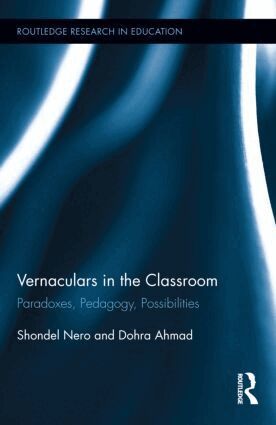
    Vernaculars in the Classroom

    Paradoxes, Pedagogy, Possibilities

    AvShondel Nero,Dohra Ahmad

    Inbunden, Engelska, 2014

    Del i serien Routledge Research in Education

    2 873 kr

    Beställningsvara. Skickas inom 10-15 vardagar. Fri frakt över 249 kr.

    Fler format och utgåvor

    Häftad

    719 kr

    Beskrivning

    This book draws on applied linguistics and literary studies to offer concrete means of engaging with vernacular language and literature in secondary and college classrooms. The authors embrace a language-as-resource orientation, countering the popular narrative of vernaculars as problems in schools. The book is divided into two parts, with the first half of the book providing linguistic and pedagogical background, and the second half offering literary case studies for teaching. Part I examines the historical and continued devaluing of vernaculars in schools, incorporating clear, usable explanations of relevant theories. This section also outlines the central myths and paradoxes surrounding vernacular languages and literatures, includes productive ways for teachers to address those myths and paradoxes, and explores challenges and possibilities for vernacular language pedagogy. In Part II, the authors provide pedagogical case studies using literary texts written in vernacular Englishes from around the world. Each chapter examines a vernacular-related topic, and concludes with discussion questions and writing assignments; an appendix contains the poems and short stories discussed, and other teaching resources. The book provides a model of interdisciplinary inquiry that can be beneficial to scholars and practitioners in composition, literature, and applied linguistics, as well as students of all linguistic backgrounds.

    Produktinformation

    • Utgivningsdatum:2014-06-10
    • Mått:152 x 229 x 17 mm
    • Vikt:430 g
    • Format:Inbunden
    • Språk:Engelska
    • Serie:Routledge Research in Education
    • Antal sidor:228
    • Förlag:Taylor & Francis Ltd
    • ISBN:9780415815512

    Utforska kategorier

    • Skolan och förskolan inom Psykologi och pedagogik
    • Högskola och universitet inom Psykologi och pedagogik
    • Undervisning i specifika ämnen inom Psykologi och pedagogik

    Mer om författaren

    Shondel Nero is Associate Professor of Teaching and Learning at New York University, USA. She is the author of Englishes in Contact: Anglophone Caribbean Students in an Urban College and editor of Dialects, Englishes, Creoles, and Education (Routledge). Her research has appeared in TESOL Quarterly, World Englishes, Language and Education, and other journals.Dohra Ahmad is Associate Professor of English at St. John’s University, USA. She is the author of Landscapes of Hope: Anti-Colonial Utopianism in America and editor of Rotten English: A Literary Anthology. Her essays have appeared in ELH, the Yale Journal of Criticism, Social Text, and the Journal of Commonwealth Literature.

    Recensioner i media

    "This is a much needed publication that translates current scholarly realizations about global English for instructional purposes." -- Suresh Canagarajah, Pennsylvania State University, USA"Nero and Ahmad show that there is no conflict between using vernacular and so-called standard English in the classroom. Indeed, the authors explicitly ask for teaching that helps students master "standard" written English, while still inviting them to write often in the vernacular. This is an important and valuable book." -- Peter Elbow, University of Massachusetts, USA"This book offers a fresh and exciting new look at vernacular Englishes from the perspective of literary studies and of vernacular literary texts from the perspective of applied linguistics. Deftly addressing questions of both language and literature, it provides an invaluable synthesis of disciplinary paradigms, with urgent implications for how we read and teach vernacular texts from around the world." -- Jahan Ramazani, University of Virginia, USA"This is a book that demonstrates the intellectual, creative, and cultural benefits of engaging the vernacular in the classroom, rather than outlawing or ignoring it. Among the many virtues of this innovative book is that it combines linguistics and literature, theory and application. The pedagogical case studies, virtually ready for classroom use, are especially valuable." -- John Rickford, Stanford University, USA"This pioneering, visionary work reflects the curricular innovations and pedagogical strategies that these two gifted scholar-teachers have developed over the years and tested in the crucible of the classroom. At long last, the language-literature paradigm is shifting, and Nero and Ahmad’s Vernaculars in the Classroom is leading the way. Go head wit yall bad self!"-- Geneva Smitherman, Michigan State University, USA"Nero and Ahmad’s brilliant book shows us that vernacular language is a powerful tool that not only expresses meaning as fully as any "standard" language, but authenticates its speakers and creates sophisticated stylistic effects." -- Sandra Wilde, Hunter College, USA "Vernaculars in the Classroom: Paradoxes, Pedagogy, Possibilities, by Shondel Nero and Dohra Ahmad, represents a unique instance of interdisciplinary research. The two authors, a linguist and a scholar of literature, unite their experiences and interests in vernacular expression to create an invaluable resource that exposes the myths and paradoxes that permeate the use of vernacular languages in schools. Concurrently, it offers answers and practical strategies for teachers to critically engage vernaculars in knowledge construction." – Maria Cecilia Schwedhelm, Language and Education Journal, 2016

    Innehållsförteckning

    • Part I: Vernacular Englishes: Crossroads of Linguistics and Literature1. Introduction2. Vernacular Language and Literature: Myths and Paradoxes3. Vernacular Use in School: Evolution of Responses and Related Challenges4. Pedagogical PossibilitiesPart II: Texts and Topics: Case Studies for Teaching5. Canonicity and Intertextuality: Louise Bennett, "Bans O’Killing" and Sapphire, Push6. Authenticity: Zora Neale Hurston, "Story in Harlem Slang" and Paul Keens-Douglas, "Wukhand"7. Code-switching: John Kasaipwalova, "Betel Nut is Bad Magic for Airplanes"; Louise Bennett, "Colonisation in Reverse"; Patricia Grace, "Letters from Whetu"; and Others8. Delegitimization: Mark Twain, "A True Story Repeated Word for Word as I Heard It"9. Form and Formal Innovation: Roddy Doyle, The Snapper10. Conclusion