• Fri frakt över 249 kr
  • •
  • Snabba leveranser
  • •
  • Billiga böcker
Kundservice

Du är på sajten för privatpersoner.

Företag, bibliotek eller offentlig verksamhet?

Du handlar på classic.bokus.com, där alla dina funktioner finns intakta.
Till classic.bokus.com
Bokus logotyp. Gå till startsidan.
  • Erbjudanden
  • Nyheter
  • Student
  • Topplistor
  • Barn & ungdom
  • Bokus Play
  • E-böcker
  • Pocketböcker
  • Spel & pussel

10% rabatt på allt med kod NYSTART10 →

Sidfot

Mina sidor

    Hjälp

    • Kundservice
    • Vanliga frågor och svar
    • Frakt och leverans
    • Retur vid ångerrätt
    • Reklamera vara
    • Betalning
    • Köpvillkor
    • Allmänna villkor
    • Information om webbplatsens tillgänglighet

    Om Bokus

    • Om oss
    • Pressrum
    • För studenter
    • För företag
    • För bibliotek och offentlig verksamhet
    • För leverantörer
    • Hållbarhet

    Populärt

    • Aktuella erbjudanden
    • Presentkort
    • Studentlitteratur
    • Nya böcker
    • Topplistor
    • Signerade böcker
    • Engelska böcker

    Inspiration

    • Boktips
    • BookTok
    • Populära bokserier
    • Barnbokskaraktärer
    • Populära författare
    Logotyp för Bokus
    Följ oss på Facebook (extern länk)Följ oss på Instagram (extern länk)Följ oss på YouTube (extern länk)Följ oss på TikTok (extern länk)
    bokus @ CookiesAnpassa cookiesIntegritetspolicyKöpvillkor
    Till Citymail hemsida (extern länk)Till Budbee hemsida (extern länk)Till Postnord hemsida (extern länk)Till Schenker hemsida (extern länk)Till Early Bird hemsida (extern länk)Till Walleys hemsida (extern länk)
    1. Naturvetenskap och teknik
    2. Teknik och industri
    3. Biokemisk teknik

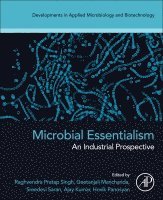
    Microbial Essentialism

    An Industrial Prospective

    AvRaghvendra Pratap Singh,Geetanjali Manchanda

    Häftad, Engelska, 2024

    Del i serien Developments in Applied Microbiology and Biotechnology

    1 672 kr

    Beställningsvara. Skickas inom 10-15 vardagar. Fri frakt över 249 kr.

    Beskrivning

    Microbial Essentialism: An Industrial Prospective refers to properties specifically possessed by microbes, including the secretion of metabolites which make them unique. These microorganisms can be commercially exploited for beneficial purposes such as the production of whole microbial cells, for products for direct use, or as starting raw materials in the manufacture of other commercial products. The book reviews the newest techniques, approaches, and options in the use of microorganisms for the manufacture of industrially important products such as pharmaceuticals, industrial enzymes, chemicals, proteins, foods and beverages, and fuels. Additional sections cover fundamental principles of established and innovative industrial microbiology and biotechnology processes and products while also discussing industrial microorganisms and the technology required for large-scale cultivation and isolation of fermentation products.

    • Covers key aspects of microbial physiology, exploring the versatility of microorganisms and their diverse metabolic activities and products
    • Provides methods and various traditional and novel applications of microorganisms to industrial processes
    • Contributed by a multidisciplinary group of experts who offer not only a thorough evaluation of the primary literature, but also invaluable first-hand experience in industrial microbiology and biotechnology

    Produktinformation

    • Utgivningsdatum:2024-03-14
    • Mått:191 x 235 x 32 mm
    • Vikt:1 280 g
    • Format:Häftad
    • Språk:Engelska
    • Serie:Developments in Applied Microbiology and Biotechnology
    • Antal sidor:622
    • Förlag:Elsevier Science
    • ISBN:9780443139321

    Utforska kategorier

    • Biokemisk teknik inom Naturvetenskap och teknik
    • Biologi inom Naturvetenskap och teknik

    Mer om författaren

    Dr. Raghvendra Pratap Singh is an eminent scientist in the Microbial Biotechnology. He has received his PhD from Gurukul Kangri University, India and is presently working in Research and Development Division, Uttaranchal University, Dehradun. Since 2014-2016, He worked as Research Scientist in Shandong University. His research contributions relate to the area of ecology of myxobacteria, plant-microbes interaction and microbial genomics. He is member of Aquatic Biodiversity Society and has a certification from Food and Drug association of India. He has received several awards and grants from various scientific agencies and societies such as Young Scientist award by ABA-2017, SERB-DST grant, Chinese Postdoctoral Grant, DBT travel grant etc. He has participated as Speaker in several National and International scientific meets and conferences such as FEMS-2013 in Stresa, Italy, Myxo-2016 in Switzerland, AMI, PTPB-2014 etc. Dr. Geetanjali Manchanda is working as Head of the Department of Botany and Environment Studies in DAV University, Jalandhar, India. She received MSc degree from Delhi University and PhD from Panjab University, Chandigarh. She has extensively worked on plant microbe interactions in stressed and contaminated environments with special focus on mycorrhizae for the fortification of various crops. She has received the prestigious research grants from DST, India, and IFS Sweden. She has contributed immensely to the scientific community by publishing research papers and book chapters. She had recently authored three books in which one book is on the use of omics technology for microbiology that has been published by ICAR, New Delhi, India. Dr. Sreedevi Sarsan completed her PhD in 2012 from Osmania University and is working as Head, Department of Microbiology and IQAC Coordinator of St. Pious X Degree & PG College for Women, Hyderabad. She has 18 years of teaching and research experience in Environmental microbiology, Soil microbiology, Food microbiology, Industrial Microbiology, agricultural microbiology, and other fields of applied microbiology. She has completed UGC funded project and guided many UG and PG student projects. To her credit, she has published a book and contributed a number of book chapters. She has organized conferences and chaired many academic and technical sessions at various national and International conferences/seminars /workshops. She has been awarded with Best Woman Faculty (by Novel Research Academy in 2020); IMRF Excellence Award (by International Multidisciplinary Research Foundation 2019); Best Citizen Gold Medal Award (by GEPRA in 2019); Best Scientist Award (by IMRF in 2016); Young Scientist Award (in 2012). Dr. Ajay Kumar is an Associate Professor in the Department of Industrial Microbiology, Sam Higginbottom University of Agriculture, Technology and Sciences, UP, India. Previously, he worked as Assistant Professor in the Department of Microbiology, Lovely Professional University, Punjab, India. He did his postdoctoral fellowship in molecular microbiology from North-West University- Mafikeng campus, South Africa. He is an active member of scientific society “Association of Microbiologist of India”. He has published more than 50 research articles including review papers/book chapters in the leading international journals/publishers. He also has a patent for the formulation of liquid biofertilizer with increased shelf life for sustainable agriculture. He has wide area of research experience, especially in the field of Plant-Microbe Interactions, and antibiotic resistance in food borne pathogens. Professor Hovik Panosyan graduated in Biology from Yerevan State University (YSU) in 1999. He received his PhD in microbiology from Institute of Botany of NAS of Armenia in 2003. He has been a faculty member at YSU since 2002 and was promoted to Associate Professor in 2011. His main research area is Microbial Ecology and Biology of Extremophilic Microbes. He has been awarded numerous research fellowships and awards including FEBS Short-Term Fellowship (2009 and 2004), FEMS Research Fellowship (2009), NFSAT (2011) DAAD (2013) and has participated in international research together with USA, European and Asian partners. Dr. Panosyan is actively engaged in studying of microbial community of extreme environments (terrestrial geothermal springs, alkali-saline soils, subterranean salt deposits, copper and molybdenum mines distributed on the territory of Armenia) based on culture-dependent and molecular techniques. He has published more than 60 research papers in peer-reviewed journals, 4 books and 25 chapters.

    Innehållsförteckning

    • 1. Essentialism of lactic acid bacteria and their role in production2. Probiotics: Beneficial microbes for health and the food industry3. Enterococci in the food industry: Friends or Foes?4. Dextran mediated nanoparticles and its various applications5. Bacterial biopolymers: Current status and future perspectives6. Biomedical applications of bacterial cellulose: Present status and future prospects7. Transaminases and aspartate ammonia-lyases as the biocatalysts for the syntheses of amino acids8. Phototrophic microorganisms as the future of green biotechnology9. Microbial enzymes in plastic degradation10. current state of research on biopolymer production by extremophilic microbes11. Biotechnological potential of cold adaptive extremozymes12. Psychobiotics and their Applications in Neuropsychiatry13. 5-Aminolevulinic acid production: Strategies for microbial biosynthesis advances and perspective14. Recent trends for enhancing oil recovery using microbial consortia15. Biosynthesis of nanoparticles by microorganisms and its potential to revolutionize antibiotic drug market16. Microbial secondary metabolites as therapeutic agents17. Microbial biosensor: A tool for effective bioremediation18. Plant Growth Promoting Fungi: A tool for agriculturally important industrial production19. Biodiversity, distribution, and practical application of nodule bacteria in Armenia with reference to global studies20. Bacillus antagonists: from rhizosphere to industry21. Emerging reservoir of eco-friendly resources within a natural endowment: Industrial application of bacterial and fungal endophytes22. Microbial inoculants for sustainable agriculture: present concepts and future perspectives23. Management of diversity and abundance of soil microorganisms to inhibit the occurrence of plant24. Microbial culture banks: a practice for sustainable future