• Fri frakt över 249 kr
  • •
  • Snabba leveranser
  • •
  • Billiga böcker
Kundservice

Du är på sajten för privatpersoner.

Företag, bibliotek eller offentlig verksamhet?

Du handlar på classic.bokus.com, där alla dina funktioner finns intakta.
Till classic.bokus.com
Bokus logotyp. Gå till startsidan.
  • Erbjudanden
  • Nyheter
  • Student
  • Topplistor
  • Barn & ungdom
  • Bokus Play
  • E-böcker
  • Pocketböcker
  • Spel & pussel

10% rabatt på allt med kod NYSTART10 →

Sidfot

Mina sidor

    Hjälp

    • Kundservice
    • Vanliga frågor och svar
    • Frakt och leverans
    • Retur vid ångerrätt
    • Reklamera vara
    • Betalning
    • Köpvillkor
    • Allmänna villkor
    • Information om webbplatsens tillgänglighet

    Om Bokus

    • Om oss
    • Pressrum
    • För studenter
    • För företag
    • För bibliotek och offentlig verksamhet
    • För leverantörer
    • Hållbarhet

    Populärt

    • Aktuella erbjudanden
    • Presentkort
    • Studentlitteratur
    • Nya böcker
    • Topplistor
    • Signerade böcker
    • Engelska böcker

    Inspiration

    • Boktips
    • BookTok
    • Populära bokserier
    • Barnbokskaraktärer
    • Populära författare
    Logotyp för Bokus
    Följ oss på Facebook (extern länk)Följ oss på Instagram (extern länk)Följ oss på YouTube (extern länk)Följ oss på TikTok (extern länk)
    bokus @ CookiesAnpassa cookiesIntegritetspolicyKöpvillkor
    Till Citymail hemsida (extern länk)Till Budbee hemsida (extern länk)Till Postnord hemsida (extern länk)Till Schenker hemsida (extern länk)Till Early Bird hemsida (extern länk)Till Walleys hemsida (extern länk)
    1. Naturvetenskap och teknik
    2. Matematik och naturvetenskap
    3. Fysik
    4. Tillämpad fysik

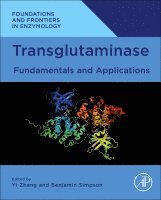
    Transglutaminase

    Fundamentals and Applications

    AvYi Zhang,Benjamin K. Simpson

    Häftad, Engelska, 2024

    Del i serien Foundations and Frontiers in Enzymology

    1 672 kr

    Beställningsvara. Skickas inom 10-15 vardagar. Fri frakt över 249 kr.

    Beskrivning

    Transglutaminase: Fundamentals and Applications, a new volume in the Foundations and Frontiers in Enzymology series, stands as a comprehensive resource on this increasingly important class of enzymes. Following an introduction to the field, international experts discuss basic biology and structure - function relationships of transglutaminases, ongoing fundamental research, and new application areas, including food processing, material synthesis, biomedicine, disease treatment, and biotechnology. Approaches for sourcing transglutaminases from animals, plants, and microorganisms are considered, followed by chapters on applied uses in biomedicine, skin, bone biology, medicine, drug development, tissue engineering, seafood bioprocessing, dairy bioprocessing, synthesis of materials and polymers, and as an immobilization agent.

    Research protocols are also provided, including research rationale, design, substrates, assays, and microassay steps for studying transglutaminases.

    • Brings together basic knowledge and applied research on transglutaminase biology
    • Considers a range of application areas, from biomedicine to drug development, tissue engineering, food processing, and materials synthesis
    • Includes instructive protocols for basic and applied transglutaminase research
    • Features chapter contributions from global leading experts in the field, across disciplines and applications

    Produktinformation

    • Utgivningsdatum:2024-02-29
    • Mått:191 x 235 x 21 mm
    • Vikt:810 g
    • Format:Häftad
    • Språk:Engelska
    • Serie:Foundations and Frontiers in Enzymology
    • Antal sidor:382
    • Förlag:Elsevier Science
    • ISBN:9780443191688

    Utforska kategorier

    • Tillämpad fysik inom Naturvetenskap och teknik
    • Biokemi inom Naturvetenskap och teknik
    • Biokemisk teknik inom Naturvetenskap och teknik

    Mer om författaren

    Dr. Yi Zhang received her BSc & MSc at Ocean University of China, and her PhD & postdoctoral training at McGill University, Canada. She was a Commonwealth Blue Charter Fellow. To-date, Dr. Zhang has published 30 papers and 5 book chapters in the areas of enzymology, agricultural biochemistry, and biological sciences. Professor Benjamin Simpson is a graduate in Biochemistry from Memorial University of Newfoundland, where he also carried out postdoctoral work till December 1985. He joined the Food Science Department at McGill in June 1987 after spending a period of time at the Institute of Food & Agricultural Sciences (IFAS), University of Florida at Gainesville in the USA, as a Research Associate from January 1986 to April, 1987. His research program involves the post-mortem biochemistry of marine organisms, in relation to enzymes. Specifically on digestive enzymes from marine animals, their characterization to discover their unique properties that may make them better suited for particular applications compared with their traditional counterparts; role of enzymes in color and texture deterioration in fish and shellfish and development of strategies to control the deleterious effects of enzymes in foods during processing and storage; and the use of enzymes in transforming discards from food harvesting / processing into value added products of commercial relevance. Examples of the value-added products prepared by the enzyme assisted procedures include natural food pigments, proteins, bioactive peptides, flavor compounds and chitin, etc., for use as food processing aids. Dr. Simpson is responsible for teaching Food Commodities, Food Chemistry 2 and Enzymology.

    Innehållsförteckning

    • An introduction to transglutaminasesYi Zhang, Srividya Parthasarathy, and Benjamin K. SimpsonChapter 1 Transglutaminases from microorganisms Limin Wang and Yi Wang1. Introduction 2. Microbial sources of TGase3. Biotechnological production of MTGase4. Concluding remarks and outlookReferencesChapter 2 Transglutaminases from plant sourcesStefano Del Duca and Giampiero Cai1. Introduction2. Phylogenetic relationship and bioinformatic analyses3. Distribution and physiological roles of TGases in plants4. Conclusions References Chapter 3 Transglutaminases from animals Jirawat Yongsawatdigul, Ali Hamzeh and Bung-orn Hemung1. Introduction 2. Function and distribution3. ConclusionsReferences Chapter 4 Newly engineered transglutaminasesHan Liu, Ishita Ghosh, Corinne Nardin and Yi Zhang1. Introduction 2. Methodology for engineering transglutaminases 3. Newly engineered microbial transglutaminases 4. Newly engineered animal transglutaminases 5. Regulations References Chapter 5 Transglutaminase 2 in neurological conditions Thomas Delgado and Gail V.W. Johnson1. Discovery of TG2 and its association with proteinopathies 2. TG2’s complex role in neuron survival 3. TG2 in CNS injury and neuroinflammation 4. Epigenetic regulation by TG2 5. Conclusions References Chapter 6 Transglutaminases in cardiovascular health and disease Lakshmi SanthanamAbbreviations 1. Introduction2. Transglutaminases in the cardiovascular system 3. Transglutaminases in vascular diseases 4. Transglutaminases in cardiac disease 5. Transglutaminases in thromboembolism 6. Conclusions and future perspectives References Chapter 7 Microbial transglutaminase in drug development Riko Nishioka, Ryo Sato, Kazuki Uchida, Rie Wakabayashi and Noriho Kamiya1. Introduction 2. Protein modification using small molecule substrates3. Preparation of proteineprotein conjugates 4. Protein modification using synthetic polymeric substrates 5. Introduction of hydrophobic molecules into proteins6. ConclusionAcknowledgmentsReferencesChapter 8 Transglutaminases in meat and seafood bioprocessing Pınar Yerlikaya and Nalan Gokoglu1. Transglutaminases in meat bioprocessing 2. Transglutaminases in seafood bioprocessing 3. Conclusion References Chapter 9 Transglutaminase in dairy processing Ehab Romeih, Marek Kieliszek and Essam Hebishy1. Introduction 2. MTGase applications in dairy processing 3. Conclusions and future remarks References Chapter 10 Transglutaminase in noodles, pastas, and baked productsSeyed Mohammad Taghi Gharibzahedi and Zeynep Altintas1. Introduction 2. Noodle and TGase 3. Pasta and TGase 4. Bread and TGase 5. Other bakery products and TGase 6. Health and nutritional properties7. Conclusions Acknowledgments References Chapter 11 Transglutaminase in textile, wool, silk, and leather processing Ning Zhang, Penghui Yang, Man Zhou, Qiang Wang, Song Liu and Jian Chen1. Transglutaminase in wool processing 2. Transglutaminase in silk processing 3. Transglutaminase in leather processing 4. Conclusion References Chapter 12 Immobilization of transglutaminases and transglutaminase as immobilization agent Katja Vasic, Zeljko Knez and Maja Leitgeb1. Introduction 2. Enzymatic properties of TGase 3. Production and substrate preference of TGase 4. TGase immobilization 5. TGase as immobilizing agent in food andbiotechnology industries 6. ConclusionsAcknowledgments References Chapter 13 Industrial production of transglutaminase Keiichi Yokoyama1. Background to food innovation with transglutaminase2. Feasibility study on protein modification by TGase3. Search for a TGase for industrial applications 4. Developments for MTGase commercialization 5. MTGase in nature 6. Recombinant production of MTGase 7. MTGase variants with improved properties 8. Food safety and regulation 9. Concluding remarks References Further reading Index