• Fri frakt över 249 kr
  • •
  • Snabba leveranser
  • •
  • Billiga böcker
Kundservice

Du är på sajten för privatpersoner.

Företag, bibliotek eller offentlig verksamhet?

Du handlar på classic.bokus.com, där alla dina funktioner finns intakta.
Till classic.bokus.com
Bokus logotyp. Gå till startsidan.
  • Erbjudanden
  • Nyheter
  • Student
  • Topplistor
  • Barn & ungdom
  • Bokus Play
  • E-böcker
  • Pocketböcker
  • Spel & pussel

10% rabatt på allt med kod: NYSTART10 →

Sidfot

Mina sidor

    Hjälp

    • Kundservice
    • Vanliga frågor och svar
    • Frakt och leverans
    • Retur vid ångerrätt
    • Reklamera vara
    • Betalning
    • Köpvillkor
    • Allmänna villkor
    • Information om webbplatsens tillgänglighet

    Om Bokus

    • Om oss
    • Pressrum
    • För studenter
    • För företag
    • För bibliotek och offentlig verksamhet
    • För leverantörer
    • Hållbarhet

    Populärt

    • Aktuella erbjudanden
    • Presentkort
    • Studentlitteratur
    • Nya böcker
    • Topplistor
    • Signerade böcker
    • Engelska böcker

    Inspiration

    • Boktips
    • BookTok
    • Populära bokserier
    • Barnbokskaraktärer
    • Populära författare
    Logotyp för Bokus
    Följ oss på Facebook (extern länk)Följ oss på Instagram (extern länk)Följ oss på YouTube (extern länk)Följ oss på TikTok (extern länk)
    bokus @ CookiesAnpassa cookiesIntegritetspolicyKöpvillkor
    Till Citymail hemsida (extern länk)Till Budbee hemsida (extern länk)Till Postnord hemsida (extern länk)Till Schenker hemsida (extern länk)Till Early Bird hemsida (extern länk)Till Walleys hemsida (extern länk)
    1. Naturvetenskap och teknik
    2. Matematik och naturvetenskap
    3. Biologi
    4. Biovetenskap

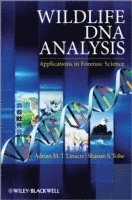
    Wildlife DNA Analysis

    Applications in Forensic Science

    AvAdrian Linacre,Shanan Tobe

    Häftad, Engelska, 2013

    Del i serien Essentials of Forensic Science

    773 kr

    Beställningsvara. Skickas inom 5-8 vardagar. Fri frakt över 249 kr.

    Beskrivning

    WILDLIFE DNA ANALYSIS Applications in Forensic ScienceDNA typing of non-human DNA is a fast developing area of research and professional practice. The application of DNA typing in wildlife forensic science is one of these prime uses of DNA typing and is gaining increasing profile. The use of DNA profiling in wildlife forensic science falls into two broad areas: species testing and genetic linkage. Species testing answers the question 'what species is this?' and genetic linkage answers the question 'did these two samples come from the same organism or population?' Wildlife DNA Analysis: Applications in Forensic Science provides an accessible introduction to both of these key areas.Clearly structured throughout, the introduction highlights the different types of crime where these techniques are regularly used. This chapter includes a discussion as to who performs forensic wildlife examinations, the standardisation and validation of methods, and the role of the expert witness in this type of alleged crime. This is followed by a detailed section on the science behind DNA typing including the problems in isolating DNA from trace material and subsequent genetic analysis are also covered. The book then undertakes a comprehensive review of species testing using DNA, including a step-by-step guide to sequence comparisons. A comparison of the different markers used in species testing highlights the criteria for a genetic marker. A full set of case histories illustrates the use of the different markers used. The book details the use of genetic markers to link two or more hairs/feathers/leaves/needles to the same individual organism and the software used in population assignment. The problems and possibilities in isolating markers, along with the construction of allele databases are discussed. The book concludes with evaluation and reporting of genetic evidence in wildlife forensic science illustrated by examples of witness statements. An accessible introduction to this fast developing area of research within forensic science.Case studies throughout to link theory and practice and to highlight the use of DNA testing in species testing.Covers both crimes against wildlife and offences where wildlife can provide vital evidence.Assumes only a basic background knowledge of DNA.Includes a comprehensive review of species testing using DNA, including a step-by-step guide to sequence comparisons.

    Produktinformation

    • Utgivningsdatum:2013-05-10
    • Mått:169 x 245 x 16 mm
    • Vikt:553 g
    • Format:Häftad
    • Språk:Engelska
    • Serie:Essentials of Forensic Science
    • Antal sidor:352
    • Förlag:John Wiley and Sons Ltd
    • ISBN:9780470665961

    Utforska kategorier

    • Biovetenskap inom Naturvetenskap och teknik
    • Zoologi inom Naturvetenskap och teknik
    • Djurböcker inom Djur och Natur

    Mer om författaren

    Adrian M. T. Linacre, Flinders University, Adelaide, Australia.Shanan S. Tobe, University of Strathclyde, Glasgow, UK.

    Innehållsförteckning

    • Foreword ixPreface xiAbout the Authors xiiiAcknowledgements xv1 Introduction 11.1 Importance of wildlife forensic science investigations 11.2 Role of forensic science in wildlife crimes 31.3 Legislation covering wildlife crime 41.4 Role of non-human DNA in forensic science 81.5 Development of wildlife DNA testing 91.5.1 History and current state of wildlife DNA forensic science 101.5.2 Wildlife forensic science testing 111.5.3 Performing DNA typing in wildlife investigations 131.6 Accreditation and certification 141.7 Standardisation and validation 201.8 Collection of evidential material, continuity of evidence and transportation to the laboratory 241.9 Note taking and maintenance of a casefile 291.10 Case assessment and initial testing 301.11 Scope of book 32Useful websites 32References 332 DNA, Genomes and Genetic Variation 372.1 Introduction 372.2 The DNA molecule 372.3 Chromosomes and nuclear DNA 392.4 Genomes 412.4.1 Nuclear DNA 412.4.2 Mitochondrial and chloroplast DNA 442.5 DNA mutation and genetic variation 472.5.1 Genetic variation of repetitive DNA 482.5.2 Single base changes leading to genetic variation 482.5.3 Genetic loci used in species testing 502.6 DNA polymorphisms leading to speciation 532.6.1 Genetic isolation 542.6.2 Other processes leading to speciation 562.7 What is a species? 562.7.1 Subspecies 602.7.2 Genus to Kingdom 612.8 Summary 63References 643 Methods in Wildlife Forensic DNA Analysis 693.1 Introduction 693.2 Protein polymorphisms 693.3 DNA isolation, purification and concentration 703.3.1 Generic aspects of DNA isolation 703.3.2 Lysis step 713.3.3 DNA purification: silica-based extraction 723.3.4 DNA purification: Chelex R○ 100 resin 733.3.5 DNA purification: organic extraction 743.3.6 Microconcentration 763.4 DNA quantification 763.5 Restriction fragment length polymorphisms (RFLP) 783.6 Methods based on the polymerase chain reaction 813.6.1 Factors affecting PCR efficiency and optimisation of PCR 843.6.2 PCR-based methods of DNA quantification 883.6.3 Random amplification of polymorphic DNA 913.6.4 Amplification of fragment length polymorphisms (AFLP) 933.7 PCR set-up 953.8 PCR clean-up 983.9 DNA sequencing 993.10 SNP typing 1003.11 New generation of DNA sequence methods 102Suggested reading 1044 Species Testing 1054.1 Introduction 1054.2 Species 1064.2.1 Genetic variation and correspondence with taxonomy 1064.3 Attributes of a species testing locus 1064.4 Application of a locus to a species 1104.5 Tests available and how they are performed 1104.5.1 Sequencing 1114.5.2 Species-specific primers 1244.6 Developing a species test 1274.6.1 Use of data on GenBank and sequence alignment 1284.6.2 Designing primers 1354.6.3 Validation 1564.7 Interpretation and reporting of results 1594.7.1 Interpretation and reporting sequencing results 1604.7.2 Interpretation and reporting species-specific testing results 1694.8 Other limitations: hybrids and wild/captive bred 1714.9 Future methodologies 173References 1735 Genetic Linkage 1775.1 Introduction 1775.2 Whole genome testing 1775.3 Types of individualisation testing 1785.3.1 Short Tandem Repeats 1795.4 Identifying STR loci 1825.4.1 DNA libraries 1835.4.2 Locating novel microsatellite motifs using Next Generation Sequencing 1845.5 Allele databases 1905.5.1 Number of theoretical genotypes 1925.5.2 Allelic ladders 1925.6 Hardy–Weinberg equilibrium 1935.7 Kinship factors and accounting for shared alleles 1995.7.1 Rare or absent alleles on the database 2025.8 Assessing the suitability of STR loci 2035.8.1 The Genetic Data Analysis software (GDA) 2055.8.2 The Excel Microsatellite Toolkit 2145.8.3 Arlequin 2205.8.4 API-Calc 2285.8.5 Genepop 2305.8.6 Fstat 2355.8.7 Structure 2365.8.8 Summary 2425.9 Genetic assignment: paternity testing 2445.9.1 Genetic assignment: paternity testing if one parent is not available 2495.9.2 Genetic assignment in paternity testing, incorporating kinship factor 2515.10 Concluding comments 253References 2546 Interpretation, Evaluation and Reporting of Results 2596.1 Introduction 2596.2 Case assessment 2606.3 Hierarchies of propositions 2616.4 DNA evidence evaluation 2626.4.1 The frequentist approach 2636.4.2 Likelihood ratios 2646.4.3 The Bayesian approach 2666.4.4 Comparison of the three approaches 2676.5 Evaluation of DNA evidence in wildlife cases 2696.5.1 Case scenario 1 2696.5.2 Case scenario 2 2716.5.3 Case scenario 3 2726.6 Role of the expert witness 2736.7 Report writing 2756.8 Summary and comments 277Statement of witness 278References 299Measurements 303Glossary 305Appendix A Simulated Sample Populations 311Appendix B Useful websites 323Index 325