• Fri frakt över 249 kr
  • •
  • Snabba leveranser
  • •
  • Billiga böcker
Kundservice

Du är på sajten för privatpersoner.

Företag, bibliotek eller offentlig verksamhet?

Du handlar på classic.bokus.com, där alla dina funktioner finns intakta.
Till classic.bokus.com
Bokus logotyp. Gå till startsidan.
  • Erbjudanden
  • Nyheter
  • Student
  • Topplistor
  • Barn & ungdom
  • Bokus Play
  • E-böcker
  • Pocketböcker
  • Spel & pussel

Må bättre, för mindre! Upp till 50% rabatt på hälsoböcker

Sidfot

Mina sidor

    Hjälp

    • Kundservice
    • Vanliga frågor och svar
    • Frakt och leverans
    • Retur vid ångerrätt
    • Reklamera vara
    • Betalning
    • Köpvillkor
    • Allmänna villkor
    • Information om webbplatsens tillgänglighet

    Om Bokus

    • Om oss
    • Pressrum
    • För studenter
    • För företag
    • För bibliotek och offentlig verksamhet
    • För leverantörer
    • Hållbarhet

    Populärt

    • Aktuella erbjudanden
    • Presentkort
    • Studentlitteratur
    • Nya böcker
    • Topplistor
    • Signerade böcker
    • Engelska böcker

    Inspiration

    • Boktips
    • BookTok
    • Populära bokserier
    • Barnbokskaraktärer
    • Populära författare
    Logotyp för Bokus
    Följ oss på Facebook (extern länk)Följ oss på Instagram (extern länk)Följ oss på YouTube (extern länk)Följ oss på TikTok (extern länk)
    bokus @ CookiesAnpassa cookiesIntegritetspolicyKöpvillkor
    Till Citymail hemsida (extern länk)Till Budbee hemsida (extern länk)Till Postnord hemsida (extern länk)Till Schenker hemsida (extern länk)Till Early Bird hemsida (extern länk)Till Walleys hemsida (extern länk)
    1. Samhälle och politik
    2. Politik och statsskick
    3. Politiska ideologier och rörelser

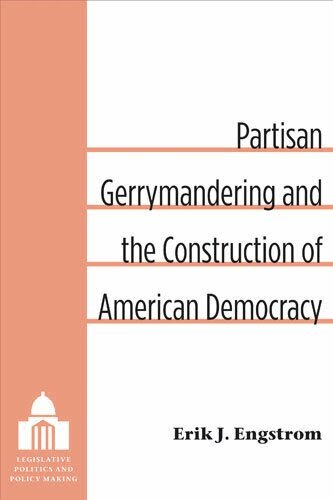
    Partisan Gerrymandering and the Construction of American Democracy

    AvErik J. Engstrom

    Häftad, Engelska, 2016

    Del i serien Legislative Politics and Policy Making

    375 kr

    Beställningsvara. Skickas inom 5-8 vardagar. Fri frakt över 249 kr.

    Beskrivning

    Erik J. Engstrom offers a historical perspective on the effects of gerrymandering on elections and party control of the U.S. national legislature. Aside from the requirements that districts be continuous and, after 1842, that each select only one representative, there were few restrictions on congressional districting. Unrestrained, state legislators drew and redrew districts to suit their own partisan agendas. With the rise of the “one-person, one-vote” doctrine and the implementation of the Voting Rights Act of 1965, however, redistricting became subject to court oversight.Engstrom evaluates the abundant cross-sectional and temporal variation in redistricting plans and their electoral results from all the states, from 1789 through the 1960s, to identify the causes and consequences of partisan redistricting. His analysis reveals that districting practices across states and over time systematically affected the competitiveness of congressional elections, shaped the partisan composition of congressional delegations, and, on occasion, determined party control of the House of Representatives.

    Produktinformation

    • Utgivningsdatum:2016-01-20
    • Mått:152 x 229 x undefined mm
    • Format:Häftad
    • Språk:Engelska
    • Serie:Legislative Politics and Policy Making
    • Antal sidor:236
    • Förlag:The University of Michigan Press
    • ISBN:9780472036578

    Utforska kategorier

    • Politiska ideologier och rörelser inom Samhälle och politik
    • Statsskick: demokrati inom Samhälle och politik
    • Val och folkomröstningar inom Samhälle och politik

    Mer om författaren

    Erik J. Engstrom is Professor of Political Science at the University of California, Davis.

    Recensioner i media

    "Explorations of American political history often demonstrate that patterns or influences familiar today also existed in the past. Erik Engstrom’s new book Partisan Gerrymandering and the Construction of American Democracy does not fit that mold. In the course of a thoroughgoing examination of redistricting in the nineteenth century, Professor Engstrom addresses a major contemporary disconnect between the beliefs of practicing politicians and the prevailing conclusions of the academic community. Both Democrats and Republicans expend significant resources trying to position their party to draw post-census maps for Congress and state legislatures and, if unsuccessful in those efforts, they attack the handiwork of the opposition in the courts. Despite the significance accorded redistricting by practicing politicians, the consensus among political scientists is that gerrymandering has little impact on party fortunes. Professor Engstrom makes a compelling case that, in the past, the creation of districts made a difference, at times even tilting the balance in Congress and thereby impacting consequential policy decisions. This meticulously researched volume explores the consequences of districting—or, as in the early days of the republic—the decision by some states not to district, but to elect their delegations at-large." --Congress & the Presidency