• Fri frakt över 249 kr
  • •
  • Snabba leveranser
  • •
  • Billiga böcker
Kundservice

Du är på sajten för privatpersoner.

Företag, bibliotek eller offentlig verksamhet?

Du handlar på classic.bokus.com, där alla dina funktioner finns intakta.
Till classic.bokus.com
Bokus logotyp. Gå till startsidan.
  • Erbjudanden
  • Nyheter
  • Student
  • Topplistor
  • Barn & ungdom
  • Bokus Play
  • E-böcker
  • Pocketböcker
  • Spel & pussel

10% studentrabatt med kod TERM26

Sidfot

Mina sidor

    Hjälp

    • Kundservice
    • Vanliga frågor och svar
    • Frakt och leverans
    • Retur vid ångerrätt
    • Reklamera vara
    • Betalning
    • Köpvillkor
    • Allmänna villkor
    • Information om webbplatsens tillgänglighet

    Om Bokus

    • Om oss
    • Pressrum
    • För studenter
    • För företag
    • För bibliotek och offentlig verksamhet
    • För leverantörer
    • Hållbarhet

    Populärt

    • Aktuella erbjudanden
    • Presentkort
    • Studentlitteratur
    • Nya böcker
    • Topplistor
    • Signerade böcker
    • Engelska böcker

    Inspiration

    • Boktips
    • BookTok
    • Populära bokserier
    • Barnbokskaraktärer
    • Populära författare
    Logotyp för Bokus
    Följ oss på Facebook (extern länk)Följ oss på Instagram (extern länk)Följ oss på YouTube (extern länk)Följ oss på TikTok (extern länk)
    bokus @ CookiesAnpassa cookiesIntegritetspolicyKöpvillkor
    Till Citymail hemsida (extern länk)Till Budbee hemsida (extern länk)Till Postnord hemsida (extern länk)Till Schenker hemsida (extern länk)Till Early Bird hemsida (extern länk)Till Walleys hemsida (extern länk)
    1. Historia och arkeologi
    2. Historia
    3. Asiens historia

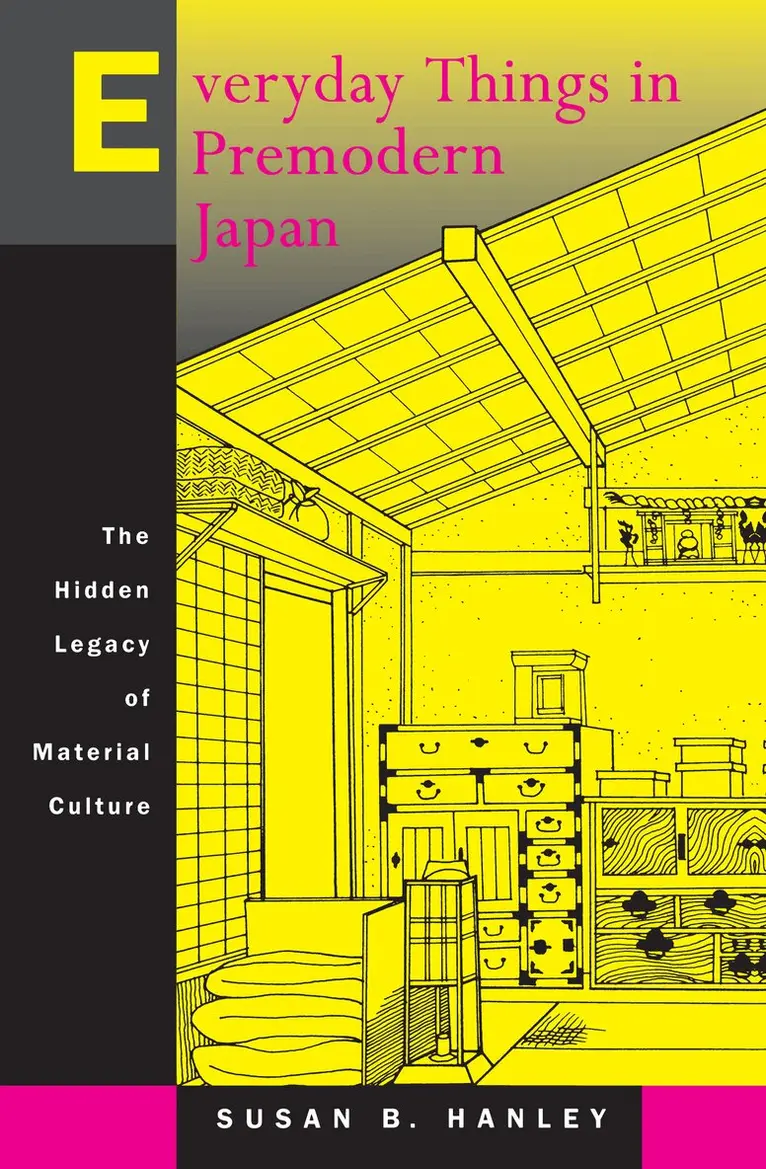
    Everyday Things in Premodern Japan

    The Hidden Legacy of Material Culture

    AvSusan B. Hanley

    Häftad, Engelska, 1999

    Del i serien University of California Press

    276 kr

    Beställningsvara. Skickas inom 5-8 vardagar. Fri frakt över 249 kr.

    Beskrivning

    Japan was the only non-Western nation to industrialize before 1900 and its leap into the modern era has stimulated vigorous debates among historians and social scientists. In an innovative discussion that posits the importance of physical well-being as a key indicator of living standards, Susan B. Hanley considers daily life in the three centuries leading up to the modern era in Japan. She concludes that people lived much better than has been previously understood - at levels equal or superior to their Western contemporaries. She goes on to illustrate how this high level of physical well-being had important consequences for Japan's ability to industrialize rapidly and for the comparatively smooth transition to a modern, industrial society. While others have used income levels to conclude that the Japanese household was relatively poor in those centuries, Hanley examines the material culture - food, sanitation, housing, and transportation. How did ordinary people conserve the limited resources available in this small island country? What foods made up the daily diet and how were they prepared? How were human wastes disposed of? How long did people live?Hanley answers all these questions and more in an accessible style and with frequent comparisons with Western lifestyles. Her methods allow for cross-cultural comparisons between Japan and the West as well as Japan and the rest of Asia. They will be useful to anyone interested in the effects of modernization on daily life.

    Produktinformation

    • Utgivningsdatum:1999-06-08
    • Mått:152 x 229 x 18 mm
    • Vikt:363 g
    • Format:Häftad
    • Språk:Engelska
    • Serie:University of California Press
    • Antal sidor:227
    • Förlag:University of California Press
    • ISBN:9780520218123

    Utforska kategorier

    • Asiens historia inom Historia och arkeologi
    • Antropologi inom Samhälle och politik
    • Ekonomisk historia inom Ekonomi och Ledarskap

    Mer om författaren

    Susan B. Hanley is Professor of Japanese Studies and History at the University of Washington. She is coeditor of Family and Population in East Asian History (1985).

    Innehållsförteckning

    • LIST OF ILLUSTRATIONSPREFACENOTE ON TRANSLITERATIONIThe Level of Physical Well-Being in Tokugawa Japan2Housing and Furnishings3A Resource-Efficient Culture4A Healthful Lifestyle5Urban Sanitation and Physical Well-Being6Demographic Patterns and Well-Being7Stability in Transition: From the Tokugawa Periodto the Meiji Period8Physical Well-Being: A Comparative PerspectiveGLOSSARYINDEX