• Fri frakt över 249 kr
  • •
  • Snabba leveranser
  • •
  • Billiga böcker
Kundservice

Du är på sajten för privatpersoner.

Företag, bibliotek eller offentlig verksamhet?

Du handlar på classic.bokus.com, där alla dina funktioner finns intakta.
Till classic.bokus.com
Bokus logotyp. Gå till startsidan.
  • Erbjudanden
  • Nyheter
  • Student
  • Topplistor
  • Barn & ungdom
  • Bokus Play
  • E-böcker
  • Pocketböcker
  • Spel & pussel

10% rabatt på allt med kod: NYSTART10 →

Sidfot

Mina sidor

    Hjälp

    • Kundservice
    • Vanliga frågor och svar
    • Frakt och leverans
    • Retur vid ångerrätt
    • Reklamera vara
    • Betalning
    • Köpvillkor
    • Allmänna villkor
    • Information om webbplatsens tillgänglighet

    Om Bokus

    • Om oss
    • Pressrum
    • För studenter
    • För företag
    • För bibliotek och offentlig verksamhet
    • För leverantörer
    • Hållbarhet

    Populärt

    • Aktuella erbjudanden
    • Presentkort
    • Studentlitteratur
    • Nya böcker
    • Topplistor
    • Signerade böcker
    • Engelska böcker

    Inspiration

    • Boktips
    • BookTok
    • Populära bokserier
    • Barnbokskaraktärer
    • Populära författare
    Logotyp för Bokus
    Följ oss på Facebook (extern länk)Följ oss på Instagram (extern länk)Följ oss på YouTube (extern länk)Följ oss på TikTok (extern länk)
    bokus @ CookiesAnpassa cookiesIntegritetspolicyKöpvillkor
    Till Citymail hemsida (extern länk)Till Budbee hemsida (extern länk)Till Postnord hemsida (extern länk)Till Schenker hemsida (extern länk)Till Early Bird hemsida (extern länk)Till Walleys hemsida (extern länk)
    1. Naturvetenskap och teknik
    2. Matematik och naturvetenskap
    3. Biologi
    4. Biovetenskap

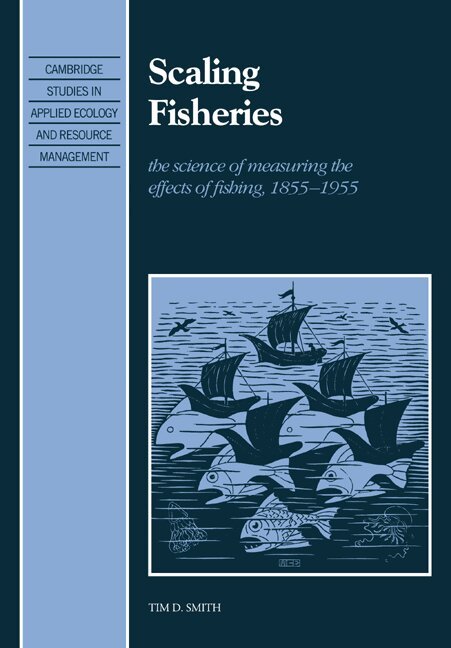
    Scaling Fisheries

    The Science of Measuring the Effects of Fishing, 1855-1955

    AvTim D. Smith

    Häftad, Engelska, 2007

    Del i serien Cambridge Studies in Applied Ecology and Resource Management

    1 013 kr

    Beställningsvara. Skickas inom 10-15 vardagar. Fri frakt över 249 kr.

    Fler format och utgåvor

    Inbunden

    2 099 kr

    Beskrivning

    Since the industrialization of fishing, fisheries scientists have been subject to intense economic and political pressures, which have affected the way the science has developed. The origins and effects of these pressures are traced in this 1994 book to concerns about determining the causes of fluctuations in fish and whale catches, and to resistance to regulation of fishing activity when populations are depleted. The development of partial theories of fish population dynamics are described using examples of both national and international fisheries. The causes of the difficulties encountered in generalizing these theories are examined, setting the stage for the limitation of scope of these studies that still influences the form and extent of fisheries research today. This is a fascinating resource for all those interested in fisheries science and the way it has developed in the last 150 years.

    Produktinformation

    • Utgivningsdatum:2007-08-16
    • Mått:167 x 242 x 20 mm
    • Vikt:648 g
    • Format:Häftad
    • Språk:Engelska
    • Serie:Cambridge Studies in Applied Ecology and Resource Management
    • Antal sidor:412
    • Förlag:Cambridge University Press
    • ISBN:9780521038966

    Utforska kategorier

    • Biovetenskap inom Naturvetenskap och teknik
    • Vattendjur inom Djur och Natur
    • Fiskar inom Naturvetenskap och teknik

    Recensioner i media

    'Tim Smith's book makes interesting reading for scientists and historians …' J. H. S. Blaxter, Nature

    Innehållsförteckning

    • Frontispiece; Acknowledgements; Units used in the text; Part I. Introduction: 1. Fluctuations, the very essence of ecosystems; Part II. Developing Methods, 1855–1940: 2. Research approaches, 1855–90; 3. Measuring the effect of fishing, 1890–1900; 4. The International Council for the Exploration of the Sea, 1900–20; 5. Predicting fluctuations, 1920–30; 6. A priori methods, 1930–40; Part III. Three Partial Theories, 1940–55: 7. Middling in size; 8. How many parents are enough?; 9. Steady state yield; 10. Integration: self-regenerating populations and the bionomic ecosystem; Notes; References; Index of people; Subject index.