• Fri frakt över 249 kr
  • •
  • Snabba leveranser
  • •
  • Billiga böcker
Kundservice

Du är på sajten för privatpersoner.

Företag, bibliotek eller offentlig verksamhet?

Du handlar på classic.bokus.com, där alla dina funktioner finns intakta.
Till classic.bokus.com
Bokus logotyp. Gå till startsidan.
  • Erbjudanden
  • Nyheter
  • Student
  • Topplistor
  • Barn & ungdom
  • Bokus Play
  • E-böcker
  • Pocketböcker
  • Spel & pussel

10% rabatt på allt med kod: NYSTART10 →

Sidfot

Mina sidor

    Hjälp

    • Kundservice
    • Vanliga frågor och svar
    • Frakt och leverans
    • Retur vid ångerrätt
    • Reklamera vara
    • Betalning
    • Köpvillkor
    • Allmänna villkor
    • Information om webbplatsens tillgänglighet

    Om Bokus

    • Om oss
    • Pressrum
    • För studenter
    • För företag
    • För bibliotek och offentlig verksamhet
    • För leverantörer
    • Hållbarhet

    Populärt

    • Aktuella erbjudanden
    • Presentkort
    • Studentlitteratur
    • Nya böcker
    • Topplistor
    • Signerade böcker
    • Engelska böcker

    Inspiration

    • Boktips
    • BookTok
    • Populära bokserier
    • Barnbokskaraktärer
    • Populära författare
    Logotyp för Bokus
    Följ oss på Facebook (extern länk)Följ oss på Instagram (extern länk)Följ oss på YouTube (extern länk)Följ oss på TikTok (extern länk)
    bokus @ CookiesAnpassa cookiesIntegritetspolicyKöpvillkor
    Till Citymail hemsida (extern länk)Till Budbee hemsida (extern länk)Till Postnord hemsida (extern länk)Till Schenker hemsida (extern länk)Till Early Bird hemsida (extern länk)Till Walleys hemsida (extern länk)
    1. Ekonomi och Ledarskap
    2. Industrier och branscher
    3. Arbetsmarknaden

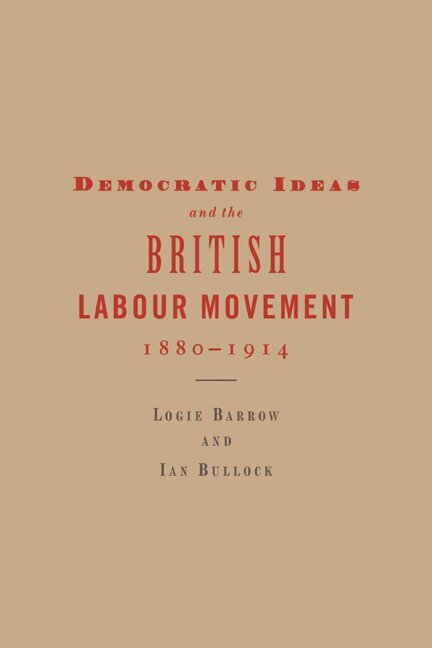
    Democratic Ideas and the British Labour Movement, 1880-1914

    AvLogie Barrow,Ian Bullock

    Inbunden, Engelska, 1996

    1 214 kr

    Beställningsvara. Skickas inom 10-15 vardagar. Fri frakt över 249 kr.

    Fler format och utgåvor

    Häftad

    638 kr

    Beskrivning

    This is the first detailed survey of democratic ideas on the British Left in the period leading to 1914. Socialists of the late nineteenth century inherited assumptions about the priority of democracy from a long tradition of British Radicalism. However, the advent of the Fabians, who rejected this tradition as primitive, and of an ILP leadership more concerned to enter than reform parliament, meant that the movement was split between 'strong' and 'weak' views of democracy. By the eve of the First World War a consensus was emerging that might have formed the basis for a more realistic and more radical approach to democracy than has actually been pursued by the Labour Party and the Left during the twentieth century. Democratic Ideas and the British Labour Movement assesses an important debate in the history of socialist ideas and in the formation of the British Labour movement.

    Produktinformation

    • Utgivningsdatum:1996-03-07
    • Mått:152 x 229 x 22 mm
    • Vikt:670 g
    • Format:Inbunden
    • Språk:Engelska
    • Antal sidor:338
    • Förlag:Cambridge University Press
    • ISBN:9780521560429

    Utforska kategorier

    • Arbetsmarknaden inom Ekonomi och Ledarskap
    • Kulturvetenskap inom Samhälle och politik

    Recensioner i media

    'It traces the importance of democracy from those who took on the mantle of the Chartists, to those who came together to form the Labour Party, and from those who believed in strong democracy to those who believed that they could change the world simply by being in power without winning the arguments among the majority of the electorate.' Chartist

    Innehållsförteckning

    • Acknowledgements; Introduction; Part I: 1. The survival of Chartist assumptions; 2. Democracy and socialism in the 1890s; 3. Democracy and the industrial struggle; Part II: 4. Conflicts in the ILP; 5. The pressure to federate: the industrial struggle in the late 1890s; 6. The rise and fall of the Clarion Federation; Part III: 7. The early 1900s: a hinge period; 8. Socialists and the state; 9. Parliamentary socialism? Labour in parliament; 10. Parliamentary democracy? 'Fred's obsession' and the path to the Bradford resolution; 11. Background to sydicalism: the legacy of the NIGFLTU's failure; 12. Avoiding the 'Servile State'. The impact of syndicalism and guild socialism; 13. 1914: an emerging consensus on the eve of Armageddon; 14. Conclusions; Appendix. Federation for local Labour historians - and for national; Index.