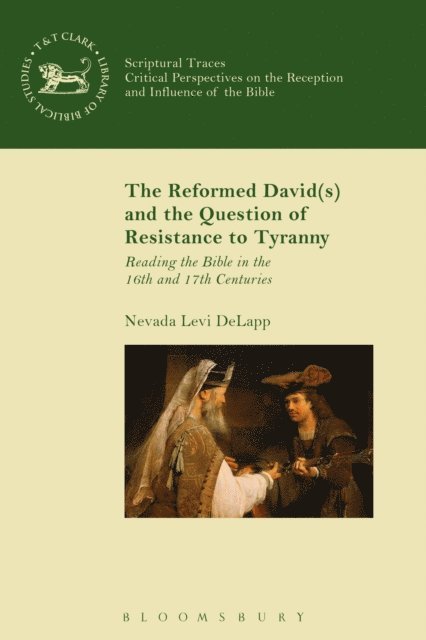
E-bok, Engelska, 2014
Reformed David(s) and the Question of Resistance to Tyranny
608 kr
Läs direkt i Bokus Reader – eller ladda ned till din enhet (PDF kräver ofta zoom och scroll på små skärmar).
Beskrivning
This study centers on the question: how do particular readers read a biblical passage? What factors govern each reading? DeLapp here attempts to set up a test case for observing how both socio-historical and textual factors play a part in how a person reads a biblical text. Using a reception-historical methodology, he surveys five Reformed authors and their readings of the David and Saul story (primarily 1 Sam 24 and 26). From this survey two interrelated phenomena emerge. First, all the authors find in David an ideal model for civic praxis-a “Davidic social imaginary” (Charles Taylor). Second, despite this primary agreement, the authors display two different reading trajectories when discussing David''s relationship with Saul. Some read the story as showing a persecuted exile, who refuses to offer active resistance against a tyrannical monarch. Others read the story as exemplifying active defensive resistance against a tyrant.
To account for this convergence and divergence in the readings, DeLapp argues for a two-fold conclusion. The authors are influenced both by their socio-historical contexts and by the shape of the biblical text itself. Given a Deuteronomic frame conducive to the social imaginary, the paradigmatic narratives of 1 Sam 24 and 26 offer a narrative gap never resolved. The story never makes explicit to the reader what David is doing in the wilderness in relation to King Saul. As a result, the authors fill in the “gap” in ways that accord with their own socio-historical experiences.
To account for this convergence and divergence in the readings, DeLapp argues for a two-fold conclusion. The authors are influenced both by their socio-historical contexts and by the shape of the biblical text itself. Given a Deuteronomic frame conducive to the social imaginary, the paradigmatic narratives of 1 Sam 24 and 26 offer a narrative gap never resolved. The story never makes explicit to the reader what David is doing in the wilderness in relation to King Saul. As a result, the authors fill in the “gap” in ways that accord with their own socio-historical experiences.
Produktinformation
- Utgivningsdatum: 2014-08-28
- Språk: Engelska
- Antal sidor: 224
- Filformat: PDF
- Kopieringsskydd: LCP
- ISBN: 9780567655493
- Förlag: Bloomsbury Publishing PLC
- Serie: Scriptural Traces
Utforska kategorier
Betyg & recensioner
0 recensioner
Inga recensioner tillgängliga.