• Fri frakt över 249 kr
  • •
  • Snabba leveranser
  • •
  • Billiga böcker
Kundservice

Du är på sajten för privatpersoner.

Företag, bibliotek eller offentlig verksamhet?

Du handlar på classic.bokus.com, där alla dina funktioner finns intakta.
Till classic.bokus.com
Bokus logotyp. Gå till startsidan.
  • Erbjudanden
  • Nyheter
  • Student
  • Topplistor
  • Barn & ungdom
  • Bokus Play
  • E-böcker
  • Pocketböcker
  • Spel & pussel

10% rabatt på allt med kod NYSTART10 →

Sidfot

Mina sidor

    Hjälp

    • Kundservice
    • Vanliga frågor och svar
    • Frakt och leverans
    • Retur vid ångerrätt
    • Reklamera vara
    • Betalning
    • Köpvillkor
    • Allmänna villkor
    • Information om webbplatsens tillgänglighet

    Om Bokus

    • Om oss
    • Pressrum
    • För studenter
    • För företag
    • För bibliotek och offentlig verksamhet
    • För leverantörer
    • Hållbarhet

    Populärt

    • Aktuella erbjudanden
    • Presentkort
    • Studentlitteratur
    • Nya böcker
    • Topplistor
    • Signerade böcker
    • Engelska böcker

    Inspiration

    • Boktips
    • BookTok
    • Populära bokserier
    • Barnbokskaraktärer
    • Populära författare
    Logotyp för Bokus
    Följ oss på Facebook (extern länk)Följ oss på Instagram (extern länk)Följ oss på YouTube (extern länk)Följ oss på TikTok (extern länk)
    bokus @ CookiesAnpassa cookiesIntegritetspolicyKöpvillkor
    Till Citymail hemsida (extern länk)Till Budbee hemsida (extern länk)Till Postnord hemsida (extern länk)Till Schenker hemsida (extern länk)Till Early Bird hemsida (extern länk)Till Walleys hemsida (extern länk)
    1. Psykologi och pedagogik
    2. Psykologi
    3. Psykologiska teorier och skolor
    4. Freudiansk psykologi

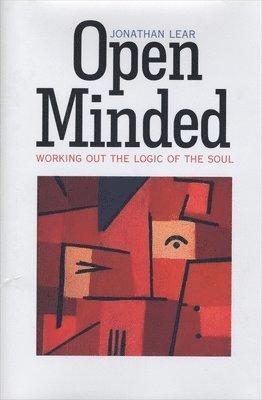
    Open Minded

    Working Out the Logic of the Soul

    AvJonathan Lear

    Häftad, Engelska, 1999

    439 kr

    Beställningsvara. Skickas inom 5-8 vardagar. Fri frakt över 249 kr.

    Beskrivning

    Freud is discredited, so we don’t have to think about the darker strains of unconscious motivation anymore. We know what moves our political leaders, so we don’t have to look too closely at their thinking either. In fact, everywhere we look in contemporary culture, knowingness has taken the place of thought. This book is a spirited assault on that deadening trend, especially as it affects our deepest attempts to understand the human psyche—in philosophy and psychoanalysis. It explodes the widespread notion that we already know the problems and proper methods in these fields and so no longer need to ask crucial questions about the structure of human subjectivity.“What is psychology?” Open Minded is not so much an answer to this question as an attempt to understand what is being asked. The inquiry leads Jonathan Lear, a philosopher and psychoanalyst, back to Plato and Aristotle, to Freud and psychoanalysis, and to Wittgenstein. Lear argues that Freud and, more generally, psychoanalysis are the worthy inheritors of the Greek attempt to put our mindedness on display. There are also, he contends, deep affinities running through the works of Freud and Wittgenstein, despite their obvious differences. Both are concerned with how fantasy shapes our self-understanding; both reveal how life’s activities show more than we are able to say.The philosophical tradition has portrayed the mind as more rational than it is, even when trying to account for irrationality. Psychoanalysis shows us the mind as inherently restless, tending to disrupt its own functioning. And empirical psychology, for its part, ignores those aspects of human subjectivity that elude objective description. By triangulating between the Greeks, Freud, and Wittgenstein, Lear helps us recover a sense of what it is to be open-minded in our inquiries into the human soul.

    Produktinformation

    • Utgivningsdatum:1999-09-01
    • Mått:155 x 230 x 35 mm
    • Vikt:500 g
    • Format:Häftad
    • Språk:Engelska
    • Antal sidor:356
    • Förlag:Harvard University Press
    • ISBN:9780674455344

    Utforska kategorier

    • Freudiansk psykologi inom Psykologi och pedagogik
    • Filosofiska discipliner inom Filosofi och religion

    Mer om författaren

    Jonathan Lear was John U. Nef Distinguished Service Professor on the Committee on Social Thought and in the Department of Philosophy at the University of Chicago. He held positions at Cambridge University and Yale University, and was a fellow of the American Academy of Arts and Sciences.

    Recensioner i media

    Our capacity to mean more than we say is the common thread of all the essays here, which explore philosophically the phenomenon of transference in psychotherapy, the nature of the unconscious mind and the role of Eros in Freud's thinking… In the chapter 'Knowingness and Abandonment: An Oedipus for Our Time,' Mr. Lear reinterprets Sophocles's Oedipus Tyrannus…[arguing] that Oedipus's flaw was to have understood the Delphic oracle too easily, to have assumed that 'meaning is transparent to human reason' and to have ignored 'unconscious meaning'… Mr. Lear offers similarly astute and original readings of Aristotle's Poetics, Plato's Symposium and Republic and Wittgenstein's Philosophical Investigations. He feels free to range so widely because he sees the work of these writers as related; each in its own way was 'working out the logic of the soul.' Each knew 'that one of the most important truths about us is that we have the capacity to be open minded: the capacity to live nondefensively with the question of how to live'… The critical essays will prove of value to anyone seriously engaged by literature. And the chapters on Freud and Oedipus are worth the price of admission alone… Mr. Lear concludes [that] 'What matters, as Freud himself well understood, is what we are able to do with the meanings we make'… These essays prompt us to examine those meanings, which activity, as Plato famously said, is what makes life worth living.

    Innehållsförteckning

    • Preface: The King and I On Killing Freud (Again) Knowingness and Abandonment: An Oedipus for Our Time An Interpretation of Transference Restlessness, Phantasy, and the Concept of Mind The Introduction of Eros: Reflections on the Work of Hans Loewald Eros and Unknowing: The Psychoanalytic Significance of Plato's Symposium Testing the Limits: The Place of Tragedy in Aristotle's Ethics Catharsis Inside and outside the Republic Transcendental Anthropology The Disappearing We Notes Acknowledgments Index