• Fri frakt över 249 kr
  • •
  • Snabba leveranser
  • •
  • Billiga böcker
Kundservice

Du är på sajten för privatpersoner.

Företag, bibliotek eller offentlig verksamhet?

Du handlar på classic.bokus.com, där alla dina funktioner finns intakta.
Till classic.bokus.com
Bokus logotyp. Gå till startsidan.
  • Erbjudanden
  • Nyheter
  • Student
  • Topplistor
  • Barn & ungdom
  • Bokus Play
  • E-böcker
  • Pocketböcker
  • Spel & pussel

10% rabatt på allt med kod NYSTART10 →

Sidfot

Mina sidor

    Hjälp

    • Kundservice
    • Vanliga frågor och svar
    • Frakt och leverans
    • Retur vid ångerrätt
    • Reklamera vara
    • Betalning
    • Köpvillkor
    • Allmänna villkor
    • Information om webbplatsens tillgänglighet

    Om Bokus

    • Om oss
    • Pressrum
    • För studenter
    • För företag
    • För bibliotek och offentlig verksamhet
    • För leverantörer
    • Hållbarhet

    Populärt

    • Aktuella erbjudanden
    • Presentkort
    • Studentlitteratur
    • Nya böcker
    • Topplistor
    • Signerade böcker
    • Engelska böcker

    Inspiration

    • Boktips
    • BookTok
    • Populära bokserier
    • Barnbokskaraktärer
    • Populära författare
    Logotyp för Bokus
    Följ oss på Facebook (extern länk)Följ oss på Instagram (extern länk)Följ oss på YouTube (extern länk)Följ oss på TikTok (extern länk)
    bokus @ CookiesAnpassa cookiesIntegritetspolicyKöpvillkor
    Till Citymail hemsida (extern länk)Till Budbee hemsida (extern länk)Till Postnord hemsida (extern länk)Till Schenker hemsida (extern länk)Till Early Bird hemsida (extern länk)Till Walleys hemsida (extern länk)
    1. Historia och arkeologi
    2. Historia
    3. Europas historia

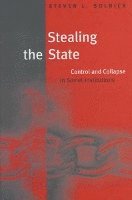
    Stealing the State

    Control and Collapse in Soviet Institutions

    AvSteven L. Solnick

    Inbunden, Engelska, 1998

    Del 89 i serien Russian Research Center Studies

    795 kr

    Beställningsvara. Skickas inom 5-8 vardagar. Fri frakt över 249 kr.

    Beskrivning

    What led to the breakdown of the Soviet Union? Steven Solnick argues, contrary to most current literature, that the Soviet system did not fall victim to stalemate at the top or to a revolution from below, but rather to opportunism from within. In three case studies--on the Communist Youth League, the system of job assignments for university graduates, and military conscription--Solnick makes use of rich archival sources and interviews to tell the story from a new perspective, and to employ and test Western theories of the firm in the Soviet environment. He finds that even before Gorbachev, mechanisms for controlling bureaucrats in Soviet organizations were weak, allowing these individuals great latitude in their actions. Once reforms began, they translated this latitude into open insubordination by seizing the very organizational assets they were supposed to be managing. Thus, the Soviet system, Solnick argues, suffered the organizational equivalent of a colossal bank run. When the servants of the state stopped obeying orders from above, the state's fate was sealed.By incorporating economic theories of institutions into a political theory of Soviet breakdown and collapse, Stealing the State offers a powerful and dynamic account of the most important international political event of the later twentieth century.

    Produktinformation

    • Utgivningsdatum:1998-01-07
    • Mått:156 x 235 x 33 mm
    • Vikt:608 g
    • Format:Inbunden
    • Språk:Engelska
    • Serie:Russian Research Center Studies
    • Antal sidor:352
    • Förlag:Harvard University Press
    • ISBN:9780674836808

    Utforska kategorier

    • Europas historia inom Historia och arkeologi
    • Statsvetenskap och politisk teori inom Samhälle och politik
    • Statsskick och politiska processer inom Samhälle och politik

    Mer om författaren

    Steven L. Solnick is Assistant Professor of Political Science at Columbia University.

    Recensioner i media

    Amid lamentations over 'reforms' stymied by Communist troglodytes, the repudiation of socialism and the dissolution of the Soviet Union seemed to come out of the blue. An institutional loss of confidence turned into a self-fulfilling spiral. 'Soviet institutions,' explains Steven L. Solnick, 'were victimized by the organizational equivalent of a colossal bank run.' Soviet officials sensed the impending doom, and they 'rushed to claim...assets before the bureaucratic doors shut for good.' Of course, 'unlike [in] a bank run, the defecting officials were not depositors claiming their rightful assets, but employees of the state appropriating state assets.' And they grabbed everything that was 'fungible.' (From the wreckage Solnick himself plucked a valuable book.)

    Innehållsförteckning

    • Introduction Objectives of This Book The Approach The Basic Argument Outline of the Book 1. Control and Collapse: Reformulating Traditional Approaches A Framework for Analyzing Institutional and Policy Change Power and Control in Soviet Institutions: "Traditional" Theories Summary 2. Control and Collapse: Neoinstitutional Approaches Neoinstitutional Approaches to Hierarchy Explaining Institutional Change Behavioral Theories: "What's So Neo about Neoinstitutionalism? Summary 3. Testing Theories of Institutional Change: The Soviet Youth Program A Strategy for Hypothesis Testing Comrades and Sons: Generational Conflict and Soviet Policy Summary 4. The Communist Youth League Background Institutional Dynamics within the Komsomol Crisis and Collapse of the All- Union Komsomol Summary 5. Job Assignments for University Graduates Background Institutional Dynamics of Raspredelenie The Collapse of the Job Assignments System Summary 6. Universal Military Service Background Institutional Dynamics of Conscription Policy Crisis and Breakdown of the Conscription System Summary 7. The Breakdown of Hierarchy: Comparative Perspectives Reviewing the Case Study Evidence Additional Manifestations of Soviet Institutional Breakdown Chinese Reforms: Successful Decentralization 8. Conclusions and Extensions: Control and Collapse in Hierarchies Hierarchical Control and Collapse in Non-Communist Environments After the Collapse: institutions in the Post-Communist States Appendix: Data Sources Notes Glossary and Abbreviations Index