• Fri frakt över 249 kr
  • •
  • Snabba leveranser
  • •
  • Billiga böcker
Kundservice

Du är på sajten för privatpersoner.

Företag, bibliotek eller offentlig verksamhet?

Du handlar på classic.bokus.com, där alla dina funktioner finns intakta.
Till classic.bokus.com
Bokus logotyp. Gå till startsidan.
  • Erbjudanden
  • Nyheter
  • Student
  • Topplistor
  • Barn & ungdom
  • Bokus Play
  • E-böcker
  • Pocketböcker
  • Spel & pussel

10% rabatt på allt med kod NYSTART10 →

Sidfot

Mina sidor

    Hjälp

    • Kundservice
    • Vanliga frågor och svar
    • Frakt och leverans
    • Retur vid ångerrätt
    • Reklamera vara
    • Betalning
    • Köpvillkor
    • Allmänna villkor
    • Information om webbplatsens tillgänglighet

    Om Bokus

    • Om oss
    • Pressrum
    • För studenter
    • För företag
    • För bibliotek och offentlig verksamhet
    • För leverantörer
    • Hållbarhet

    Populärt

    • Aktuella erbjudanden
    • Presentkort
    • Studentlitteratur
    • Nya böcker
    • Topplistor
    • Signerade böcker
    • Engelska böcker

    Inspiration

    • Boktips
    • BookTok
    • Populära bokserier
    • Barnbokskaraktärer
    • Populära författare
    Logotyp för Bokus
    Följ oss på Facebook (extern länk)Följ oss på Instagram (extern länk)Följ oss på YouTube (extern länk)Följ oss på TikTok (extern länk)
    bokus @ CookiesAnpassa cookiesIntegritetspolicyKöpvillkor
    Till Citymail hemsida (extern länk)Till Budbee hemsida (extern länk)Till Postnord hemsida (extern länk)Till Schenker hemsida (extern länk)Till Early Bird hemsida (extern länk)Till Walleys hemsida (extern länk)
    1. Psykologi och pedagogik
    2. Psykologi
    3. Psykologiska teorier och skolor

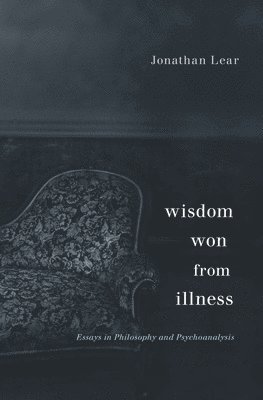
    Wisdom Won from Illness

    Essays in Philosophy and Psychoanalysis

    AvJonathan Lear

    Inbunden, Engelska, 2017

    382 kr

    Beställningsvara. Skickas inom 5-8 vardagar. Fri frakt över 249 kr.

    Beskrivning

    Wisdom Won from Illness brings into conversation two fields of humane inquiry—psychoanalysis and moral philosophy—that seem to have little to say to each other but which, taken together, form a basis for engaged ethical thought about how to live.Jonathan Lear begins by looking to the ancient Greek philosophers for insight into what constitutes the life well lived. Socrates said the human psyche should be ruled by reason, and much philosophy as well as psychology hangs on what he meant. For Aristotle, reason organized and presided over the harmonious soul; a wise person is someone capable of a full, happy, and healthy existence. Freud, plumbing the depths of unconscious desires and pre-linguistic thoughts, revealed just how unharmonious the psyche could be. Attuned to the stresses of modern existence, he investigated the myriad ways people fall ill and fail to thrive. Yet he inherited from Plato and Aristotle a key insight: that the irrational part of the soul is not simply opposed to reason. It is a different manner of thinking: a creative intelligence that distorts what it seeks to understand.Can reason absorb the psyche’s nonrational elements into a whole conception of the flourishing, fully realized human being? Without a good answer to that question, Lear says, philosophy is cut from its moorings in human life. Wisdom Won from Illness illuminates the role of literature in shaping ethical thought about nonrational aspects of the mind, offering rich readings of Shakespeare, Kierkegaard, J. M. Coetzee, Marilynne Robinson, and others.

    Produktinformation

    • Utgivningsdatum:2017-01-02
    • Mått:156 x 235 x 30 mm
    • Vikt:680 g
    • Format:Inbunden
    • Språk:Engelska
    • Antal sidor:344
    • Förlag:Harvard University Press
    • ISBN:9780674967847

    Utforska kategorier

    • Psykologiska teorier och skolor inom Psykologi och pedagogik
    • Filosofiska discipliner inom Filosofi och religion

    Mer om författaren

    Jonathan Lear was John U. Nef Distinguished Service Professor on the Committee on Social Thought and in the Department of Philosophy at the University of Chicago. He held positions at Cambridge University and Yale University, and was a fellow of the American Academy of Arts and Sciences.

    Recensioner i media

    Lear takes a subtly radical position in Wisdom Won from Illness, arguing that psychoanalysis is not merely a venture one undertakes in the hope of relieving suffering (of achieving a level of contentment, of escaping symptoms of depression and anxiety), but in the hope of living well. This is one of the poignant qualities of this collection of essays: it asks more of humans than that they be content; it asks that humans not only live happily, but excellently. And it doesn’t merely hope for humans to do this, it expects it of them, and shows in clinical vignettes drawn from Lear’s private practice that the human need for truth—to understand ourselves and the world in which we live, and to be able to consciously marshal our unconscious life for our own development—is overwhelmingly powerful. Lear, like all great teachers, has the remarkable ability to remind us of this truth, even when this truth has gone out of fashion. Such a grand expectation for human life belongs, traditionally, to philosophy, not to psychoanalysis, but in Lear’s hands psychoanalysis is unique in that it can do the healing work of medicine and the enlightening work of philosophy.