• Fri frakt över 249 kr
  • •
  • Snabba leveranser
  • •
  • Billiga böcker
Kundservice

Du är på sajten för privatpersoner.

Företag, bibliotek eller offentlig verksamhet?

Du handlar på classic.bokus.com, där alla dina funktioner finns intakta.
Till classic.bokus.com
Bokus logotyp. Gå till startsidan.
  • Erbjudanden
  • Student
  • Topplistor
  • Barn & ungdom
  • Bokus Play
  • E-böcker
  • Ljudböcker
  • Pocketböcker
  • Spel och pussel

Pocketfynda! Hundratals böcker för 49 kr/st →

Sidfot

Mina sidor

    Hjälp

    • Kundservice
    • Vanliga frågor och svar
    • Frakt och leverans
    • Retur vid ångerrätt
    • Reklamera vara
    • Betalning
    • Köpvillkor
    • Allmänna villkor
    • Information om webbplatsens tillgänglighet

    Om Bokus

    • Om oss
    • Pressrum
    • För studenter
    • För företag
    • För bibliotek och offentlig verksamhet
    • För leverantörer
    • Hållbarhet

    Populärt

    • Aktuella erbjudanden
    • Presentkort
    • Studentlitteratur
    • Nya böcker
    • Topplistor
    • Signerade böcker
    • Engelska böcker

    Inspiration

    • Boktips
    • BookTok
    • Barnbokskaraktärer
    • Populära författare
    Logotyp för Bokus
    Följ oss på Facebook (extern länk)Följ oss på Instagram (extern länk)Följ oss på YouTube (extern länk)Följ oss på TikTok (extern länk)
    bokus @ CookiesAnpassa cookiesIntegritetspolicyKöpvillkor
    Till Citymail hemsida (extern länk)Till Budbee hemsida (extern länk)Till Postnord hemsida (extern länk)Till Schenker hemsida (extern länk)Till Early Bird hemsida (extern länk)Till Walleys hemsida (extern länk)
    1. Juridik
    2. Rättsvetenskap
    3. Rättshistoria

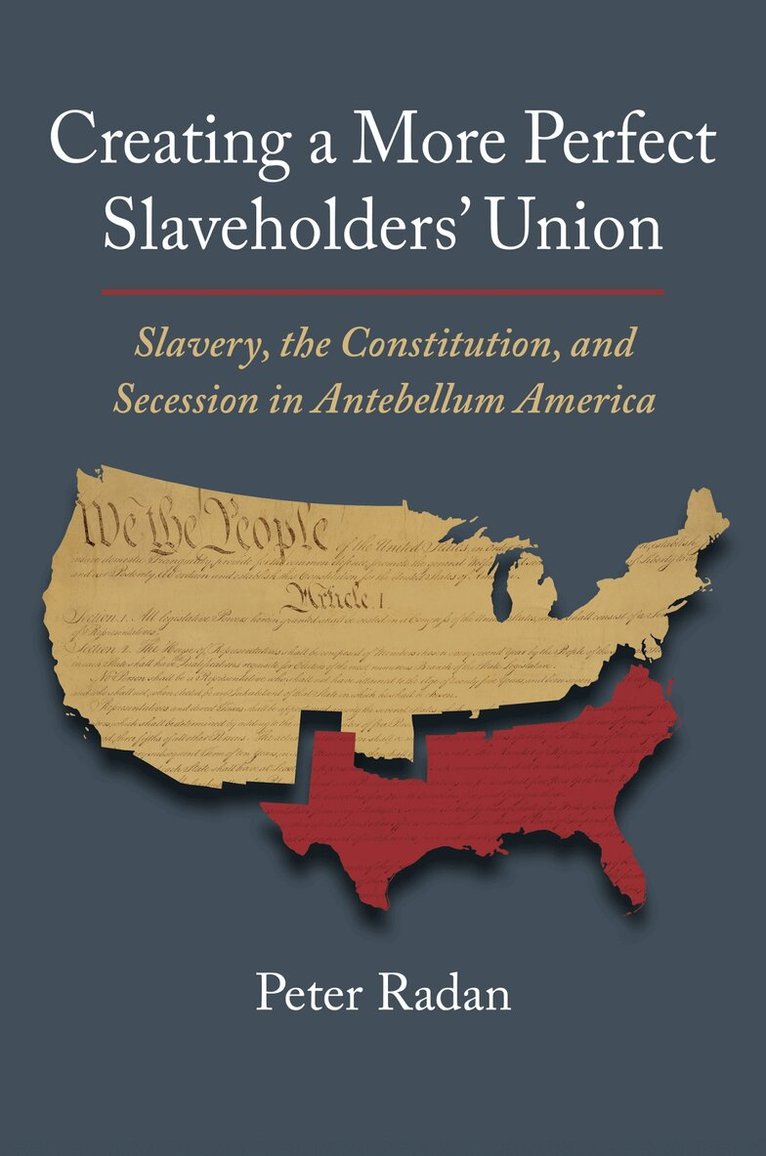
    Creating a More Perfect Slaveholders' Union

    Slavery, the Constitution, and Secession in Antebellum America

    AvPeter Radan

    Inbunden, Engelska, 2023

    681 kr

    Beställningsvara. Skickas inom 5-8 vardagar. Fri frakt över 249 kr.

    Beskrivning

    In Texas v. White (1869), the Supreme Court of the United States ruled that the unilateral secession of a state from the Union was unconstitutional because the Constitution created “an indestructible Union, composed of indestructible States.” The Court ruled “there was no place for reconsideration, or revocation, except through revolution, or through consent of the States.” In his iconoclastic work, Peter Radan demonstrates why the Court’s ruling was wrong and why, on the basis of American constitutional law in 1860–1861, the unilateral secessions of the Confederate states were lawful on the grounds that the United States was forged as a “slaveholders’ Union.”Creating a More Perfect Slaveholders’ Union addresses two constitutional issues: first, whether the states in 1860 had a right to secede from the Union and second, what significance slavery had in defining the constitutional Union. These two matters came together when the states seceded on the grounds that the system of government they had agreed to—namely, a system of human enslavement—had been violated by the incoming Republican administration. The legitimacy of this secession was anchored, as Radan demonstrates, in the compact theory of the Constitution, which held that because the Constitution was a compact between the member states of the Union, breaches of its fundamental provisions gave affected states the right to unilaterally secede from the Union. In so doing the Confederate states sought to preserve and protect their peculiar institution by forming a more perfect slaveholders’ Union.Creating a More Perfect Slaveholders’ Union stands as the first and only systematic analysis of the legal arguments mounted for and against secession in 1860–1861 and reshapes how we understand the Civil War and, consequently, the history of the United States more generally.

    Produktinformation

    • Utgivningsdatum:2023-10-27
    • Mått:152 x 229 x undefined mm
    • Vikt:272 g
    • Format:Inbunden
    • Språk:Engelska
    • Antal sidor:448
    • Förlag:University Press of Kansas
    • ISBN:9780700635801

    Utforska kategorier

    • Rättshistoria inom Juridik
    • Författningsrätt och förvaltningsrätt inom Juridik
    • Inbördeskrig inom Historia och arkeologi

    Mer om författaren

    Peter Radan is honorary professor of law at Macquarie University in Sydney, Australia, and a fellow of the Australian Academy of Law. He is the author of The Break-up of Yugoslavia and International Law and coauthor of Creating New States: Theory and Practice of Secession.

    Recensioner i media

    Peter Radan has produced a very learned defense of secession under the constitutions of 1878 and 1860. The author successfully challenges conventional wisdom that Abraham Lincoln was speaking unquestioned constitutional truth when in his inaugural address he pronounced Southern secession unconstitutional. The constitutional right of a state in 1787 and 1860 to secede from the Union, Radan livingly details, was at least as plausible as the conventional claim that states in 1787 and afterward had no constitutional right to secede from the Union." - Mark A. Graber, Regents Professor, University of Maryland Carey School of Law, and author of Punish Treason, Reward Loyalty: The Forgotten Goals of the Constitutional Reform after the Civil War"In this important, pathbreaking book, Peter Radan takes a close look at an idea that has been off-limits for over a hundred years: that the Confederate arguments for secession might have had some merit. With the Civil War fresh in American minds, secessionist arguments had to be branded as heresy, and they were. But now that we have more distance, we can afford to take a new and more objective look. And what we learn about injustices of the past may show the way to a more just future." - Kermit Roosevelt, David Berger Professor for the Administration of Justice at the University of Pennsylvania Carey Law School, and author of The Nation That Never Was: Reconstructing America’s Story

    Innehållsförteckning

    • ForewordAcknowledgmentsGlossaryPrologueIntroduction1. “An Irrepressible Conflict”: Slavery and the Union’ Territorial Expansion2. “An Indestructible Union”: Nationalist and Compact Theories of the Constitution3. “A Peculiar Species of Property”: The Constitution and Slavery4. “The Constitutional Compact Has Been Deliberately Broken”: Constitutional Breaches and the Legal Justification of Secession5. The Final WordNotesSelected BibliographyIndex