• Fri frakt över 249 kr
  • •
  • Snabba leveranser
  • •
  • Billiga böcker
Kundservice

Du är på sajten för privatpersoner.

Företag, bibliotek eller offentlig verksamhet?

Du handlar på classic.bokus.com, där alla dina funktioner finns intakta.
Till classic.bokus.com
Bokus logotyp. Gå till startsidan.
  • Erbjudanden
  • Student
  • Topplistor
  • Barn & ungdom
  • Bokus Play
  • E-böcker
  • Ljudböcker
  • Pocketböcker
  • Spel & pussel

10% rabatt på allt med kod NYSTART10 →

Sidfot

Mina sidor

    Hjälp

    • Kundservice
    • Vanliga frågor och svar
    • Frakt och leverans
    • Retur vid ångerrätt
    • Reklamera vara
    • Betalning
    • Köpvillkor
    • Allmänna villkor
    • Information om webbplatsens tillgänglighet

    Om Bokus

    • Om oss
    • Pressrum
    • För studenter
    • För företag
    • För bibliotek och offentlig verksamhet
    • För leverantörer
    • Hållbarhet

    Populärt

    • Aktuella erbjudanden
    • Presentkort
    • Studentlitteratur
    • Nya böcker
    • Topplistor
    • Signerade böcker
    • Engelska böcker

    Inspiration

    • Boktips
    • BookTok
    • Populära bokserier
    • Barnbokskaraktärer
    • Populära författare
    Logotyp för Bokus
    Följ oss på Facebook (extern länk)Följ oss på Instagram (extern länk)Följ oss på YouTube (extern länk)Följ oss på TikTok (extern länk)
    bokus @ CookiesAnpassa cookiesIntegritetspolicyKöpvillkor
    Till Citymail hemsida (extern länk)Till Budbee hemsida (extern länk)Till Postnord hemsida (extern länk)Till Schenker hemsida (extern länk)Till Early Bird hemsida (extern länk)Till Walleys hemsida (extern länk)
    1. Samhälle och politik
    2. Politik och statsskick
    3. Statsskick och politiska processer
    4. Politiskt ledarskap

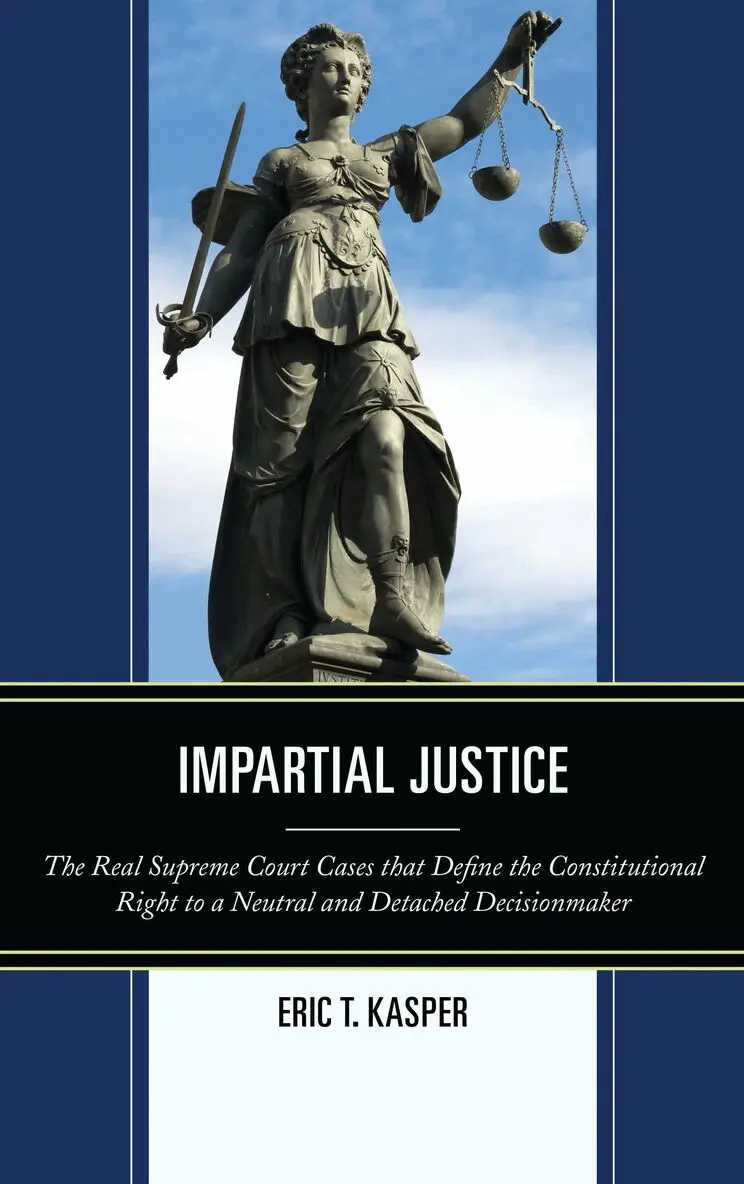
    Impartial Justice

    The Real Supreme Court Cases that Define the Constitutional Right to a Neutral and Detached Decisionmaker

    AvEric T. Kasper

    Inbunden, Engelska, 2013

    1 027 kr

    Beställningsvara. Skickas inom 10-15 vardagar. Fri frakt över 249 kr.

    Fler format och utgåvor

    Häftad

    644 kr

    Beskrivning

    This book examines the right to a neutral and detached decisionmaker as interpreted by the U.S. Supreme Court. This right resides in the Constitution’s Fifth Amendment and Fourteenth Amendment guarantees to procedural due process and in the Sixth Amendment’s promise of an impartial jury. Supreme Court cases on these topics are the vehicles to understand how these constitutional rights have come alive. First, the book surveys the right to an impartial jury in criminal cases by telling the stories of defendants whose convictions were overturned after they were the victims of prejudicial pretrial publicity, mob justice, and discriminatory jury selection. Next, the book articulates how our modern notion of judicial impartiality was forged by the Court striking down cases where judges were bribed, where they had other direct financial stakes in the outcome of the case, and where a judge decided the case of a major campaign supporter. Finally, the book traces the development of the right to a neutral decisionmaker in quasi-judicial, non-court settings, including cases involving parole revocation, medical license review, mental health commitments, prison discipline, and enemy combatants. Each chapter begins with the typically shocking facts of these cases being retold, and each chapter ends with a critical examination of the Supreme Court’s ultimate decisions in these cases.

    Produktinformation

    • Utgivningsdatum:2013-03-22
    • Mått:157 x 235 x 23 mm
    • Vikt:485 g
    • Format:Inbunden
    • Språk:Engelska
    • Antal sidor:232
    • Förlag:Bloomsbury Publishing Plc
    • ISBN:9780739177211

    Utforska kategorier

    • Politiskt ledarskap inom Samhälle och politik
    • Konstitution: stat och regering inom Samhälle och politik
    • Författningsrätt och förvaltningsrätt inom Juridik

    Mer om författaren

    Eric T. Kasper is an associate professor of political science for the University of Wisconsin Colleges and serves as the municipal judge in Rice Lake, Wisconsin, where he lives with his wife Julie and their two children, Madison and Jackson. This is his third book, having previously written Don’t Stop Thinking About the Music: The Politics of Songs and Musicians in Presidential Campaigns (with Benjamin Schoening) and To Secure the Liberty of the People: James Madison’s Bill of Rights and the Supreme Court’s Interpretation.

    Recensioner i media

    The word "disinterested" has multiple meanings. Although "apathetic" or "unenthusiastic" may be the first definitions that come to mind, in a juridical context the notion of "disinterest" is positive, a guarantee that the decision maker in a dispute is unbiased and not slanting rulings or playing favorites. Without this virtuous form of disinterest, a truly just system of dispute resolution is not possible. Kasper, who also serves as a municipal judge, has written a multifaceted study of the various settings in which impartiality is a core value in Anglo-American law. After a brief introduction tracking the evolution of impartiality from the 1215 adoption of the Magna Carta, Kasper explores the concept of unbiased decision making by juries, judges, and quasi-judicial actors or bodies. The next 13 chapters are organized as examinations of forums for impartiality--some examples are "death-qualified" juries, judges with financial stakes in the outcomes of cases, and medical license reviews--each viewed through the prism of a specific US Supreme Court decision. Kasper's accounts of the cases avoid jargon and are thus highly readable as well as interesting and informative. Summing Up: Recommended. All readership levels.

    Innehållsförteckning

    • AcknowledgementsPrefaceIntroduction: A Short History of What It Means to Be a Neutral, Impartial, and Unbiased DecisionmakerPart One: An Impartial Jury Trial in Criminal Cases1. Prejudicial Pretrial Publicity: Sheppard v. Maxwell (1966)2. Avoiding Mob Justice: Frank v. Mangum (1915) and Moore v. Dempsey (1923)3. Racial Discrimination in Jury Selection: Batson v. Kentucky (1986) and Miller-El v. Dretke (2005)4. Sex Discrimination in Jury Selection: Hoyt v. Florida (1961) and Taylor v. Louisiana (1975)5. Death-Qualified Juries: Witherspoon v. Illinois (1968) and Lockhart v. McCree (1986)Part Two: Due Process and the Right to an Impartial Judge6. Mayor-Judges with a Financial Stake in the Outcome: Tumey v. Ohio (1927) and Ward v. Village of Monroeville (1972)7. A Judge Hearing a Contempt Proceeding after Being Vilified by the Defendant: Mayberry v. Pennsylvania (1971)8. Non-Lawyer Judges: North v. Russell (1976)9. The Judge Who Was Bribed in Other Cases: Bracy v. Gramley (1997)10. A Judge Deciding a Case Involving a Major Campaign Supporter: Caperton v. A.T. Massey Coal Co. (2009)Part Three: Due Process and the Right to an ImpartialDecisionmaker in Quasi-Judicial, Non-Court Settings11. Parole Revocation: Morrissey v. Brewer (1972)12. Medical License Review: Withrow v. Larkin (1975)13. Mental Health Commitments for Juveniles: Parham v. J.R. (1979)14. Prison Discipline: Edwards v. Balisok (1997)15. Enemy Combatant Cases: Hamdi v. Rumsfeld (2004)ConclusionsCatalog of CasesBibliographyIndex