• Fri frakt över 249 kr
  • •
  • Snabba leveranser
  • •
  • Billiga böcker
Kundservice

Du är på sajten för privatpersoner.

Företag, bibliotek eller offentlig verksamhet?

Du handlar på classic.bokus.com, där alla dina funktioner finns intakta.
Till classic.bokus.com
Bokus logotyp. Gå till startsidan.
  • Erbjudanden
  • Nyheter
  • Student
  • Topplistor
  • Barn & ungdom
  • Bokus Play
  • E-böcker
  • Pocketböcker
  • Spel & pussel

10% studentrabatt med kod TERM26

Sidfot

Mina sidor

    Hjälp

    • Kundservice
    • Vanliga frågor och svar
    • Frakt och leverans
    • Retur vid ångerrätt
    • Reklamera vara
    • Betalning
    • Köpvillkor
    • Allmänna villkor
    • Information om webbplatsens tillgänglighet

    Om Bokus

    • Om oss
    • Pressrum
    • För studenter
    • För företag
    • För bibliotek och offentlig verksamhet
    • För leverantörer
    • Hållbarhet

    Populärt

    • Aktuella erbjudanden
    • Presentkort
    • Studentlitteratur
    • Nya böcker
    • Topplistor
    • Signerade böcker
    • Engelska böcker

    Inspiration

    • Boktips
    • BookTok
    • Populära bokserier
    • Barnbokskaraktärer
    • Populära författare
    Logotyp för Bokus
    Följ oss på Facebook (extern länk)Följ oss på Instagram (extern länk)Följ oss på YouTube (extern länk)Följ oss på TikTok (extern länk)
    bokus @ CookiesAnpassa cookiesIntegritetspolicyKöpvillkor
    Till Citymail hemsida (extern länk)Till Budbee hemsida (extern länk)Till Postnord hemsida (extern länk)Till Schenker hemsida (extern länk)Till Early Bird hemsida (extern länk)Till Walleys hemsida (extern länk)
    1. Samhälle och politik
    2. Politik och statsskick
    3. Politiska partier

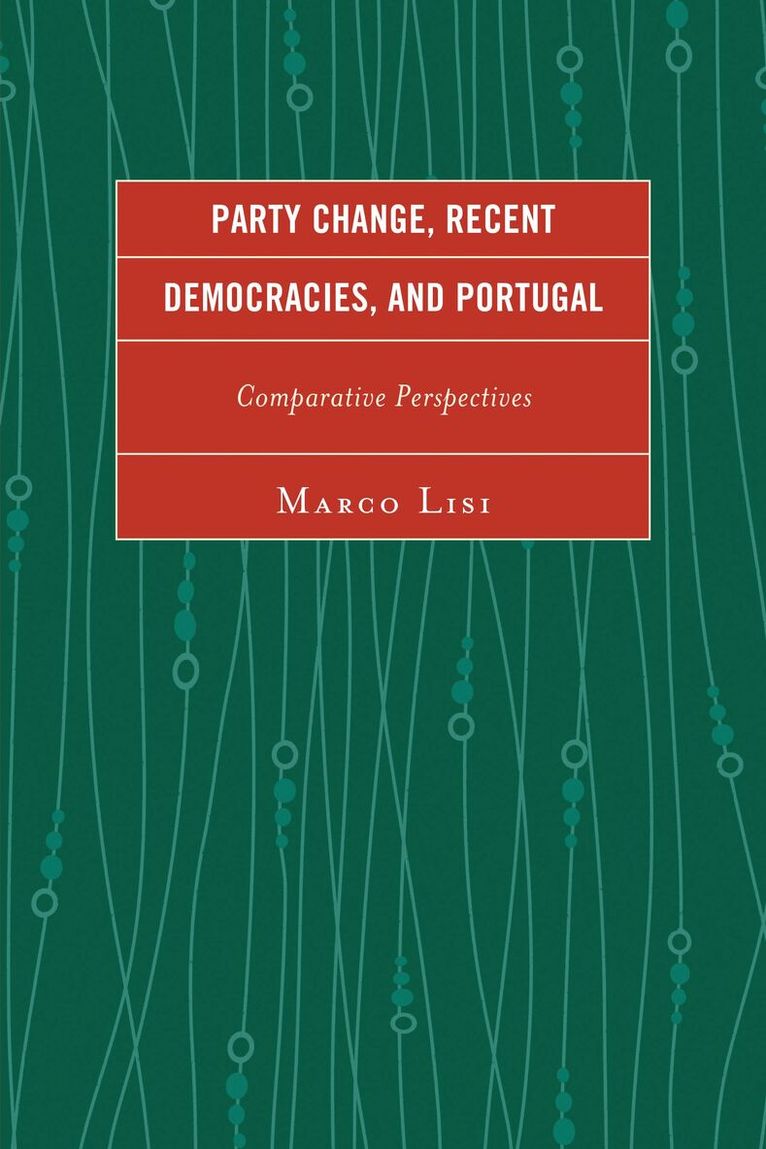
    Party Change, Recent Democracies, and Portugal

    Comparative Perspectives

    AvMarco Lisi

    Inbunden, Engelska, 2015

    1 326 kr

    Beställningsvara. Skickas inom 10-15 vardagar. Fri frakt över 249 kr.

    Beskrivning

    This book offers a critical overview on the literature on party change and provides original data on several dimensions of party organizations, focusing in particular on Portuguese political parties. The Portuguese case study will be used to illustrate how political parties evolve and the main differences in the trajectory experienced by parties in old democracies. Therefore, starting from the main theoretical contributions used to study party change, this book examines some key dimensions of the role played by political parties: ideological and programmatic orientations, the social basis of support, party organization, electoral campaigns and the elections of party leaders. Through a wide and rich data collection and the comparative perspective adopted, this book furthers our understanding of how Portuguese political parties have changed and the impact of this change on the quality of democracy.

    Produktinformation

    • Utgivningsdatum:2015-10-01
    • Mått:159 x 236 x 24 mm
    • Vikt:508 g
    • Format:Inbunden
    • Språk:Engelska
    • Antal sidor:250
    • Förlag:Bloomsbury Publishing Plc
    • ISBN:9780739193655

    Utforska kategorier

    • Politiska partier inom Samhälle och politik
    • Statsskick: demokrati inom Samhälle och politik
    • Statsvetenskap och politisk teori inom Samhälle och politik

    Mer om författaren

    Marco Lisi is assistant professor in the Department of Political Studies at Nova University of Lisbon.

    Recensioner i media

    Political Parties are central institutions of representative democracy, even if they are failing to perform many of their democratic functions. Exploring the relationship between political parties and democratization in Portugal, this book is a major contribution to the comparative study of party system configurations in Europe.

    Innehållsförteckning

    • 1. Introduction2. Party Change in Contemporary Democracies: the Analytic Framework3. The Development of Party Organizations in Portugal4. The Social Bases of Support: Voters and Party Members5. Candidate and Leadership Selection6. Ideology and Partisanship in Portuguese Parties7. Parties and Electoral Campaigns8. Conclusions