• Fri frakt över 249 kr
  • •
  • Snabba leveranser
  • •
  • Billiga böcker
Kundservice

Du är på sajten för privatpersoner.

Företag, bibliotek eller offentlig verksamhet?

Du handlar på classic.bokus.com, där alla dina funktioner finns intakta.
Till classic.bokus.com
Bokus logotyp. Gå till startsidan.
  • Erbjudanden
  • Student
  • Topplistor
  • Barn & ungdom
  • Bokus Play
  • E-böcker
  • Ljudböcker
  • Pocketböcker
  • Spel och pussel

Pocketfynda! Hundratals böcker för 49 kr/st →

Sidfot

Mina sidor

    Hjälp

    • Kundservice
    • Vanliga frågor och svar
    • Frakt och leverans
    • Retur vid ångerrätt
    • Reklamera vara
    • Betalning
    • Köpvillkor
    • Allmänna villkor
    • Information om webbplatsens tillgänglighet

    Om Bokus

    • Om oss
    • Pressrum
    • För studenter
    • För företag
    • För bibliotek och offentlig verksamhet
    • För leverantörer
    • Hållbarhet

    Populärt

    • Aktuella erbjudanden
    • Presentkort
    • Studentlitteratur
    • Nya böcker
    • Topplistor
    • Signerade böcker
    • Engelska böcker

    Inspiration

    • Boktips
    • BookTok
    • Barnbokskaraktärer
    • Populära författare
    Logotyp för Bokus
    Följ oss på Facebook (extern länk)Följ oss på Instagram (extern länk)Följ oss på YouTube (extern länk)Följ oss på TikTok (extern länk)
    bokus @ CookiesAnpassa cookiesIntegritetspolicyKöpvillkor
    Till Citymail hemsida (extern länk)Till Budbee hemsida (extern länk)Till Postnord hemsida (extern länk)Till Schenker hemsida (extern länk)Till Early Bird hemsida (extern länk)Till Walleys hemsida (extern länk)
    1. Samhälle och politik
    2. Samhälle och kultur
    3. Kultur och medier
    4. Kulturvetenskap

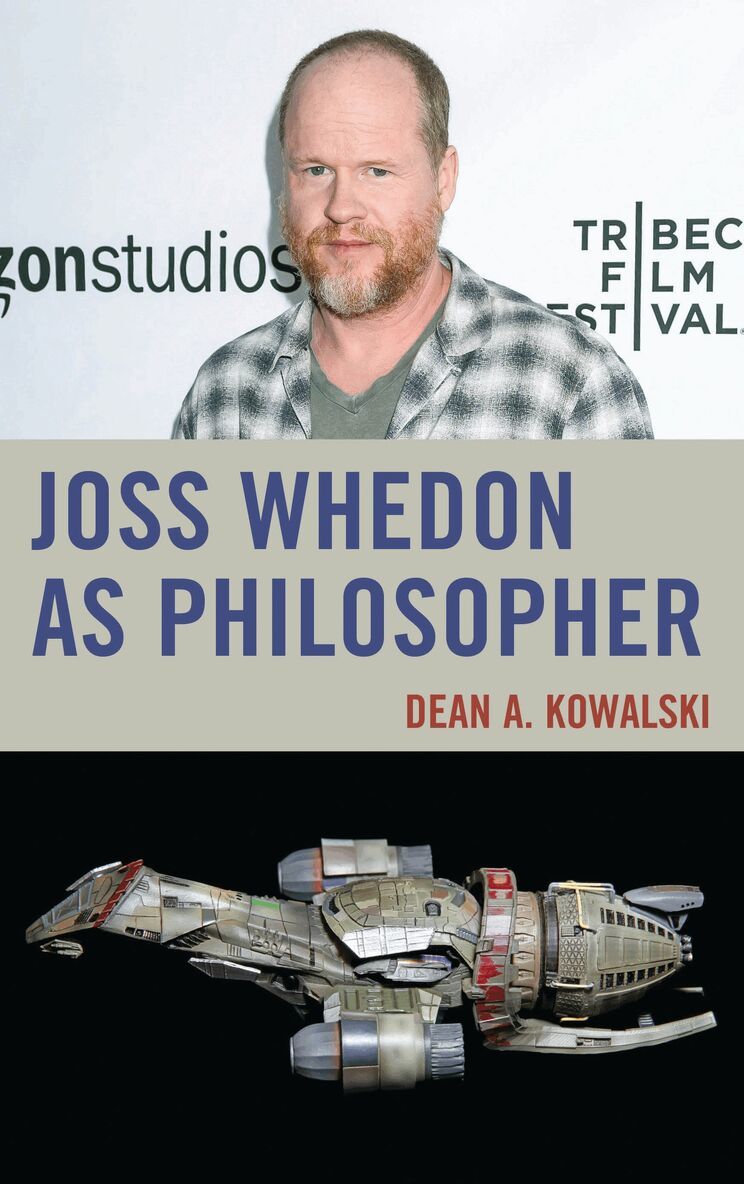
    Joss Whedon as Philosopher

    AvDean Kowalski

    Inbunden, Engelska, 2017

    Del i serien Philosophy of Popular Culture

    1 320 kr

    Beställningsvara. Skickas inom 10-15 vardagar. Fri frakt över 249 kr.

    Beskrivning

    In this book, Dean Kowalski argues that filmmakers can “do” philosophy when creating a fictional narrative film, and utilizes a careful and extensive analysis of Joss Whedon’s fictive creations—Buffy the Vampire Slayer, Angel, Firefly, Dollhouse, and The Cabin in the Woods (among others)—to establish this thesis.This book appeals to many different readers. For the many admirers of Whedon’s fictive creations, it offers one of the most comprehensive analyses of his corpus. It reprises many examples and dialogue passages from the far corners of the so-called “Whedonverse.” You’ll get a chance to re-experience your favorite dramatic moments, and think about them in novel ways. For popular culture scholars, it offers illustrations of various philosophical theories, explains how those theories pertain to relevant data points in Whedon’s oeuvre, and assesses whether, or to what extent, they have real-world application. For philosophers of film, it explicates crucial issues germane to the film-as-philosophy debate, but also expands them to television—all in the attempt to demonstrate why it is that Whedon ought to be included among those rare filmmakers who engage the philosophical process via their artistry.

    Produktinformation

    • Utgivningsdatum:2017-11-29
    • Mått:159 x 236 x 23 mm
    • Vikt:621 g
    • Format:Inbunden
    • Språk:Engelska
    • Serie:Philosophy of Popular Culture
    • Antal sidor:278
    • Förlag:Bloomsbury Publishing Plc
    • ISBN:9780739196656

    Utforska kategorier

    • Kulturvetenskap inom Samhälle och politik
    • Medievetenskap inom Samhälle och politik
    • Filosofiska discipliner inom Filosofi och religion

    Mer om författaren

    Dean A. Kowalski is professor of philosophy at the University of Wisconsin-Waukesha.

    Recensioner i media

    Dean Kowalski’s Joss Whedon as Philosopher confirms what we have long suspected, that there is a great deal of philosophical gold to be mined from the Whedonverse. Kowalski expertly guides the reader through the many philosophical insights and provocations that can be found in Whedon’s works, from Buffy, Angel and Firefly, to the Avengers films, Cabin in the Woods and Dollhouse. He shows how Whedon’s creations have much to tell us about authenticity and the good life, rights and personhood, ethics and religion, free will and determinism, and more besides. In the second part, the book offers some meditations of its own on the very idea of film (and television) as philosophy – all the better to confirm that Whedon can readily be numbered among those who, in the act of filmmaking, actually do philosophy.

    Innehållsförteckning

    • AcknowledgementsDedicationIntroductionPhoto Credits and CaptionsPart I: Philosophy in the WhedonverseChapter 1: Seeking Authenticity in the WhedonverseChapter 2: On Being Horrible (and an Angel)Chapter 3: Ethics in an Atheistic WhedonverseChapter 4: Religious Ambivalence in the WhedonverseChapter 5: Freedom of the Will: A Whedonverse Paradox (or Not)Part II: Film-as-Philosophy, Whedonesquely Chapter 6: Mulhall and His DetractorsChapter 7: The Russell-Wartenberg DebateChapter 8: Exploring The Cabin in the Woods Chapter 9: Angel, Angelus, and Personal IdentityConclusion: The Whedonverse, Television, and PhilosophyBibliography