• Fri frakt över 249 kr
  • •
  • Snabba leveranser
  • •
  • Billiga böcker
Kundservice

Du är på sajten för privatpersoner.

Företag, bibliotek eller offentlig verksamhet?

Du handlar på classic.bokus.com, där alla dina funktioner finns intakta.
Till classic.bokus.com
Bokus logotyp. Gå till startsidan.
  • Erbjudanden
  • Nyheter
  • Student
  • Topplistor
  • Barn & ungdom
  • Bokus Play
  • E-böcker
  • Pocketböcker
  • Spel & pussel

10% rabatt på allt med kod: NYSTART10 →

Sidfot

Mina sidor

    Hjälp

    • Kundservice
    • Vanliga frågor och svar
    • Frakt och leverans
    • Retur vid ångerrätt
    • Reklamera vara
    • Betalning
    • Köpvillkor
    • Allmänna villkor
    • Information om webbplatsens tillgänglighet

    Om Bokus

    • Om oss
    • Pressrum
    • För studenter
    • För företag
    • För bibliotek och offentlig verksamhet
    • För leverantörer
    • Hållbarhet

    Populärt

    • Aktuella erbjudanden
    • Presentkort
    • Studentlitteratur
    • Nya böcker
    • Topplistor
    • Signerade böcker
    • Engelska böcker

    Inspiration

    • Boktips
    • BookTok
    • Populära bokserier
    • Barnbokskaraktärer
    • Populära författare
    Logotyp för Bokus
    Följ oss på Facebook (extern länk)Följ oss på Instagram (extern länk)Följ oss på YouTube (extern länk)Följ oss på TikTok (extern länk)
    bokus @ CookiesAnpassa cookiesIntegritetspolicyKöpvillkor
    Till Citymail hemsida (extern länk)Till Budbee hemsida (extern länk)Till Postnord hemsida (extern länk)Till Schenker hemsida (extern länk)Till Early Bird hemsida (extern länk)Till Walleys hemsida (extern länk)
    1. Samhälle och politik
    2. Politik och statsskick
    3. Statsskick och politiska processer
    4. Statsskick: demokrati

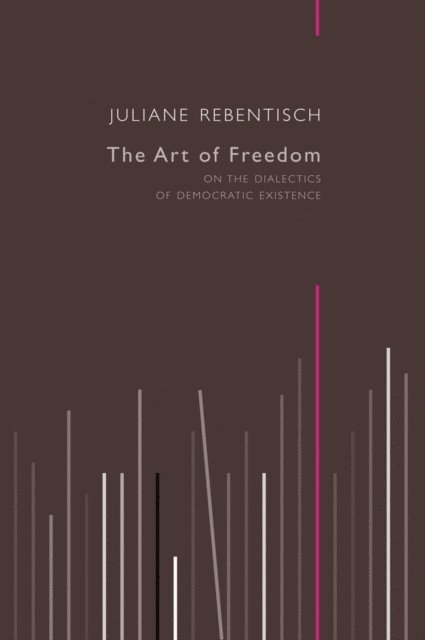
    Art of Freedom

    On the Dialectics of Democratic Existence

    AvJuliane Rebentisch

    Häftad, Engelska, 2016

    267 kr

    Beställningsvara. Skickas inom 5-8 vardagar. Fri frakt över 249 kr.

    Fler format och utgåvor

    Inbunden

    742 kr

    E-bok

    300 kr

    Beskrivning

    The concept of democratic freedom refers to more than the kind of freedom embodied by political institutions and procedures. Democratic freedom can only be properly understood if it is grasped as the expression of a culture of freedom that encompasses an entire form of life. Juliane Rebentisch’s systematic and historical approach demonstrates that we can learn a great deal about the democratic culture of freedom from its philosophical critics.From Plato to Carl Schmitt, the critique of democratic culture has always been articulated as a critique of its ãaestheticization“. Rebentisch defends various phenomena of aestheticization Ð from the irony typical of democratic citizens to the theatricality of the political Ð as constitutive elements of democratic culture and the notion of freedom at the heart of its ethical and political self-conception.This work will be of particular interest to students of Political Theory, Philosophy and Aesthetics.


    Produktinformation

    • Utgivningsdatum:2016-05-06
    • Mått:152 x 229 x 25 mm
    • Vikt:513 g
    • Format:Häftad
    • Språk:Engelska
    • Antal sidor:320
    • Förlag:John Wiley and Sons Ltd
    • ISBN:9780745682136

    Utforska kategorier

    • Statsskick: demokrati inom Samhälle och politik
    • Statsvetenskap och politisk teori inom Samhälle och politik
    • Filosofiska discipliner inom Filosofi och religion

    Mer om författaren

    Juliane Rebentisch is Professor of Philosophy and Aesthetics at Offenbach University of Art and Design.

    Recensioner i media

    "Highly Recomennded"Choice

    Innehållsförteckning

    • Introduction: Aestheticization Ð An ApologiaPart I: An Antique Diagnosis of a Crisis1. The Provocative Beauty of Democracy: PlatoI. Freedom and Indeterminacy2. The Slavery of the Tyrant3. The Unstable Democrat4. Clear-sighted, Processual and Totalized Weakness of Will5. Weakness of Will or the Freedom from Oneself6. The Unfree Opportunist7. Many Jobs and Much Trespassing8. The Occurrence of an Inner Nature or the Freedom Toward Self9. Democrats and Theatre Types10. Theatrocracy: The Fearlessly Judging Multitude11. Masses and Mimesis12. Self-Difference and PerfectionPart II: The Ethical-Political Right of Irony2. The Morality of Irony: Hegel1. The Beginning of Morality in Socratic Irony2. Socrates’ Divisive Work3. Irony and the Practice of Truth4. Hegel’s Critique of Kant5. A Socratic Reformulation of the Moral Principle6. Critique of the Romantics7. Abstract and Subjective Freedom8. Evil and the “Natural Will”9. The Dialectic of Freedom10. A Less Rigorous Concept of Self-Determination11. Conflicts with and in Morality12. Hegel’s Expulsion of Subjective Freedom from Ethical Life13. The Riddle of Socratic Virtue and the Historicity of the Good3. The Ethics of Aesthetic Existence: Kierkegaard1. The Negative Freedom of Socratic Irony and its Romantic Superseding2. Self-Enhancement and Forgetfulness-of-Self3. The Impotent Seducer4. The “Helmeted” Will and its Desperation in the Face of the Aesthetic5. Repentance and Duty: The Freedom to Choose What One Already Is6. One Sexism for Another7. The Love of Divorced Society Ladies8. Aesthetic and Aristocratic Exception9. Common sinners10. The Leap of Faith11. Repetitions4. Sovereignty in Romanticism: Schmitt1. Aestheticization and Neutralization2. A Look at an Orange3. Alien Power4. The Other in the Own and Decision5. Political Anthropology6. Schmitt and Kierkegaard7. Political Theology8. “Concrete Life” and Decision9. Schmitt’s Rousseauism10. Politics as a Critique of PoliticsPart III: Democracy and Aestheticization5. The Spectacle of Democracy: Rousseau1. The Irony of the Actor2. The Public Expression of Indeterminacy3. The Actress and Her Parodies4. The Golden Mean5. “Thy Magic Powers Reunite What Custom’s Sword Has Divided”: The Feast of the Brothers6. All Brothers are also Men: The Problem of Male Self-Difference7. The Two Paradoxes of the Social Contract8. The Sovereignty of the Legislator and the Judgment of the “Common Man”9. Another Kind of Equality10. A Politicizable Boundary11. The Two Bodies of the People12. Representation and the Coding of Contingency6. The Anaestheticization of the Political in Fascism: Benjamin1. Charisma versus Ratio2. Politicizing Art3. Astonishment, Not Sympathy4. The Look of the Stranger5. Alienation6. Adaptability and Revolution7. Charisma and Democracy8. Political Theatre9. Post-Democracy and the Anaesthetizing of the Political: A Look ForwardNotesAcknowledgementsOrigins of the TextIndex