• Fri frakt över 249 kr
  • •
  • Snabba leveranser
  • •
  • Billiga böcker
Kundservice

Du är på sajten för privatpersoner.

Företag, bibliotek eller offentlig verksamhet?

Du handlar på classic.bokus.com, där alla dina funktioner finns intakta.
Till classic.bokus.com
Bokus logotyp. Gå till startsidan.
  • Erbjudanden
  • Nyheter
  • Student
  • Topplistor
  • Barn & ungdom
  • Bokus Play
  • E-böcker
  • Pocketböcker
  • Spel & pussel

10% rabatt på allt med kod NYSTART10 →

Sidfot

Mina sidor

    Hjälp

    • Kundservice
    • Vanliga frågor och svar
    • Frakt och leverans
    • Retur vid ångerrätt
    • Reklamera vara
    • Betalning
    • Köpvillkor
    • Allmänna villkor
    • Information om webbplatsens tillgänglighet

    Om Bokus

    • Om oss
    • Pressrum
    • För studenter
    • För företag
    • För bibliotek och offentlig verksamhet
    • För leverantörer
    • Hållbarhet

    Populärt

    • Aktuella erbjudanden
    • Presentkort
    • Studentlitteratur
    • Nya böcker
    • Topplistor
    • Signerade böcker
    • Engelska böcker

    Inspiration

    • Boktips
    • BookTok
    • Populära bokserier
    • Barnbokskaraktärer
    • Populära författare
    Logotyp för Bokus
    Följ oss på Facebook (extern länk)Följ oss på Instagram (extern länk)Följ oss på YouTube (extern länk)Följ oss på TikTok (extern länk)
    bokus @ CookiesAnpassa cookiesIntegritetspolicyKöpvillkor
    Till Citymail hemsida (extern länk)Till Budbee hemsida (extern länk)Till Postnord hemsida (extern länk)Till Schenker hemsida (extern länk)Till Early Bird hemsida (extern länk)Till Walleys hemsida (extern länk)
    1. Historia och arkeologi
    2. Historia
    3. Historia: särskilda händelser och ämnen
    4. Socialhistoria och kulturhistoria

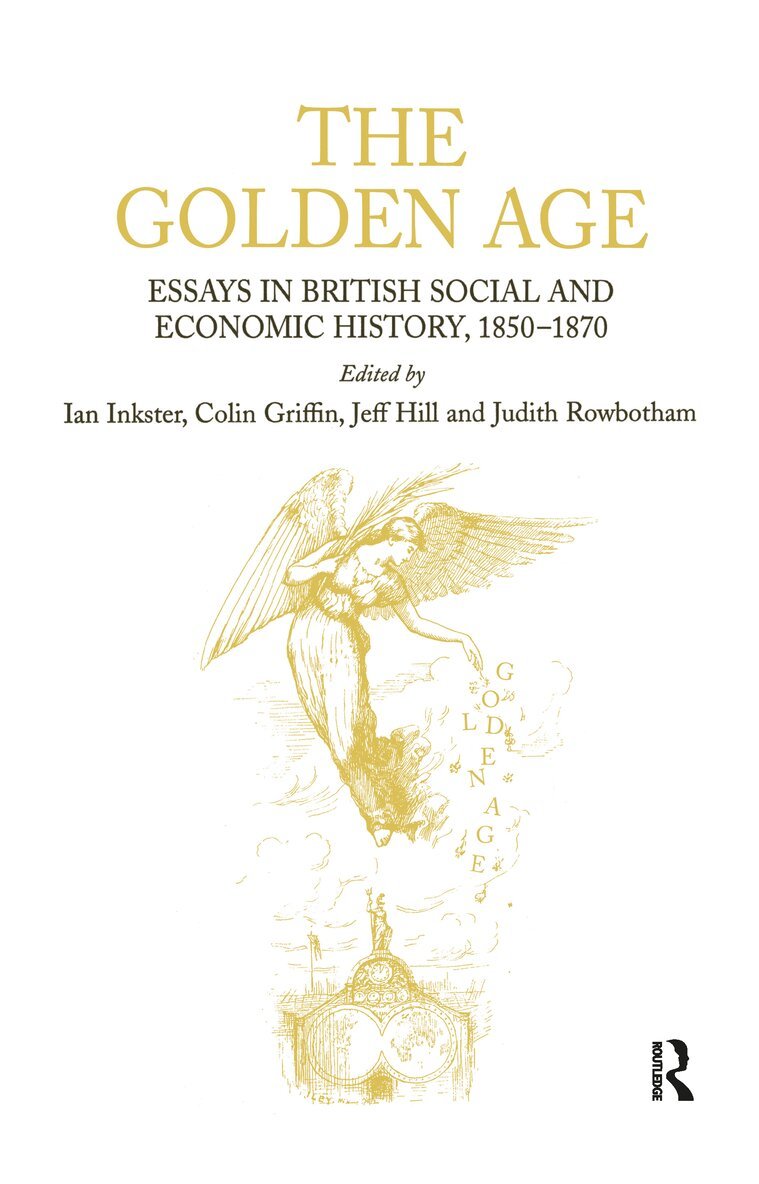
    Golden Age

    Essays in British Social and Economic History, 1850–1870

    AvIan Inkster,Colin Griffin

    Inbunden, Engelska, 2000

    527 kr

    Tillfälligt slut

    Beskrivning

    In 1850 the Industrial Revolution came to an end. In 1851 the Great Exhibition illustrated to the whole world the supremacy of industrial England. For the next twenty years Britain reigned supreme. From around 1870 Britain began to decline. Britain is now a second rate power with strong memories of its former supremacy. The above five sentences summarise a common view of the sequencing of Britain’s rise and relative fall, a stereotype that is challenged and modified in the essays of The Golden Age. By concentrating on central aspects of social and industrial change authors expose the underpinnings of supremacy, its unsung underside, its tarnished gold. Major themes cover industrial and technological change, social institutions and gender relations in a period during which industry and industrialism were equally celebrated and nurtured. Against this background it is difficult to argue for any sudden decline of energy, assets or institution, nor for any significant move from an industrial society to one in which a hearty manufacturing was replaced by commerce and land, sensibility and artifice.

    Produktinformation

    • Utgivningsdatum:2000-12-29
    • Mått:156 x 234 x 24 mm
    • Vikt:453 g
    • Format:Inbunden
    • Språk:Engelska
    • Antal sidor:304
    • Förlag:Taylor & Francis Ltd
    • ISBN:9780754601142

    Utforska kategorier

    • Socialhistoria och kulturhistoria inom Historia och arkeologi
    • Europas historia inom Historia och arkeologi
    • Ekonomisk historia inom Ekonomi och Ledarskap

    Mer om författaren

    Ian Inkster, Colin Griffin, Judith Rowbotham

    Recensioner i media

    '... intriguing and thought-provoking... This is a book that poses important questions and raises crucial concerns about our understanding of this period.' Canadian Journal of History

    Innehållsförteckning

    • Contents: Introduction; A lustrous age?, Ian Inkster; ’Nor all that glisters.....’: the not so Golden Age, Harold Perkin; Part One Industry: Introduction, Colin Griffin; Coalmining in mid-Victorian Britain: a Golden Age revisited?, Colin Griffin; A Golden Age of agriculture?, Stephen Caunce; The cotton industry in the 1850s and 1860s: decades of contrast, Geoff Timmins; The Golden Age of electricity, Gillian Cookson; Part Two Technology: Introduction, Ian Inkster; Michael Farraday and lighthouses, Frank A. J. L. James; Lies, damned lies and declinism: Lyon Playfair, the Paris 1867 Exhibition and contested rhetorics of scientific education and industrial performance, Graeme Gooday; Machinofacture and technical change: the patent evidence, Ian Inkster; Part Three Social Institutions: Introduction, Jeff Hill; ’Why should working men visit the Exhibition?’ - workers and the Great Exhibition and the ethos of industrialism, Su Barton; Estimating a public sphere: intellectual and technical associations at the time of the Great Exhibition, Vicky Brown and Ian Inkster; ’Golden Age’ and ’Better Days’: narratives of industrialism in the cotton trade of north-east Lancashire, 1860s to 1920s, Jeff Hill; Popular culture and the ’Golden Age’: the Church of England and hiring fairs in the East Riding of Yorkshire c. 1850-75, Gary Moses; In defence of respectability: financial crime, the ’High Art’ criminal and the language of the courtroom 1850-1880, Sarah Lowrie; Part four gender: Introduction, Judith Rowbotham; ’Physically a splendid race’ or ’hardened and brutalised by unsuitable toil’?: unravelling the position of women workers in rural England during the Golden Age of agriculture, Nicola Verdon; The respectability imperative: a golden rule in cases of sexual assault?, Kim Stevenson; Keep the ’whoam’ fires burning: domestic yearnings in Lancashire dialect poetry, Catriona M. Parratt; ’All our past proclaims our future’: popular biogra