Häftad, Engelska, 2013
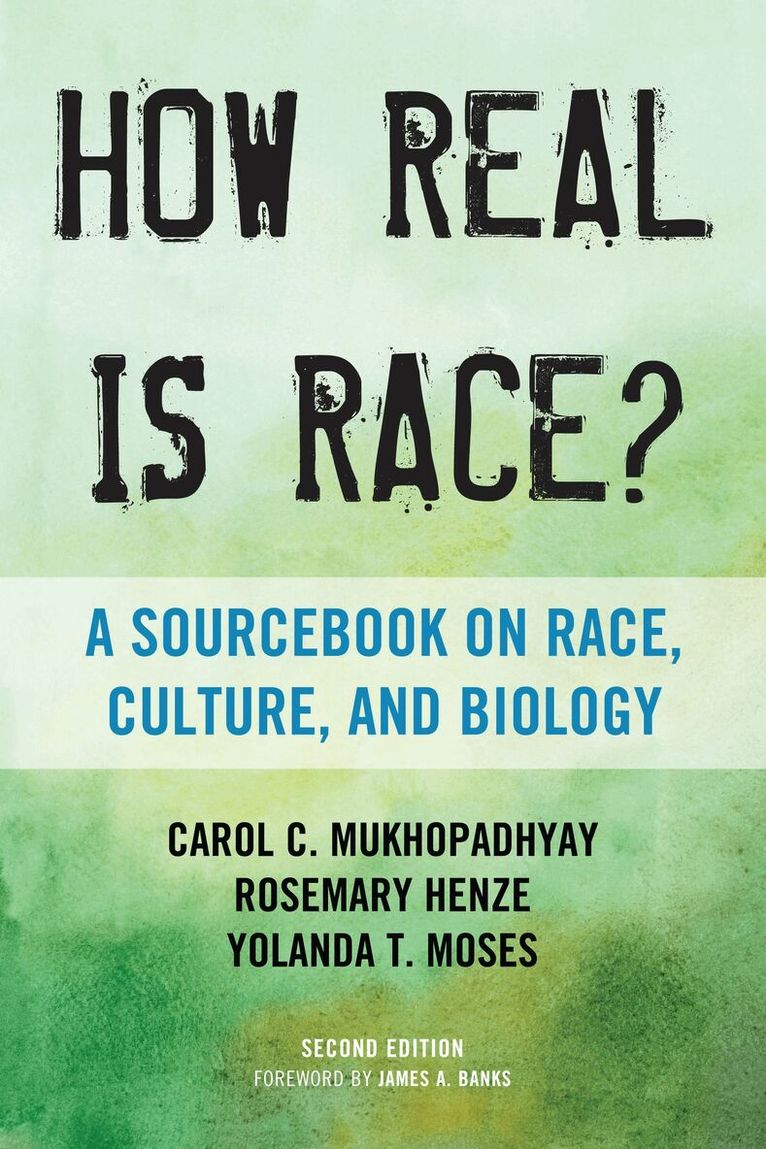
How Real Is Race?
A Sourcebook on Race, Culture, and Biology
Av Carol C. Mukhopadhyay, Rosemary Henze, Yolanda T. Moses
777 kr
Beställningsvara. Skickas inom 10-15 vardagar. Fri frakt över 249 kr.
Beskrivning
Produktinformation
- Utgivningsdatum: 2013-12-11
- Mått: 151 x 225 x 22 mm
- Vikt: 485 g
- Format: Häftad
- Språk: Engelska
- Antal sidor: 362
- Upplaga: 2
- Förlag: Bloomsbury Publishing Plc
- ISBN: 9780759122734
Utforska kategorier
Mer om författaren
Carol C. Mukhopadhyay (professor emerita of anthropology, San Jose State University) has 40 years of experience teaching, consulting, researching, and publishing on issues of cultural diversity and education related to race, ethnicity and gender, in both the United States and India. She is a key advisor for the American Anthropological Association's public information project, RACE. Rosemary Henze (professor of linguistics and language development, San Jose State University) has a background in education, anthropology, and linguistics, and has been an ESL teacher. She worked with K-12 schools for 14 years as a consultant, researcher, and curriculum designer on bilingual, multicultural, and antiracist education and has researched education in Greece, Alaska, Hawaii, and Nicaragua. Yolanda T. Moses (professor of anthropology and Associate Vice Chancellor for Excellence, Diversity and Equity, University of California, Riverside) has spent more than 25 years researching, writing, and teaching in the United States, the Caribbean, South Africa, and Brazil. She has held national leadership roles in the American Anthropological Association, City College of New York (CUNY), and American Association of Higher Education and chairs the National Advisory Board for the American Anthropological Association's Understanding Race and Human Variation project (RACE).
Recensioner i media
This book offers educators at all levels a valuable biocultural perspective on race and diversity, and can serve as a resource to enhance curriculum and pedagogy. Distinguished by its biocultural approach integrating race-related research and scholarship from biological, cultural, linguistic, and archaeological perspectives, it is intended for educators at precollege and college levels, especially for teacher education courses, and can serve as a general sourcebook for cultural diversity workshops. It is also appropriate for any reader seeking a better understanding of the concept of race and human variation. New to this edition (1st ed., 2007) is a greater emphasis on how racial identities are dynamic, negotiated, and culturally defined. The book is organized in four sections. The first questions whether racial classification is biologically valid. The second explores the concept of race as a social construct, and the third uses everyday realities of school and college to explore the way racial ideologies operate in educational settings from both student and educator perspectives. The final section presents practical applications for educators, providing a list of references, website resources, and examples of suggested activities relating to topics covered in the book. Summing Up: Highly recommended. All levels/libraries.
Betyg & recensioner
0 recensioner
Inga recensioner tillgängliga.