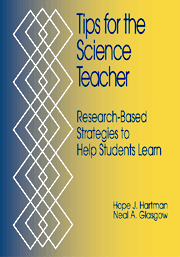
Häftad, Engelska, 2001
Tips for the Science Teacher
Av Hope J. Hartman, Neal A. Glasgow
605 kr
Beställningsvara. Skickas inom 3-6 vardagar. Fri frakt över 249 kr.
Beskrivning
"An authoritative, research-based, thoroughly up-to-date and readable review of the best available techniques for science instruction."
Robert J. Sternberg, IBM Professor of Psychology and Education
Director, Center for the Psychology of Abilities, Competencies and Expertise (PACE Center)
Yale University
New Haven, CT
"Teachers are starved for this kind of presentation of information. The format of the book is very appealing, with a unique blend of research, practical applications and the voices of experience addressing "pitfalls." Its specific tips are targeted, focused and clearly presented."
Karen Charles, Math and Science Program Specialist
Eisenhower Consortium at SERVE
Greensboro, NC
"This book makes effective science teaching strategies readily available, truly at your fingertips. I really appreciated the organization, especially the 'what the research says' component."
Leslie C. Gushwa, Science Department Chair
1998 San Diego County Teacher of the Year
San Dieguito Academy
Encinitas, CA
"Principals and lead teachers at all levels will find this valuable information useful as they work with their colleagues in professional development."
Raymond J. Dagenais, Ed.D.
Science Curriculum and Assessment Leader
Illinois Mathematics and Science Academy
Aurora, IL
"It is refreshing to have valuable research synthesized into user-friendly tips. It should be mandatory for all science teachers, new and veteran."
Dr. Margaret Just, Research Scientist
University of California, San Diego
"This book is perfect for busy educators—its succinct sections make it a particularly useable reference tool."
Jeanelle Bland, Assistant Professor, Science Education
Eastern Connecticut State University
Willimantic, CT
Science for real classrooms! Apply the latest research with these easy how-to's!
Educational research is an unparalleled source for valuable insights into successful science instruction if, and only if, the cryptic results can be translated into classroom applications. In this clear-cut guide, Hartman and Glasgow decipher the latest research and provide a blueprint for implementing best practices that foster effective science learning and professional development.
All facets of a scientific instructional program are explored, including emotional and social aspects of science learning, the use of technology and assessments in the classroom, the development of students' critical thinking and learning skills, and informal science learning.
By creating an accessible bridge between theoretical research and real classroom practices, this invaluable reference tool empowers science teachers with critical information that can vastly improve overall performance. Key highlights include:
- Straightforward translation of educational research into useful findings that can be easily integrated into the classroom
- More than 90 practical tactics that are adapted from educational, psychological, and sociological studies and critiques
- User-friendly format featuring four concise and informative discussion points with each strategy provided—"What the Research Says," "Classroom Applications," "Precautions and Pitfalls," and "The References"
About the Authors:
Hope J. Hartman is Professor of Education and Coordinator of Social and Psychological Foundations at the City College of the City University of New York.
Neal Glasgow has extensive experience as a secondary school teacher of science and art; a director and technician of a university biotechnology teaching laboratory; an educational consultant; an author; and a frequent educational speaker.
Produktinformation
- Utgivningsdatum: 2001-11-29
- Mått: 177 x 254 x 16 mm
- Vikt: 510 g
- Format: Häftad
- Språk: Engelska
- Antal sidor: 248
- Upplaga: 1
- Förlag: SAGE Publications
- ISBN: 9780761975892
Utforska kategorier
Betyg & recensioner
0 recensioner
Inga recensioner tillgängliga.