• Fri frakt över 249 kr
  • •
  • Snabba leveranser
  • •
  • Billiga böcker
Kundservice

Du är på sajten för privatpersoner.

Företag, bibliotek eller offentlig verksamhet?

Du handlar på classic.bokus.com, där alla dina funktioner finns intakta.
Till classic.bokus.com
Bokus logotyp. Gå till startsidan.
  • Erbjudanden
  • Nyheter
  • Student
  • Topplistor
  • Barn & ungdom
  • Bokus Play
  • E-böcker
  • Pocketböcker
  • Spel & pussel

10% rabatt på allt med kod: NYSTART10 →

Sidfot

Mina sidor

    Hjälp

    • Kundservice
    • Vanliga frågor och svar
    • Frakt och leverans
    • Retur vid ångerrätt
    • Reklamera vara
    • Betalning
    • Köpvillkor
    • Allmänna villkor
    • Information om webbplatsens tillgänglighet

    Om Bokus

    • Om oss
    • Pressrum
    • För studenter
    • För företag
    • För bibliotek och offentlig verksamhet
    • För leverantörer
    • Hållbarhet

    Populärt

    • Aktuella erbjudanden
    • Presentkort
    • Studentlitteratur
    • Nya böcker
    • Topplistor
    • Signerade böcker
    • Engelska böcker

    Inspiration

    • Boktips
    • BookTok
    • Populära bokserier
    • Barnbokskaraktärer
    • Populära författare
    Logotyp för Bokus
    Följ oss på Facebook (extern länk)Följ oss på Instagram (extern länk)Följ oss på YouTube (extern länk)Följ oss på TikTok (extern länk)
    bokus @ CookiesAnpassa cookiesIntegritetspolicyKöpvillkor
    Till Citymail hemsida (extern länk)Till Budbee hemsida (extern länk)Till Postnord hemsida (extern länk)Till Schenker hemsida (extern länk)Till Early Bird hemsida (extern länk)Till Walleys hemsida (extern länk)
    1. Samhälle och politik
    2. Samhälle och kultur
    3. Kultur och medier
    4. Kulturvetenskap

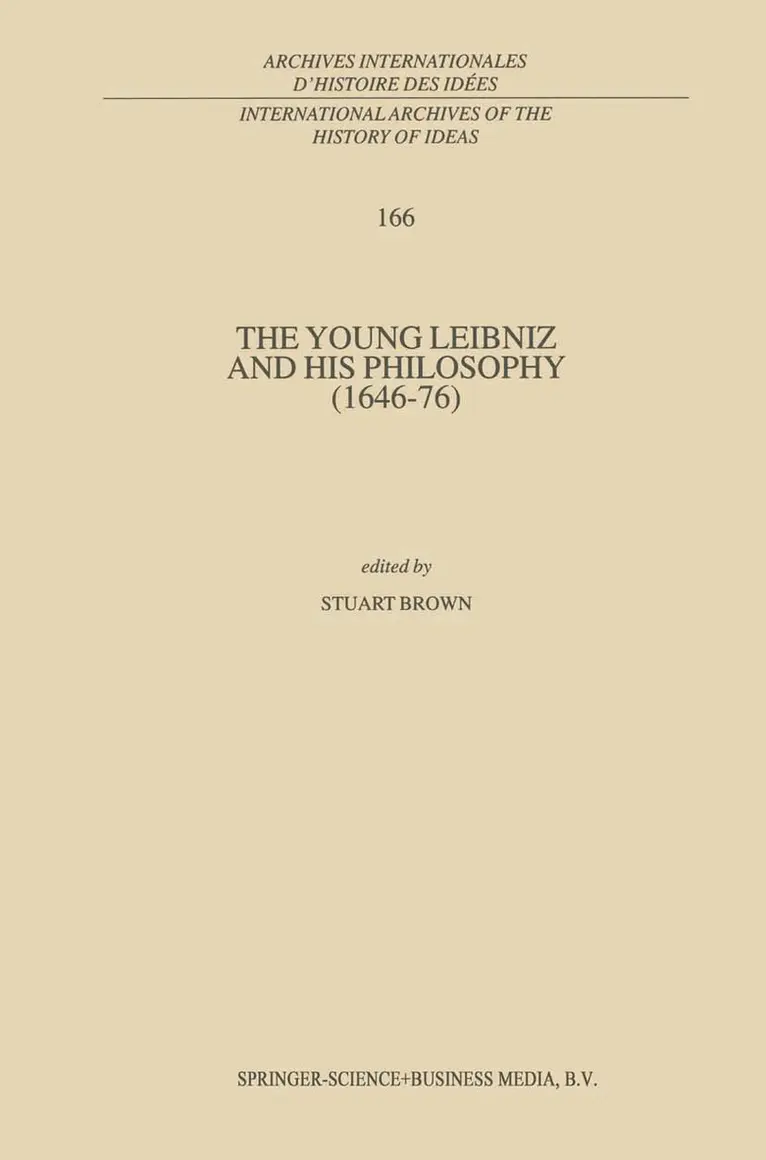
    Young Leibniz and his Philosophy (1646–76)

    AvStuart Brown

    Inbunden, Engelska, 1999

    Del 166 i serien International Archives of the History of Ideas Archives internationales d'histoire des idées

    1 626 kr

    Beställningsvara. Skickas inom 10-15 vardagar. Fri frakt över 249 kr.

    Beskrivning

    Despite the importance of Leibniz's mature philosophy, his early work has been relatively neglected. This collection begins with an overview of his formative years and includes 12 original papers by internationally-known scholars. The contributions reflect the wide range of the young Leibniz's philosophical interests and his interests in related subjects, including law, physics and theology. Some chapters explore his relationship to other philosophers, including his teachers in Leipzig and Jena and his Paris friend Tschirnhaus, as well as Hobbes and Spinoza. Others focus on particular periods or texts and deal with themes ranging from ethics and free-will to his philosophically-significant account of transubstantiation and his early monadology. Some of the topics are familiar to Leibniz students - harmony, sufficient reason and possible worlds, for instance - but others are less familiar - for instance, his attitude to historical truth, millenarianism and the relation of mathematics to the natural world. The book provides an introduction to Leibniz's early philosophy and throws light on the development of some of the doctrines with which he is particularly associated.

    Produktinformation

    • Utgivningsdatum:1999-10-31
    • Mått:156 x 234 x 23 mm
    • Vikt:664 g
    • Format:Inbunden
    • Språk:Engelska
    • Serie:International Archives of the History of Ideas Archives internationales d'histoire des idées
    • Antal sidor:314
    • Förlag:Kluwer Academic Publishers
    • ISBN:9780792359975

    Utforska kategorier

    • Kulturvetenskap inom Samhälle och politik
    • Filosofiska discipliner inom Filosofi och religion

    Innehållsförteckning

    • Leibniz’s formative years (1646–76): an overview.- The young Leibniz and his teachers.- Immeatio and emperichoresis. The theological roots of harmony in Bisterfeld and Leibniz.- Deus sive harmonia universalis est ultima ratio rerum: the conception of God in Leibniz’s early philosophy.- Transubstantiation, physics and philosophy at the time of the Catholic Demonstrations.- The young Leibniz and the problem of historical truth.- Mathematics and nature in Leibniz’s early philosophy.- Leibniz and ethics: the years 1669–72.- Leibniz and millenarianism.- Sufficient reason and human freedom in the Confessio Philosophi.- Atoms, minds and vortices in De Summa Rerum: Leibniz vis-à-vis Hobbes and Spinoza.- Leibniz, Spinoza, and Tschirnhaus: multiple worlds, possible worlds.- The proto-monadology of the De Summa Rerum.- A bibliography of the Young Leibniz and his background.