• Fri frakt över 249 kr
  • •
  • Snabba leveranser
  • •
  • Billiga böcker
Kundservice

Du är på sajten för privatpersoner.

Företag, bibliotek eller offentlig verksamhet?

Du handlar på classic.bokus.com, där alla dina funktioner finns intakta.
Till classic.bokus.com
Bokus logotyp. Gå till startsidan.
  • Erbjudanden
  • Nyheter
  • Student
  • Topplistor
  • Barn & ungdom
  • Bokus Play
  • E-böcker
  • Pocketböcker
  • Spel & pussel

10% rabatt på allt med kod: NYSTART10 →

Sidfot

Mina sidor

    Hjälp

    • Kundservice
    • Vanliga frågor och svar
    • Frakt och leverans
    • Retur vid ångerrätt
    • Reklamera vara
    • Betalning
    • Köpvillkor
    • Allmänna villkor
    • Information om webbplatsens tillgänglighet

    Om Bokus

    • Om oss
    • Pressrum
    • För studenter
    • För företag
    • För bibliotek och offentlig verksamhet
    • För leverantörer
    • Hållbarhet

    Populärt

    • Aktuella erbjudanden
    • Presentkort
    • Studentlitteratur
    • Nya böcker
    • Topplistor
    • Signerade böcker
    • Engelska böcker

    Inspiration

    • Boktips
    • BookTok
    • Populära bokserier
    • Barnbokskaraktärer
    • Populära författare
    Logotyp för Bokus
    Följ oss på Facebook (extern länk)Följ oss på Instagram (extern länk)Följ oss på YouTube (extern länk)Följ oss på TikTok (extern länk)
    bokus @ CookiesAnpassa cookiesIntegritetspolicyKöpvillkor
    Till Citymail hemsida (extern länk)Till Budbee hemsida (extern länk)Till Postnord hemsida (extern länk)Till Schenker hemsida (extern länk)Till Early Bird hemsida (extern länk)Till Walleys hemsida (extern länk)
    1. Naturvetenskap och teknik
    2. Matematik och naturvetenskap
    3. Kemi
    4. Analytisk kemi

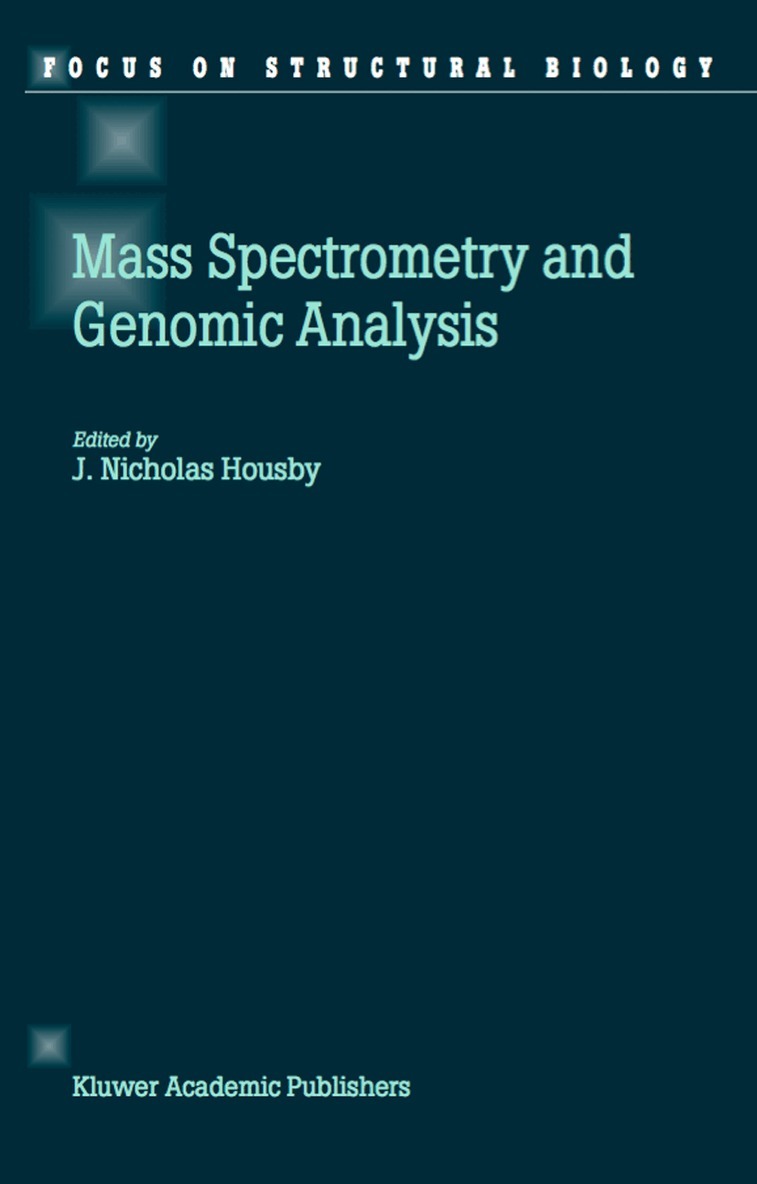
    Mass Spectrometry and Genomic Analysis

    AvJ.N. Housby

    Inbunden, Engelska, 2001

    Del i serien Focus on Structural Biology

    1 086 kr

    Beställningsvara. Skickas inom 10-15 vardagar. Fri frakt över 249 kr.

    Beskrivning

    The human genome project is set to revolutionize health care and medicine. The genetic make up of each individual gives clues as to the genetic factors that predispose one to a particular genetic disease. Single Nucleotide Polymorphisms (SNPs), single base changes in the nucleotide DNA sequence of individuals, are thought to be the main cause of genetic variation. By comparing patterns of SNP allele frequencies between disease affected and control populations, disease associated SNPs can be identified and potential disease gene(s) located. These types of study necessitate genotyping of thousands of SNPs which requires the use of powerful, high throughput, systems of analysis. Mass spectrometry is fast becoming the preferred technology for this type of high throughput analysis. This book contains a collection of descriptions of some of the most outstanding advances in the field of mass spectrometry from which, it is hoped, the reader will be able to learn both the principles and the most up-to-date methods for its use in genomic analysis. It covers the general principles of the technologies and more in depth detailed descriptions for more academic reading and information.

    Produktinformation

    • Utgivningsdatum:2001-10-31
    • Mått:155 x 235 x 15 mm
    • Vikt:430 g
    • Format:Inbunden
    • Språk:Engelska
    • Serie:Focus on Structural Biology
    • Antal sidor:149
    • Upplaga:2001
    • Förlag:Kluwer Academic Publishers
    • ISBN:9780792371731

    Utforska kategorier

    • Analytisk kemi inom Naturvetenskap och teknik
    • Biologi inom Naturvetenskap och teknik
    • Människans biologi inom Naturvetenskap och teknik

    Innehållsförteckning

    • INTRODUCTION; PREFACE; CHAPTER 1. TJ. Griffin, LM. Smith, Single-Nucleotide Polymorphism Analysis by MALDI-TOF Mass Spectrometry. 1. Introduction. 1.1. MALDI-TOF MS. 2. Analysis of Peptide Nucleic Acid Hybridisation Probes. 2.1. Design of PNA Hybridisation Probes. 2.2. Analysis of Polymorphisms in Tyrosinase Exon 4. 3. Direct Analysis of Invasive Cleavage Products. 3.1. The Invader Assay. 3.2. Direct Analysis of SNPs From Human Genomic DNA. 4. Conclusions. 5. Experimental Methods. 5.1. PNA Probe Synthesis and Preparation. 5.2. PCR Amplification of Exon 4 of the Tyrosinase Gene. 5.3. Hybridisation of PNA Probes to Immobilised Gene Targets. 5.4. MALDI-TOF MS Analysis of PNA Probes. 5.5. Invader Squared Reaction. 5.6. MALDI-TOF MS Sample Preparation of Cleavage Products. 5.7. MALDI-TOF MS Analysis of Cleavage Products. Affiliations. References. CHAPTER 2. LA. Haff, AC. Belden, LR. Hall, PL. Ross, IP. Smirnov, SNP Genotyping by MALDI-TOF Mass Spectrometry. 1. Introduction. 2. SNP Analysis by Single Base Extension of Primers. 3. Materials and Methods. 4. Design Considerations for the SNP Genotyping Assay. 4.1. Design of PCR Product. 4.2. PCR Product Polishing. 4.3. Primer Design Rules for Monoplex SNP Typing. 4.4. Mass Calculations. 4.5. Primer Design Rules for Multiplexed Reactions. 4.5.1. Multiplexing with Primer Pools of Six or Fewer Primers. 4.5.2. Recommended Primer Pool Design: More Than Six Primers. 4.6 Primer Quality. 5. The Single Base Extension Reaction. 5.1. Desalting of Primer Extension Reactions. 5.2. MALDI-TOF Conditions. 5.3. Determination of Bases Added to the Primer. 6. Modification of the SNP Typing Assay to Support Allele Frequency. Determination. 7. Conclusions. 8. References. CHAPTER 3. Hubert Köster, MASSARRAY™: Highly Accurate and Versatile High Throughput Analysis of Genetic Variations. 1. Introduction. 2. MassARRAY™ Technology. 3. Methodology of MassARRAY™ Technology. 4. Diagnostic Applications of MassARRAY™ Technology for Analysis ofDNA Sequence Variations. 5. Application of MassARRAY™ for Confirmation and Validation of Single Nucleotide Polymorphisms. 6. Conclusions. 7. Materials and Methods. 8. Acknowledgements. 9. References. CHAPTER 4. S. Sauer, D. Lechner, IG. Gut, The GOOD Assay. 1. Introduction. 2. SNP Genotyping by MALDI. 3. How to Improve the Analysis of DNA by MALDI. 4. Principles of the GOOD Assay. 5. Variations of the GOOD Assay. 6. Materials and Method of the GOOD Assay. 7. Applications of the GOOD Assay. 8. The Issue of DNA Quality. 9. Physical Haplotyping by the GOOD Assay. 10. Quantitation. 11. Automation of the GOOD Assay. 12. Outlook. 13. References.CHAPTER 5. PH. Tsatsos, V. Vasiliskov, A. Mirzabekov, Microchip Analysis of DNA Sequence by Contiguous Stacking of Oligonucleotides and Mass Spectrometry. 1. Introduction. 2. Magichip properties. 2.1. Production of MAGIChip. 2.2. Activation of Probes. 2.3. Chemical Immobilisation of Probes. 2.4. Preparation of the Target. 3. Hybridisation. 3.1. Theoretical Considerations of Hybridisation. 3.2. Hybridisation on Microchips. 4. Generic Microchip. 5. Principle of Contiguous Stacking Hybridisation. 6. Monitoring. 6.1. Fluorescence. 6.2. Laser Scanner. 6.3. Mass Spectrometry. 6.4. Example of Mutation Detection by CSH and MALDI-TOF Mass Spectrometry. 7. Conclusions. 8. Acknowledgements. 9. References. CHAPTER 6. PE. Jackson, MD. Friesen, JD. Groopman, Short Oligonucleotide Mass Analysis (SOMA): an ESI-MS Application for Genotyping and Mutation Analysis. 1. Introduction. 2. Short Oligonucleotide Mass Analysis. 2.1. Method Outline. 2.2. Design of PCR Primers and Fragments for Analysis. 2.3. Typical PCR Reaction Conditions. 3. Electrospray Ionisation Mass Spectrometry. 3.1. Formation of Ions. 3.2. Tandem Mass Spectrometry. 3.3. Typical ESI-MS Settings for SOMA. 4. Purification Procedures. 4.1. Phenol/Chloroform Extraction and Ethanol Precipitation. 4.2. In-line HPLC Purification. 5. Genotyping Using SOMA. 5.1. APC Genotyping in HumanSubjects. 5.2. APC Genotyping in Min Mice. 6. Mutation Detection Using SOMA. 6.1. Analysis of p53 Mutations in Liver Cancer Patients. 6.1.1. p53 Mutations in Liver Tumours. 6.1.2. p53 Mutations in Plasma Samples. 7. Advantages and Disadvantages of SOMA. 8. Future Perspectives. 9. Acknowledgements. 10. References. CHAPTER 7. WV. Bienvenut, M. Müller, PM. Palagi, E. Gasteiger, M. Heller, E. Jung, M. Giron, R. Gras, S. Gay, PA. Binz, G J. Hughes, JC. Sanchez, RD. Appel, DF. Hochstrasser, Proteomics and Mass Spectrometry: Some Aspects and Recent Developments. 1. Introduction to Proteomics. 2. Protein Biochemical and Chemical Processing Followed by Mass Spectrometric Analysis. 2.1. 2-DE Gel Protein Separation. 2.2. Protein Identification Using Peptide Mass Fingerprinting and Robots. 2.2.1. MALDI-MS Analysis. 2.2.2. MS/MS Analysis. 2.2.3. Improvement of the Identification by Chemical Modification of Peptides. 2.3. The Molecular Scanner Approach. 2.3.1. Double Parallel Digestion Process. 2.3.2. 14C Quantitation of the Transferred Product and Diffusion. 3. Protein Identification Using Bioinformatics Tools. 3.1. Protein Identification by PMF Tools Using MS Data. 3.1.1. Peak Detection. 3.1.2. Identification Tools. 3.2. MS/MS Ions Search. 3.3. De Novo Sequencing. 3.4. Other Tools Related to Protein Identification. 3.5. Data Storage and Treatment with LIMS. 3.6. Concluding Remarks. 4. Bioinformatics Tools for the Molecular Scanner. 4.1. Peak Detection and Spectrum Intensity Images. 4.2. Protein Identification. 4.2.1. Validation of Identifications. 4.3. Concluding Remarks. 5. Conclusions. 6. Acknowledgements. 7. References. INDEX.