• Fri frakt över 249 kr
  • •
  • Snabba leveranser
  • •
  • Billiga böcker
Kundservice

Du är på sajten för privatpersoner.

Företag, bibliotek eller offentlig verksamhet?

Du handlar på classic.bokus.com, där alla dina funktioner finns intakta.
Till classic.bokus.com
Bokus logotyp. Gå till startsidan.
  • Erbjudanden
  • Nyheter
  • Student
  • Topplistor
  • Barn & ungdom
  • Bokus Play
  • E-böcker
  • Pocketböcker
  • Spel & pussel

10% rabatt på allt med kod: NYSTART10 →

Sidfot

Mina sidor

    Hjälp

    • Kundservice
    • Vanliga frågor och svar
    • Frakt och leverans
    • Retur vid ångerrätt
    • Reklamera vara
    • Betalning
    • Köpvillkor
    • Allmänna villkor
    • Information om webbplatsens tillgänglighet

    Om Bokus

    • Om oss
    • Pressrum
    • För studenter
    • För företag
    • För bibliotek och offentlig verksamhet
    • För leverantörer
    • Hållbarhet

    Populärt

    • Aktuella erbjudanden
    • Presentkort
    • Studentlitteratur
    • Nya böcker
    • Topplistor
    • Signerade böcker
    • Engelska böcker

    Inspiration

    • Boktips
    • BookTok
    • Populära bokserier
    • Barnbokskaraktärer
    • Populära författare
    Logotyp för Bokus
    Följ oss på Facebook (extern länk)Följ oss på Instagram (extern länk)Följ oss på YouTube (extern länk)Följ oss på TikTok (extern länk)
    bokus @ CookiesAnpassa cookiesIntegritetspolicyKöpvillkor
    Till Citymail hemsida (extern länk)Till Budbee hemsida (extern länk)Till Postnord hemsida (extern länk)Till Schenker hemsida (extern länk)Till Early Bird hemsida (extern länk)Till Walleys hemsida (extern länk)
    1. Samhälle och politik
    2. Samhälle och kultur
    3. Sociala grupper och identitet
    4. Etnicitet

    To Live Upon Hope

    Mohicans and Missionaries in the Eighteenth-Century Northeast

    AvRachel Wheeler

    Inbunden, Engelska, 2008

    702 kr

    Beställningsvara. Skickas inom 10-15 vardagar. Fri frakt över 249 kr.

    Fler format och utgåvor

    Häftad

    452 kr

    Beskrivning

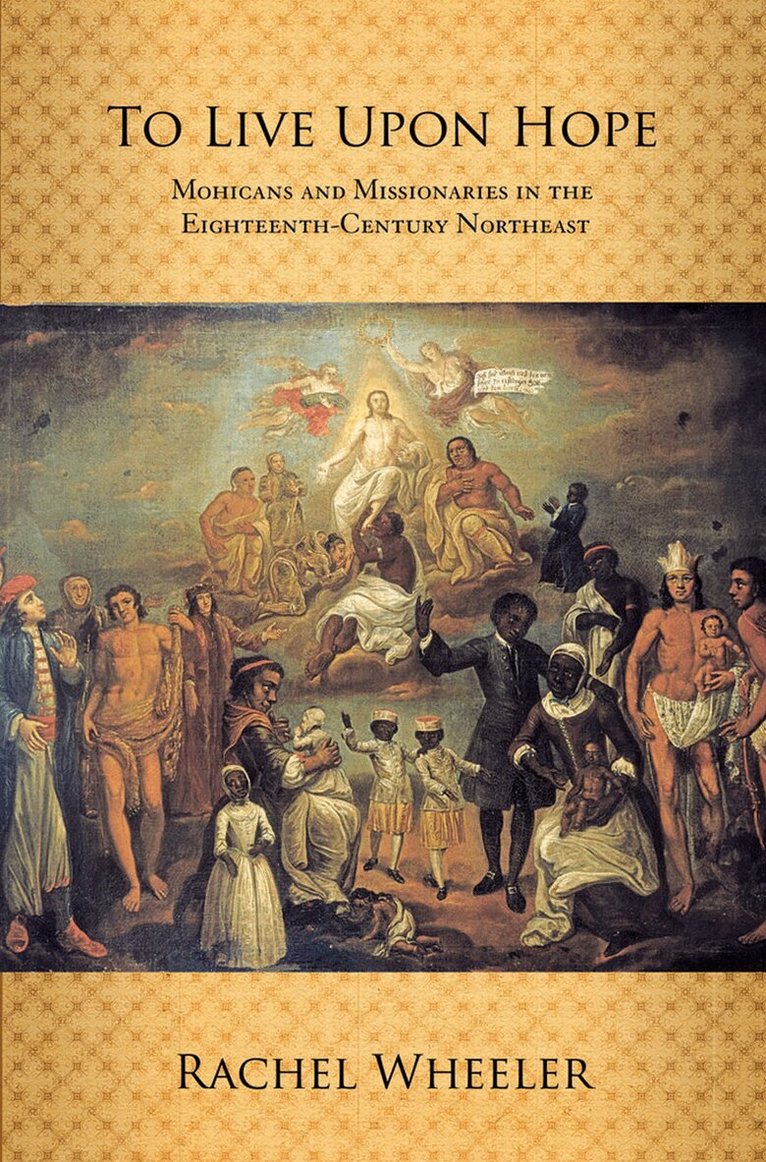
    Two Northeast Indian communities with similar histories of colonization accepted Congregational and Moravian missionaries, respectively, within five years of one another: the Mohicans of Stockbridge, Massachusetts (1735), and Shekomeko, in Dutchess County, New York (1740). In To Live upon Hope, Rachel Wheeler explores the question of what "missionary Christianity" became in the hands of these two native communities.The Mohicans of Stockbridge and Shekomeko drew different conclusions from their experiences with colonial powers. Both tried to preserve what they deemed core elements of Mohican culture. The Indians of Stockbridge believed education in English cultural ways was essential to their survival and cast their acceptance of the mission project as a means of preserving their historic roles as cultural intermediaries. The Mohicans of Shekomeko, by contrast, sought new sources of spiritual power that might be accessed in order to combat the ills that came with colonization, such as alcohol and disease.Through extensive research, especially in the Moravian records of day-to-day life, Wheeler offers an understanding of the lived experience of Mohican communities under colonialism. She complicates the understanding of eighteenth-century American Christianity by demonstrating that mission programs were not always driven by the destruction of indigenous culture and the advancement of imperial projects. To Live upon Hope challenges the prevailing view of accommodation or resistance as the two poles of Indian responses to European colonization. Colonialism placed severe strains on native peoples, Wheeler finds, yet Indians also exercised a level of agency and creativity that aided in their survival.

    Produktinformation

    • Utgivningsdatum:2008-04-23
    • Mått:152 x 229 x 28 mm
    • Vikt:907 g
    • Format:Inbunden
    • Språk:Engelska
    • Antal sidor:336
    • Förlag:Cornell University Press
    • ISBN:9780801446313

    Utforska kategorier

    • Etnicitet inom Samhälle och politik
    • Socialhistoria och kulturhistoria inom Historia och arkeologi
    • Religion: allmänt inom Filosofi och religion

    Mer om författaren

    Rachel Wheeler is Associate Professor of Religious Studies at Indiana University–Purdue University Indianapolis.

    Recensioner i media

    Behind the mythology of The Last of the Mohicans and recent revisionist accounts, Native and otherwise, that regard the Christian mission to the Indians as an unmitigated disaster, there lies a tangled and often deeply moving tale, well told by Rachel Wheeler.... We should read it to better understand a crucial episode in the national story, and also to shine a comparative light on the working out of our own faith.(Christianity Today) In this meticulously researched and well-written book, Rachel Wheeler adds to the growing scholarship exploring how Native American communities adapted 'missionary Christianity' to suit their own needs....Wheeler successfully examines some of the complex responses native peoples developed in a rapidly changing colonial world.- Shawn G. Wiemann (History: Reviews of New Books) Rachel Wheeler provides an impressive amount of texture, detail, and contingency as she traces the outline of two very different and intriguing mission towns. Throughout, Wheeler's emphasis is on how Indians 'adapted Christianity to preserve and construct community.' Wheeler is a deft storyteller. To Live Upon Hope is perhaps the most sophisticated analysis of northeastern Indian lifeworlds and religious interiority that we have to date, in part because of Wheeler's mastery of the difficult eighteenth-century Moravian manuscript archives—a feat claimed only by a few contemporary American historians. And for this and many other reasons, this excellent volume is sure to be enjoyed by students and historians interested in Native American studies and/or the religious history of early America.(Journal of Social History) This is a wonderful book for what it does for the field of mission history. Comparing two communities influenced by two different denominations brings into sharp relief the competition for native souls in colonial British America; Wheeler never loses sight of the ferocious power dynamics of colonialism. Wheeler has also accomplished a tough task, showing how Mohicans made two types of Protestantism their own. To Live upon Hope is a reminder that Christianity was not always a shock-troop weapon against native peoples; it could become a source of Indian pride and strength. Wheeler's dual approach is also a tragic statement on the bar of civility and racial superiority with some mission efforts that always set limits on native acceptance into Anglo-American society. There is much left to ponder with this work.(Journal of American History) To Live Upon Hope is a monumental study of the Mohican Indian mission experience in the eighteenth century.... Using her tenacious skill at uncovering countless obscure manuscript sources, Rachel Wheeler has re-created the little-known story of these Indian missions and, in comparing the two, placed her emphasis on the 'reconfiguration of peoples and the formation of racial identity.'... To Live Upon Hope outlines the careers of many fascinating characters, including Umpachene and Hendrick at Stockbridge and Shabash, Tschoop, and Joshua at Shekomeko. Wheeler's use of the sources is thorough and unmatched; indeed, her study serves as a sourcebook for the period.... Wheeler's history is a major work and should remain as the definitive study of the Mohican mission experience for many years to come. Demonstrating clearly and eloquently that the Mohicans did not rely on hope alone to survive in a changing world, she shows that they acted and they adapted.- Lion Miles (The New England Quarterly) To Live upon Hopecontributes significantly to underattended topics through careful study of local archives. Rachel Wheeler applies appropriately adapted theory to develop fresh arguments about the relations of power between imperial and indigenous agency in a book that should make useful reading for scholars in Native American Studies and Colonial/Postcolonial Studies.... Chapter six (Mohican Men and Jesus as Manitou) and chapter eight (Mohican Women and the Community of the Blood) best exemplify her central arguments about Mohican Christianity. They are worth the purchasing price of the whole book for anyone interested in discussing the gendered dimensions of Indian religious conversion in eighteenth century America as part of an advanced undergraduate or graduate seminar.(James O'Neil Spady) Wheeler is particularly strong on Moravian Mohican spirituality, including its gendered dimensions, and her thorough and compelling reading of Edwards's relationship with the Stockbridge Mohicans must now stand as the authoritative discussion of that subject. The comparative dimension only adds to the book's richness, particularly by highlighting perhaps inadvertently the relatively limited role played by piety and religious practice, as opposed to political and material benefits, in motivating eastern Indians to work with Anglo-Protestant missionaries. To Live upon Hope is sure to become required reading for anyone interested in Indians and/or religion, particularly in eighteenth-century North America.- Neal Salisbury (William and Mary Quarterly)

    Innehållsförteckning

    • 1. Introduction: Indian and ChristianPart I. Hope2. The River God and the Lieutenant3. Covenants, Contracts, and the Founding of StockbridgePart II. Renewal4. The Chief and the Orator5. Moravian Missionaries of the Blood6. Mohican Men and Jesus as ManitouPart III. Preservation7. The Village Matriarch and the Young Mother8. Mohican Women and the Community of the BloodPart IV. Persecution9. The Dying Chief and the Accidental Missionary10. Indian and White Bodies Politic at StockbridgeConclusion11. Irony and Identity12. The Cooper and the Sachem13. Epilogue: Real and Ideal IndiansAbbreviationsNotesIndex