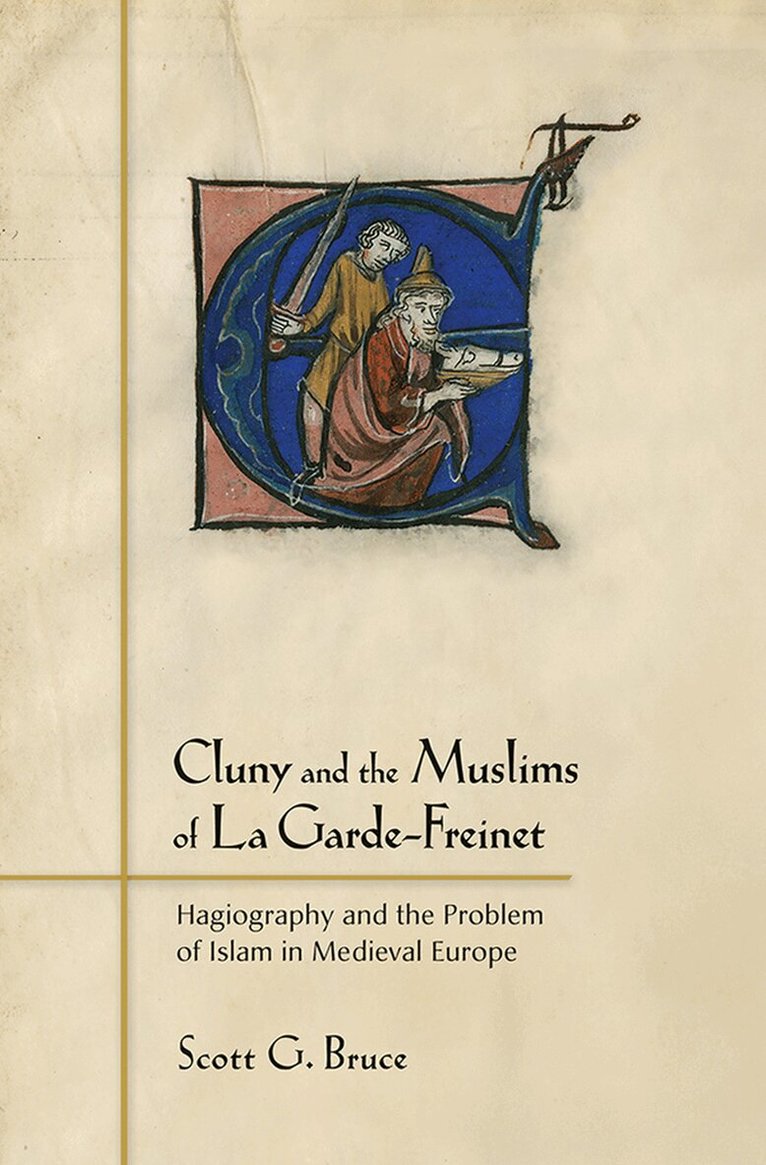
Inbunden, Engelska, 2015
Cluny and the Muslims of La Garde-Freinet
Hagiography and the Problem of Islam in Medieval Europe
495 kr
Beställningsvara. Skickas inom 7-10 vardagar. Fri frakt över 249 kr.
Beskrivning
Produktinformation
- Utgivningsdatum: 2015-11-05
- Mått: 155 x 235 x undefined mm
- Vikt: 454 g
- Format: Inbunden
- Språk: Engelska
- Antal sidor: 174
- Förlag: Cornell University Press
- ISBN: 9780801452994
Utforska kategorier
Mer om författaren
Scott G. Bruce is Professor of Medieval History at Fordham University in the Bronx, New York. He is the author of Silence and Sign Language in Medieval Monasticism and editor of Ecologies and Economies in Medieval and Early Modern Europe.
Recensioner i media
Overall, this is an impressive book. It diligently unpacks the development of the hagiographical legend surrounding the kidnapping of Maiolus and assesses its impact upon later Cluniac authors—especially Peter the Venerable. It makes positive contributions to several major debates surrounding Peter and the broad character of the Cluniac engagement with non-Christians and places that discussion within a long-term context. Bruce expresses himself with some neat turns of phrase and the book as a whole is a very easy read. It is much to be recommended!(Islam and Christian-Muslim Relations) Crisply written and easy to read, given the density of some of the material. Highly recommended.(Reading Religion) A thoughtful and provocative book... Bruce has demonstrated the importance of the vita of Maiolus on the attitudes of the twelfth-century abbot and raised new ways to think about Peter's approach to Islam.(Journal of Religion) Meticulously researched and highly readable, this book will be a valuable addition to the shelves of all scholars of polemic and interreligious interactions in the Middle Ages. In drawing scholarly attention to the influence of devotional and hagiographical texts in shaping the attitudes of medieval theologians, Bruce provides fresh material and an original perspective to ongoing conversations about the ways in which medieval Christian writers interacted with Islam and the texts that shaped their thought-worlds.(Journal of Medieval Religious Cultures) This is a welcome work, bringing greater attention to a small but telling episode in the life of one Cluniac abbot and the polemical work of another Cluniac abbot, while also satisfying a modern desire for insight into Christian-Muslim relations in the past.(American Historical Review)
Betyg & recensioner
0 recensioner
Inga recensioner tillgängliga.