• Fri frakt över 249 kr
  • •
  • Snabba leveranser
  • •
  • Billiga böcker
Kundservice

Du är på sajten för privatpersoner.

Företag, bibliotek eller offentlig verksamhet?

Du handlar på classic.bokus.com, där alla dina funktioner finns intakta.
Till classic.bokus.com
Bokus logotyp. Gå till startsidan.
  • Erbjudanden
  • Nyheter
  • Student
  • Topplistor
  • Barn & ungdom
  • Bokus Play
  • E-böcker
  • Pocketböcker
  • Spel & pussel

10% rabatt på allt med kod: NYSTART10 →

Sidfot

Mina sidor

    Hjälp

    • Kundservice
    • Vanliga frågor och svar
    • Frakt och leverans
    • Retur vid ångerrätt
    • Reklamera vara
    • Betalning
    • Köpvillkor
    • Allmänna villkor
    • Information om webbplatsens tillgänglighet

    Om Bokus

    • Om oss
    • Pressrum
    • För studenter
    • För företag
    • För bibliotek och offentlig verksamhet
    • För leverantörer
    • Hållbarhet

    Populärt

    • Aktuella erbjudanden
    • Presentkort
    • Studentlitteratur
    • Nya böcker
    • Topplistor
    • Signerade böcker
    • Engelska böcker

    Inspiration

    • Boktips
    • BookTok
    • Populära bokserier
    • Barnbokskaraktärer
    • Populära författare
    Logotyp för Bokus
    Följ oss på Facebook (extern länk)Följ oss på Instagram (extern länk)Följ oss på YouTube (extern länk)Följ oss på TikTok (extern länk)
    bokus @ CookiesAnpassa cookiesIntegritetspolicyKöpvillkor
    Till Citymail hemsida (extern länk)Till Budbee hemsida (extern länk)Till Postnord hemsida (extern länk)Till Schenker hemsida (extern länk)Till Early Bird hemsida (extern länk)Till Walleys hemsida (extern länk)
    1. Historia och arkeologi
    2. Historia
    3. Asiens historia

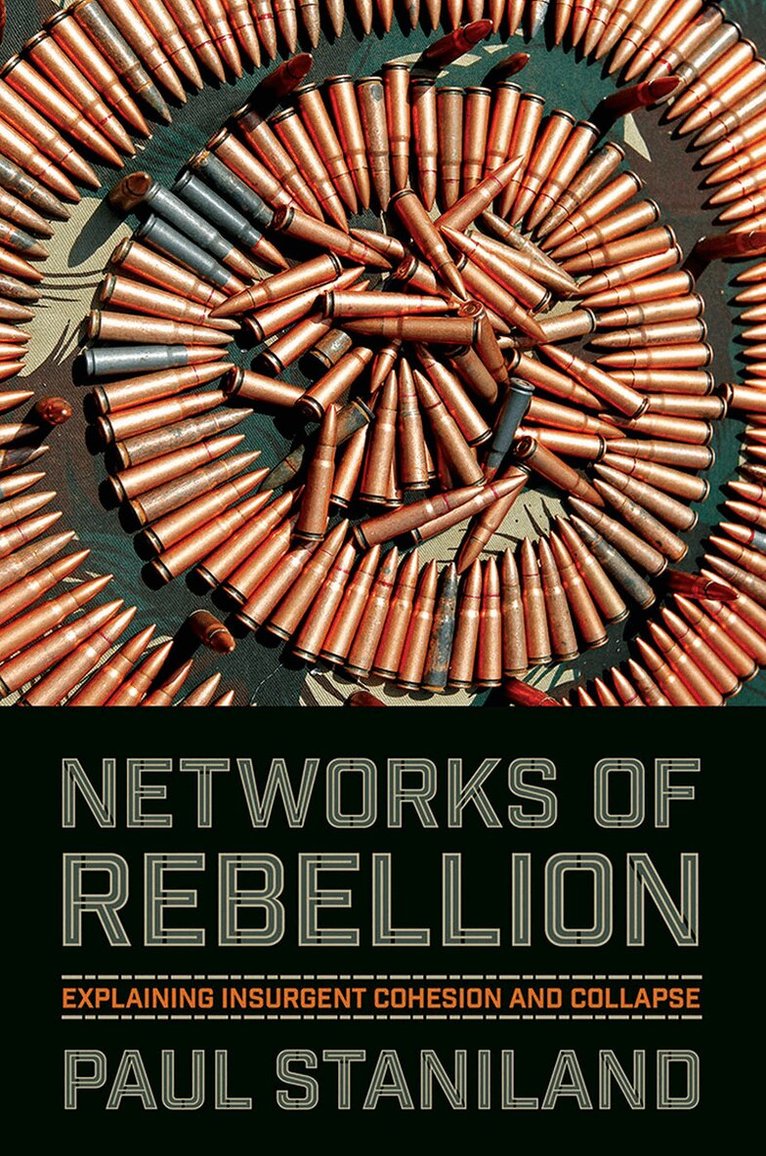
    Networks of Rebellion

    Explaining Insurgent Cohesion and Collapse

    AvPaul Staniland

    Häftad, Engelska, 2014

    Del i serien Cornell Studies in Security Affairs

    450 kr

    Beställningsvara. Skickas inom 10-15 vardagar. Fri frakt över 249 kr.

    Fler format och utgåvor

    Inbunden

    1 665 kr

    Beskrivning

    Insurgent cohesion is central to explaining patterns of violence, the effectiveness of counterinsurgency, and civil war outcomes. Cohesive insurgent groups produce more effective war-fighting forces and are more credible negotiators; organizational cohesion shapes both the duration of wars and their ultimate resolution. In Networks of Rebellion, Paul Staniland explains why insurgent leaders differ so radically in their ability to build strong organizations and why the cohesion of armed groups changes over time during conflicts. He outlines a new way of thinking about the sources and structure of insurgent groups, distinguishing among integrated, vanguard, parochial, and fragmented groups. Staniland compares insurgent groups, their differing social bases, and how the nature of the coalitions and networks within which these armed groups were built has determined their discipline and internal control. He examines insurgent groups in Afghanistan, 1975 to the present day, Kashmir (1988–2003), Sri Lanka from the 1970s to the defeat of the Tamil Tigers in 2009, and several communist uprisings in Southeast Asia during the Cold War. The initial organization of an insurgent group depends on the position of its leaders in prewar political networks. These social bases shape what leaders can and cannot do when they build a new insurgent group. Counterinsurgency, insurgent strategy, and international intervention can cause organizational change. During war, insurgent groups are embedded in social ties that determine they how they organize, fight, and negotiate; as these ties shift, organizational structure changes as well.

    Produktinformation

    • Utgivningsdatum:2014-04-18
    • Mått:155 x 235 x 19 mm
    • Vikt:907 g
    • Format:Häftad
    • Språk:Engelska
    • Serie:Cornell Studies in Security Affairs
    • Antal sidor:312
    • Förlag:Cornell University Press
    • ISBN:9780801479298
    • Utmärkelser:Winner, 2014 Joseph S. Lepgold Book Prize (Georget

    Utforska kategorier

    • Asiens historia inom Historia och arkeologi
    • Politisk aktivism inom Samhälle och politik
    • Krig och försvar inom Samhälle och politik

    Mer om författaren

    Paul Staniland is Assistant Professor of Political Science and Codirector of the Program on International Security Policy at the University of Chicago.

    Recensioner i media

    Networks of Rebellion is a tour de force, providing a new theory for understanding why rebel groups have different types of internal organization, and why some hold up to the pressures of war while other collapse. The organization of rebellion is critical for understanding both patterns of violence and the ways that wars end.... It is elegantly written, well argued, and thoroughly researched. Staniland has clearly made a significant contribution to our understanding of rebellion. Moreover, this book is among the most policy-relevant works in political science at this juncture. It is not only a must read for scholars, but for practitioners trying to grasp the intricacies of insurgency, multiparty civil wars, and conflict resolution more generally.- Kathleen Gallagher Cunningham (H-Diplo/ISSF Roundtable Reviews) Paul Staniland is emerging as one of the most creative and influential scholars of political violence. His Networks of Rebellion will cement that reputation.... the book is a model of cogent theorization, inventive but systematic research design, and effective writing. It constitutes a substantial contribution to the scholarship on political violence and a milestone for field-based, comparative research.... Staniland's work is seminal. To understand civil war we need to understand insurgents, and to understand insurgents we need to look at the social foundations of insurgent organizations.... Networks of Rebellion is impressive empirically. The writing is clear and compelling. The book deserves the recognition it has received and is likely to continue to receive.- Scott Strauss (Perspectives on Politics) Paul Staniland's Networks of Rebellion: Explaining Insurgent Cohesionand Collapse is an important contribution to the analysis ofterror networks and their motivations.It deals with a varietyof conflicts, many of which Staniland acknowledges as being under-researched, and presents clear, understandable explanations of eachorganization under review.Through detailed case studies, Staniland highlights the subtle differences between the groups, which in other studies might be discussed collectively under particular titles such as religious extremist or maynot be discussed at all if they are smaller or do not pose the largest threat—and illustrates how subtle differences can have significant implications.- Patrick Finnegan (Parameters) Staniland's project is diligent in its methodological rigour, impressive in its empirical findings, and assertive and compelling in the theory it builds accordingly. Staniland's contribution to insurgency studies is reminiscent to how the field of critical terrorism studies emerged from scholarly dissatisfaction with the pre-existing quality of work in terrorism studies, particularly in terms of its epistemology, ontology, ethics, and praxis. His mission is ambitious, but Networks of Rebellion delivers against it and has laid the foundations of a new research agenda.- Will Carter (Small Wars and Insurgencies) With the reported emergence of some 1,000 rebel groups in the spreading Syrian civil war and the stark contrast of those that seem organized and formidable as opposed to transitory, a careful study of insurgents' structures and networks is most timely. Staniland... focuses on whether the groups are 'horizontally' or 'vertically' integrated or relatively isolated across/within locations, collaborators, and subsidiaries.... This book nicely presents a coherent overall typology complete with extenuating circumstances of contextual and political environments within which groups operate.(Choice) Staniland's three case studies serve as comparative evidence to test the author's theory. Additionally, the case studies make valuable contributions to the study of Kashmir, Afghanistan, and Sri Lanka. The author's personal field research supports each of the three case studies, which adds to their overall value and lends support to his argument. Serious students of insurgency, irregular warfare, strategy, international relations, and Southern Asia will value this groundbreaking study. Staniland's work is very much worth reading, especially for those who wish to understand insurgent organizations, particularly insurgent organizations in Kashmir, Afghanistan, and Sri Lanka.- Lt. Col. Jonathan P. Klug (Military Review)

    Innehållsförteckning

    • 1. Organizing InsurgencyPart I. Theorizing Rebellion2. Insurgent Origins3. Insurgent ChangePart II. Comparative Evidence from South Asia4. Azad and Jihad: Trajectories of Insurgency in Kashmir5. Organizing Rebellion in Afghanistan6. Explaining Tamil Militancy in Sri LankaPart III. Extensions and Implications7. "Peasants and Commissars": Communist Tides in Southeast Asia8. Insurgency, War, and Politics

    Betyg & recensioner

    5/5