• Fri frakt över 249 kr
  • •
  • Snabba leveranser
  • •
  • Billiga böcker
Kundservice

Du är på sajten för privatpersoner.

Företag, bibliotek eller offentlig verksamhet?

Du handlar på classic.bokus.com, där alla dina funktioner finns intakta.
Till classic.bokus.com
Bokus logotyp. Gå till startsidan.
  • Erbjudanden
  • Nyheter
  • Student
  • Topplistor
  • Barn & ungdom
  • Bokus Play
  • E-böcker
  • Pocketböcker
  • Spel & pussel

10% rabatt på allt med kod NYSTART10 →

Sidfot

Mina sidor

    Hjälp

    • Kundservice
    • Vanliga frågor och svar
    • Frakt och leverans
    • Retur vid ångerrätt
    • Reklamera vara
    • Betalning
    • Köpvillkor
    • Allmänna villkor
    • Information om webbplatsens tillgänglighet

    Om Bokus

    • Om oss
    • Pressrum
    • För studenter
    • För företag
    • För bibliotek och offentlig verksamhet
    • För leverantörer
    • Hållbarhet

    Populärt

    • Aktuella erbjudanden
    • Presentkort
    • Studentlitteratur
    • Nya böcker
    • Topplistor
    • Signerade böcker
    • Engelska böcker

    Inspiration

    • Boktips
    • BookTok
    • Populära bokserier
    • Barnbokskaraktärer
    • Populära författare
    Logotyp för Bokus
    Följ oss på Facebook (extern länk)Följ oss på Instagram (extern länk)Följ oss på YouTube (extern länk)Följ oss på TikTok (extern länk)
    bokus @ CookiesAnpassa cookiesIntegritetspolicyKöpvillkor
    Till Citymail hemsida (extern länk)Till Budbee hemsida (extern länk)Till Postnord hemsida (extern länk)Till Schenker hemsida (extern länk)Till Early Bird hemsida (extern länk)Till Walleys hemsida (extern länk)
    1. Psykologi och pedagogik
    2. Pedagogik
    3. Utbildningsstrategier och utbildningspolitik

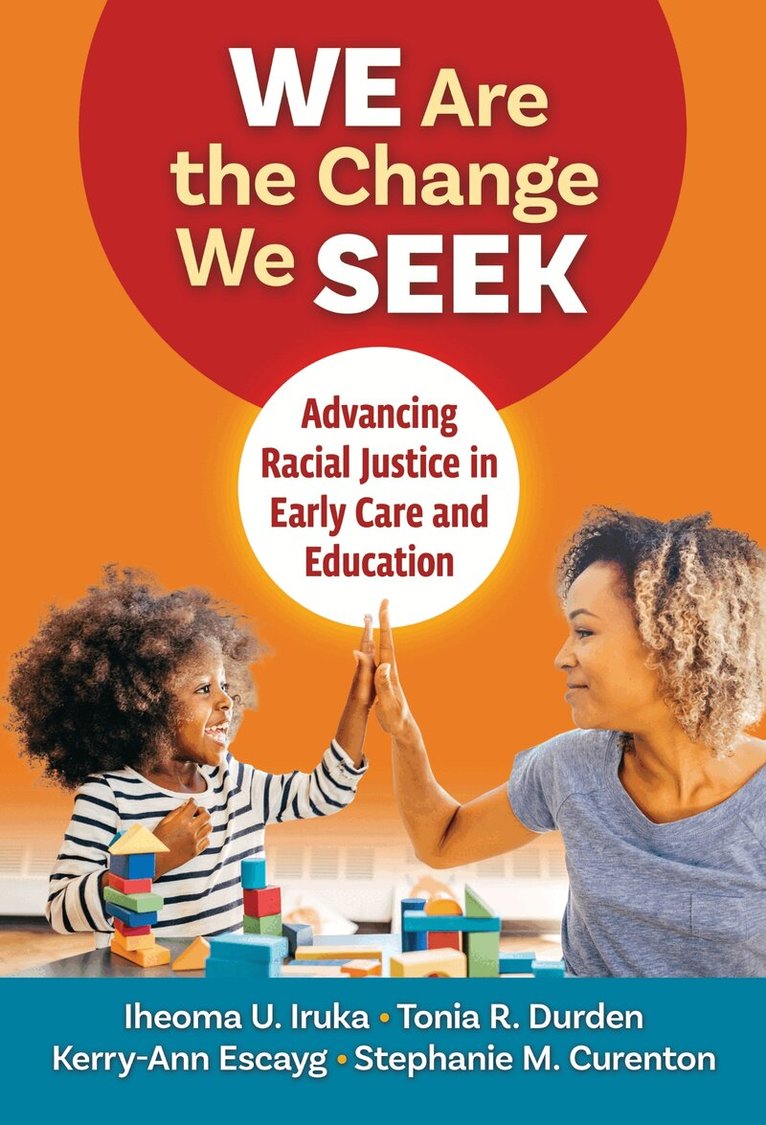
    We Are the Change We Seek

    Advancing Racial Justice in Early Care and Education

    AvIheoma U. Iruka,Tonia R. Durden

    Häftad, Engelska, 2023

    Del i serien Early Childhood Education Series

    379 kr

    Beställningsvara. Skickas inom 5-8 vardagar. Fri frakt över 249 kr.

    Beskrivning

    This timely book will help early care and education teachers, leaders, administrators, coaches, and staff deliver on the promise of high-quality education for all children. The authors provide inspiration, practical tools, and resources through the antibias, antiracist, culturally responsive practices framework (ABAR CRP). This teacher-friendly text shows how to engage in self-inquiry and evaluate current classroom practices while embedding new ones that advance the learning and well-being of children, especially those from minoritized and poor communities. Readers will find tools and assessments to support the implementation of culturally grounded practices that will improve outcomes for diverse children in early childhood settings and systems. This book connects history to current events, supports self-inquiry, encourages a shift in mindset and, most importantly, offers guidance for creating affirming and joyful spaces for young children to learn.Book Features:“Design an Activity for Children” section asks teachers to create a classroom activity incorporating the information they have learned.“Discussions About Real-World Dilemmas” presents a problem and asks readers to discuss how they would resolve it.“Exercises That Promote Critical Reflection” activities that encourages teachers to think about how they are a product of the beliefs, values, and social-political history of their cultural group.“What Would You Do” reflective questions that help teachers to problem-solve how they might react during difficult situations.

    Produktinformation

    • Utgivningsdatum:2023-06-23
    • Mått:161 x 229 x 8 mm
    • Vikt:113 g
    • Format:Häftad
    • Språk:Engelska
    • Serie:Early Childhood Education Series
    • Antal sidor:168
    • Förlag:Teachers' College Press
    • ISBN:9780807768020

    Utforska kategorier

    • Utbildningsstrategier och utbildningspolitik inom Psykologi och pedagogik
    • Skolan och förskolan inom Psykologi och pedagogik

    Mer om författaren

    Iheoma U. Iruka is a research professor in public policy and the founding director of the Equity Research Action Coalition at the Frank Porter Graham Child Development Institute at The University of North Carolina at Chapel Hill. Tonia R. Durden is a clinical professor and birth through five program coordinator in the Department of Early Childhood and Elementary Education at Georgia State University. Kerry-Ann Escayg is an associate professor of teacher education at the University of Nebraska–Omaha. Stephanie M. Curenton is a professor and director of the Center on the Ecology of Early Development program at Boston University.

    Innehållsförteckning

    • ContentsAcknowledgments  viiIntroduction  1How to Use This Book  21.  Racism's Past, Present, and Future  3What Is Racism?  3The Effects of Racism in the United States  11An Intersectionality Lens  18Now What?  212.  Connecting Culturally Responsive, Anti-Bias, and Anti-Racist (CRABAR) Practices  23Anti-Racism and Anti-Bias  24Terminology Matters: Defining Bias and Racism  25Racism in Early Childhood Education  26Introducing the CRABAR Framework  27Now What?  383.  Creating CRABAR Learning Environments  41Spaces for Belonging: Model Learning Environments  42The Classroom Environment: A Review  43Reflection on Afrocentric Classroom Environments  44Prepare to Develop Anti-Racist Classroom Environments  45Now What?  584.  Developing a CRABAR Assessment View  61Purposes of Assessment  62Using a CRABAR Lens for Assessment of Classroom Quality  68Emerging CRABAR Assessments  75Now What?  79How Assessments Should be Used  815.  Valuing the Early Childhood Workforce to Sustain CRABAR Practices  83The Vast Role and Limited Compensation for ECE Professionals  84Low and Inequitable Wages for ECE Professionals Explained by Legacy of Racism and Sexism  85Now What?  976.  Using the RICHER Approach to Elevate the CRABAR Practices  99Deference to Whiteness in ECE Settings  101The RICHER Framework  103Now What?  116Conclusion  121Resources  123References  125Index  143About the Authors  155Land Acknowledgement  155Body Acknowledgment  157