• Fri frakt över 249 kr
  • •
  • Snabba leveranser
  • •
  • Billiga böcker
Kundservice

Du är på sajten för privatpersoner.

Företag, bibliotek eller offentlig verksamhet?

Du handlar på classic.bokus.com, där alla dina funktioner finns intakta.
Till classic.bokus.com
Bokus logotyp. Gå till startsidan.
  • Erbjudanden
  • Nyheter
  • Student
  • Topplistor
  • Barn & ungdom
  • Bokus Play
  • E-böcker
  • Pocketböcker
  • Spel & pussel

10% rabatt på allt med kod: NYSTART10 →

Sidfot

Mina sidor

    Hjälp

    • Kundservice
    • Vanliga frågor och svar
    • Frakt och leverans
    • Retur vid ångerrätt
    • Reklamera vara
    • Betalning
    • Köpvillkor
    • Allmänna villkor
    • Information om webbplatsens tillgänglighet

    Om Bokus

    • Om oss
    • Pressrum
    • För studenter
    • För företag
    • För bibliotek och offentlig verksamhet
    • För leverantörer
    • Hållbarhet

    Populärt

    • Aktuella erbjudanden
    • Presentkort
    • Studentlitteratur
    • Nya böcker
    • Topplistor
    • Signerade böcker
    • Engelska böcker

    Inspiration

    • Boktips
    • BookTok
    • Populära bokserier
    • Barnbokskaraktärer
    • Populära författare
    Logotyp för Bokus
    Följ oss på Facebook (extern länk)Följ oss på Instagram (extern länk)Följ oss på YouTube (extern länk)Följ oss på TikTok (extern länk)
    bokus @ CookiesAnpassa cookiesIntegritetspolicyKöpvillkor
    Till Citymail hemsida (extern länk)Till Budbee hemsida (extern länk)Till Postnord hemsida (extern länk)Till Schenker hemsida (extern länk)Till Early Bird hemsida (extern länk)Till Walleys hemsida (extern länk)
    1. Psykologi och pedagogik
    2. Pedagogik
    3. Utbildningsstrategier och utbildningspolitik

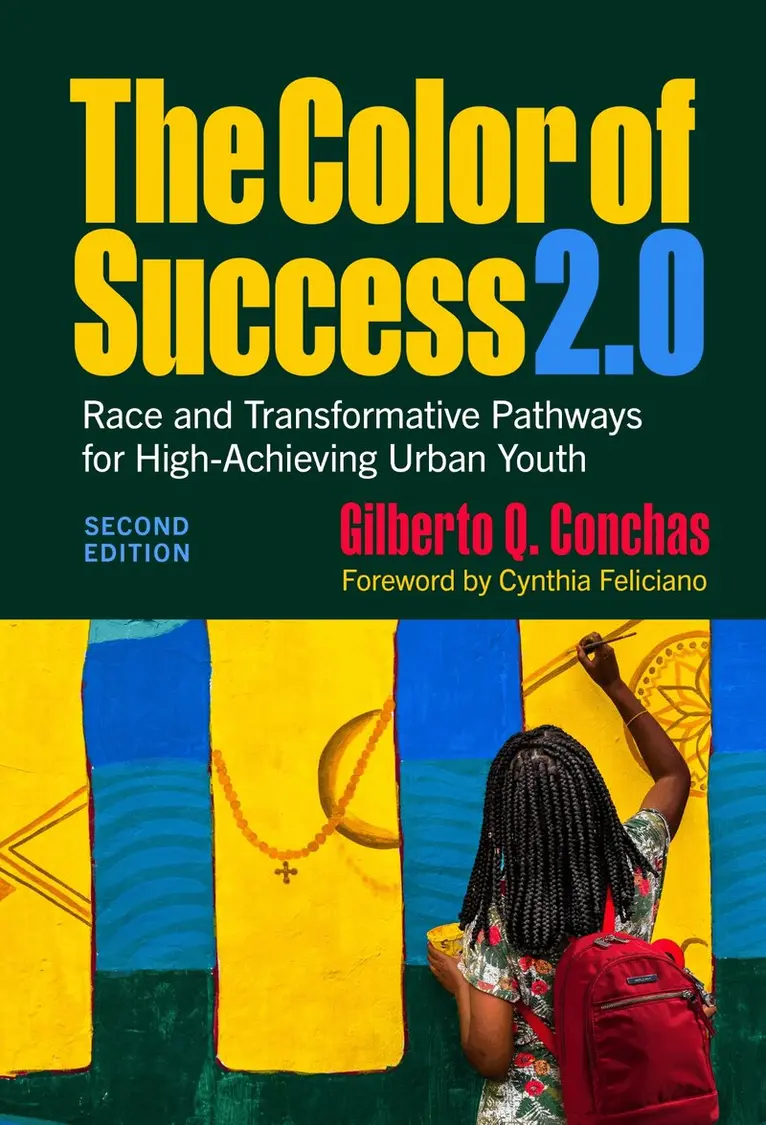
    Color of Success 2.0

    Race and Transformative Pathways for High-Achieving Urban Youth

    AvGilberto Q. Conchas

    Häftad, Engelska, 2024

    419 kr

    Beställningsvara. Skickas inom 5-8 vardagar. Fri frakt över 249 kr.

    Fler format och utgåvor

    Inbunden

    1 217 kr

    Beskrivning

    The first edition of The Color of Success was a groundbreaking, asset-based exploration of the educational trajectories of high-achieving, low-income students within urban schools. The author brings his now seminal book up to date with insights based on existing and new research, current policies, and innovative pedagogical approaches. Conchas utilizes a critical lens to examine the intersectional identities of racially minoritized students, the role of existing power hierarchies within schools, and offers specific structural approaches that create educational opportunity. The Color of Success 2.0 amplifies student voice; explores school, family, and community partnerships; promotes culturally relevant pedagogy and teacher preparation; includes a new chapter on Black male optimism after the historic election of President Barack Obama; and offers a thought-provoking additional chapter on the role of educational leaders in promoting successful school pathways; plus, a thoroughly revised quantitative chapter on social capital. With a sense of urgency, readers will gain vital insights for understanding what is needed to create, promote, and expand equitable school environments and transformative pathways for racially minoritized urban youth. Book Features:Takes a rare look at Black, Latinx, and Vietnamese urban school success stories, instead of those depicting failure.Includes narratives and perspectives of students' daily struggles, affirmations, and successes in their quest to navigate school and beyond.Uses mixed-methods research to respond to the challenges of a new post-pandemic political reality of racial unrest and an unequal social landscape.Examines the role of educational leaders' responsibility as change agents to provide equitable and dynamic pathways for success.

    Produktinformation

    • Utgivningsdatum:2024-07-26
    • Mått:156 x 229 x 12 mm
    • Vikt:354 g
    • Format:Häftad
    • Språk:Engelska
    • Antal sidor:240
    • Upplaga:2
    • Förlag:Teachers' College Press
    • Medarbetare:Cynthia Feliciano
    • ISBN:9780807769904

    Utforska kategorier

    • Utbildningsstrategier och utbildningspolitik inom Psykologi och pedagogik
    • Sociala grupper och identitet inom Samhälle och politik
    • Etnicitet inom Samhälle och politik

    Mer om författaren

    Gilberto Q. Conchas is the Wayne K. and Anita Woolfolk Hoy Endowed Chair of Education at The Pennsylvania State University. His books include Race Frames in Education: Structuring Inequality and Opportunity in a Changing Society coedited with Sophia Rodriguez.

    Innehållsförteckning

    • ContentsForeword to the 1st Edition  viiForeword to the 2nd Edition  xiPreface  xvAcknowledgments  xixIntroduction: Race and Transformative Pathways to High-Achieving Urban Youth  1The OG: The Color of Success  2The Color of Success 2.0: New Research, Emerging Research, and Praxis  3Minimizing Inequity and Promoting Opportunity  5Semantic Conventions  6Case Study Research Approach and Design  7On My Subjectivity as a Chicana/o/x Researcher  11Organization of this Book  141.  A Critical Perspective of the Challenges Confronting Students of Color: Toward a Conceptual Framework of Transformative Urban School Pathways  18Issues Associated With Educational Inequity  19Cultural-Ecological Explanations of Low Academic Performance Among Racially Minoritized Students  21Complicating the Cultural Ecological Framework  24School Processes and Engagement Among Students of Color  25The Student Voice of High-Achieving Minoritized Youth  27Confronting Segregation and Stereotypes  28Valuing Minoritized Students' Experiences to Promote Urban School Success  30Conclusion  302.  Balkanization in Urban School Spaces: Integrated and Segregated Organizational Cultures and Structures Side-by-Side  32Racial Segregation, Engagement, and Performance  33Baldwin High School as the Case Study Setting  33Why a California High School?  35The General School Climate as Perceived by Teachers and Students  36Non-Belonging Student Perceptions of the General School Pathway  38The College and Career Academies  41Mediating Distinct Peer Relations  50Conclusion  513.  "We Just Make the Best of What We Have": Immigrant and U.S-Born Vietnamese American Youth Surfing the "Model Minority" Wave of Success  52Background on Asian American Student Achievement  53Vietnamese Origin Students at Baldwin High School  56Gender and the Construction of Student Ability  58Academic Identity Groups among High-Achieving Vietnamese Students  59Understanding the "Model Minority" Stereotype  59Structuring Competition Versus Collaborative Learning  61Benefiting from the "Model Minority" Typology  62Conclusion  644.  "I Want to Make a Difference": Understanding Immigrant and U.S.- Born Latina/o/x Students' Variability in Academic Aspirations, School Engagement, and Optimism  66Background on Latina/o/x School Achievement  67School Opportunity Structure and Racial Perceptions  68Identity Formation Among Latina/o/x Students  70Responses of High-Achieving Latina/o/x Students  71Creating Optimism Despite Inequity Among Medical Academy Latina/o/xs  77Conclusion  795.  "Nothing Can Stop Me Now": Constructing Black Student Aspirations, Expectations, and School Success  81Background on Black Student Achievement  81The Situation at Baldwin High School  84The Academy Experience at Baldwin High School  88A Closer Look at Black Males, Aspirations, and Expectations  93A Closer Look at Black Females, Aspirations, and Expectations  96Conclusion  986.  "(Obama) Becomin' President Kinda Raise the Bar on What You're Doin' ": Perceptions of Opportunity and Constraining Aspirations Among Black Male Youth During a Time of Historic Change  101Oppositional Culture as Institutional Phenomenon  103Historical Significance of the Election of Barack Obama  104Promoting Academic Achievement for Students of Color  105The Palmview Male Cooperative  107PMC Students on Social Mobility, Racial Inequality, and Marginalization  109The PMC as a Source of Social Capital, Cultural Capital, and Brotherhood  114The PMC and Academic Achievement  122Conflicting and Constraining Student Perspectives on Aspirations  123How Can We Explain This Perplexing Phenomenon?  126Conclusion  1297.  Institutional Change Agents: Student-Centered Approaches, Culture Shifts, and the Construction of Pathways for Urban School Success  131College and Career Academies as Small Learning Communities  134Unraveling School Success's Approach to Providing TA  136Overview of School Success  137School Success and Technical Assistance  137Why and How School Success Promotes the Four Pillars of Linked Learning  141Discussion of School Success's Current State and Future in the School Change Landscape  149Conclusion  1538.  "We Are Like a Family . . . We Know Each Other Well and Get Along": Teacher and Peer Relationships as (Pre)conditions for the Potential Realization of Social Capital  155Preconditions for the Realization of Social Capital  157Time Students Spend on Homework Outside of School  160A Novel Approach for Examining Familial and School Preconditions for Social Capital  160Findings From the Data in Five Steps  166Conclusion  1779.  Racial Inequity and Transformative Educational Pathways Informing Policy and Praxis: Wrapping It all Up  180Institutional Processes, Social Support Systems, and School Success  181Student Ideology, Institutional Mechanisms, and Social Support Systems  182Summary of the Key Findings and Policy Recommendations  186Implications for Further Research  190Policy and Praxis Limitations  191Conclusion  193References  195Index  213About the Author  220