• Fri frakt över 249 kr
  • •
  • Snabba leveranser
  • •
  • Billiga böcker
Kundservice

Du är på sajten för privatpersoner.

Företag, bibliotek eller offentlig verksamhet?

Du handlar på classic.bokus.com, där alla dina funktioner finns intakta.
Till classic.bokus.com
Bokus logotyp. Gå till startsidan.
  • Erbjudanden
  • Student
  • Topplistor
  • Barn & ungdom
  • Bokus Play
  • E-böcker
  • Ljudböcker
  • Pocketböcker
  • Spel och pussel

5% studentrabatt – använd koden KURSBOK27 →

Sidfot

Mina sidor

    Hjälp

    • Kundservice
    • Vanliga frågor och svar
    • Frakt och leverans
    • Retur vid ångerrätt
    • Reklamera vara
    • Betalning
    • Köpvillkor
    • Allmänna villkor
    • Information om webbplatsens tillgänglighet

    Om Bokus

    • Om oss
    • Pressrum
    • För studenter
    • För företag
    • För bibliotek och offentlig verksamhet
    • För leverantörer
    • Hållbarhet

    Populärt

    • Aktuella erbjudanden
    • Presentkort
    • Studentlitteratur
    • Nya böcker
    • Topplistor
    • Signerade böcker
    • Engelska böcker

    Inspiration

    • Boktips
    • BookTok
    • Barnbokskaraktärer
    • Populära författare
    Logotyp för Bokus
    Följ oss på Facebook (extern länk)Följ oss på Instagram (extern länk)Följ oss på YouTube (extern länk)Följ oss på TikTok (extern länk)
    bokus @ CookiesAnpassa cookiesIntegritetspolicyKöpvillkor
    Till Citymail hemsida (extern länk)Till Budbee hemsida (extern länk)Till Postnord hemsida (extern länk)Till Schenker hemsida (extern länk)Till Early Bird hemsida (extern länk)Till Walleys hemsida (extern länk)
    1. Samhälle och politik
    2. Samhälle och kultur
    3. Sociala och etiska frågor
    4. Diskriminering och rättvisa

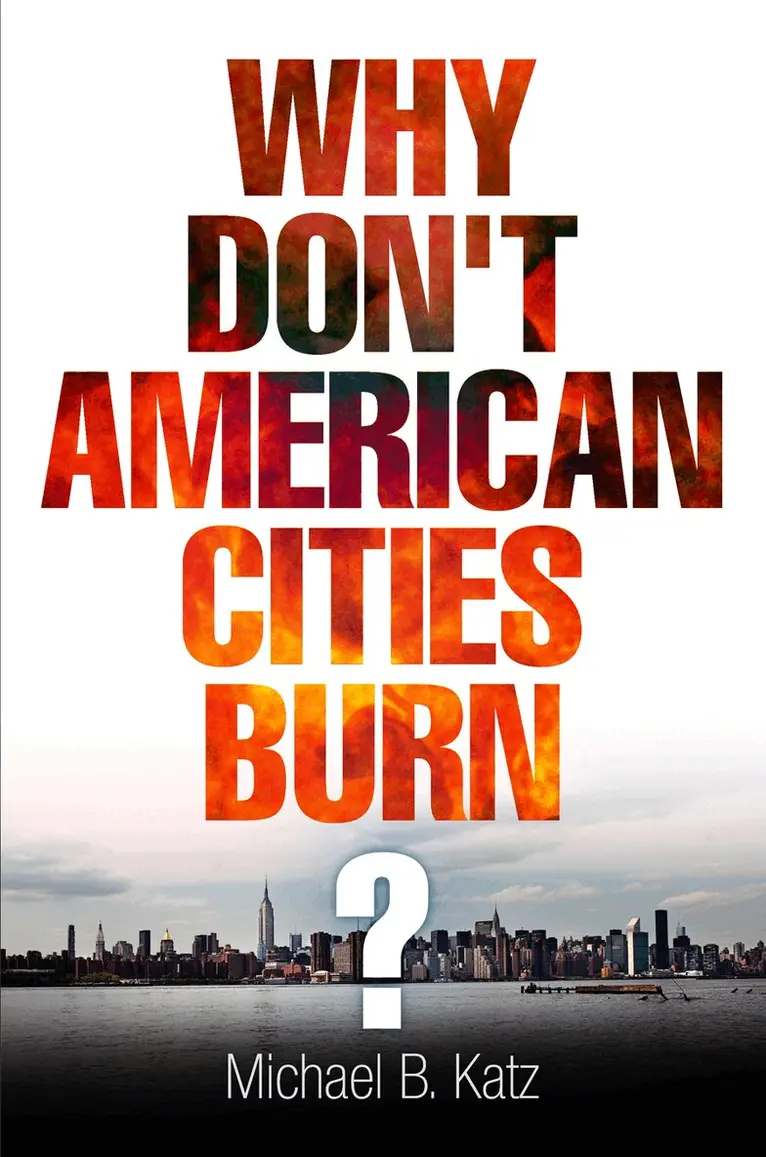
    Why Don't American Cities Burn?

    AvMichael B. Katz

    Häftad, Engelska, 2013

    Del i serien City in the Twenty-First Century

    238 kr

    Skickas . Fri frakt över 249 kr.

    Fler format och utgåvor

    E-bok

    473 kr

    Beskrivning

    At 1:27 on the morning of August 4, 2005, Herbert Manes fatally stabbed Robert Monroe, known as Shorty, in a dispute over five dollars. It was a horrific yet mundane incident for the poor, heavily African American neighborhood of North Philadelphia-one of seven homicides to occur in the city that day and yet not make the major newspapers. For Michael B. Katz, an urban historian and a juror on the murder trial, the story of Manes and Shorty exemplified the marginalization, social isolation, and indifference that plague American cities.Introduced by the gripping narrative of this murder and its circumstances, Why Don't American Cities Burn? charts the emergence of the urban forms that underlie such events. Katz traces the collision of urban transformation with the rightward-moving social politics of late twentieth- and early twenty-first-century America. He shows how the bifurcation of black social structures produced a new African American inequality and traces the shift from images of a pathological black "underclass" to praise of the entrepreneurial poor who take advantage of new technologies of poverty work to find the beginning of the path to the middle class. He explores the reasons American cities since the early 1970s have remained relatively free of collective violence while black men in bleak inner-city neighborhoods have turned their rage inward on one another rather than on the agents and symbols of a culture and political economy that exclude them.The book ends with a meditation on how the political left and right have come to believe that urban transformation is inevitably one of failure and decline abetted by the response of government to deindustrialization, poverty, and race. How, Katz asks, can we construct a new narrative that acknowledges the dark side of urban history even as it demonstrates the capacity of government to address the problems of cities and their residents? How can we create a politics of modest hope?

    Produktinformation

    • Utgivningsdatum:2013-10-17
    • Mått:152 x 229 x 12 mm
    • Vikt:378 g
    • Format:Häftad
    • Språk:Engelska
    • Serie:City in the Twenty-First Century
    • Antal sidor:224
    • Förlag:University of Pennsylvania Press
    • ISBN:9780812222807

    Utforska kategorier

    • Diskriminering och rättvisa inom Samhälle och politik
    • Sociala grupper och identitet inom Samhälle och politik
    • Våld och övergrepp inom Samhälle och politik

    Mer om författaren

    Michael B. Katz is Walter H. Annenberg Professor of History at the University of Pennsylvania. Among his many books is The Price of Citizenship: Redefining the American Welfare State, also available from the University of Pennsylvania Press.

    Recensioner i media

    "Katz brings together demographic, economic, and political evidence to form a new narrative of the modern city centered on the experience of the urban poor. He not only reveals what happened in inner cities in the last decade but writes convincingly about why it matters. And he gives hope that the long decline of urban places can be reversed, even neighborhoods like North Philadelphia." (American Journal of Sociology) "Katz's work begins to move us away from a story of inevitable urban crisis and decline to a more balanced interpretation that incorporates structural inequities and human agency, as well as policy failures and successes. Indeed, Katz is working toward nothing less than a revision of our understanding of urban America in the late twentieth century." (Journal of American History) "In June 2006, distinguished urban historian Michael Katz served as a juror in a murder trial in his hometown of Philadelphia. That case propelled Katz on a fascinating journey to understand the social conditions that lay behind the fates of murderer, victim, and the city where they both struggled to survive. With Katz as sage guide, we revisit urban America over the last half century as well as the public policy successes and failures that are an inseparable part of that story." (Lizabeth Cohen, author of A Consumers' Republic: The Politics of Mass Consumption in Postwar America) "Brilliantly conceived and beautifully written, Why Don't American Cities Burn? is a terrific read that is difficult to put down. Katz considers changes over the past half-century through the lenses of urban geography and population demographics, institutional structures, the public's ossified view of the deserving and undeserving urban poor, and how the zeal for market-based solutions has led towards new poverty technologies that recast the poor as entrepreneurial actors. Most important, Katz introduces his book with a story that humanizes the field of social sciences that-paradoxically-appears at times to have forgotten the people in the sea of quantitative analyses." (Peter Hendee Brown, University of Minnesota)

    Innehållsförteckning

    • Prologue: The Death of ShortyChapter 1. What Is an American City?Chapter 2. The New African American InequalityChapter 3. Why Don't American Cities Burn Very Often?Chapter 4. From Underclass to Entrepreneur: New Technologies of Poverty Work in Urban AmericaEpilogue: The Existential Problem of Urban StudiesNotesIndexAcknowledgments