• Fri frakt över 249 kr
  • •
  • Snabba leveranser
  • •
  • Billiga böcker
Kundservice

Du är på sajten för privatpersoner.

Företag, bibliotek eller offentlig verksamhet?

Du handlar på classic.bokus.com, där alla dina funktioner finns intakta.
Till classic.bokus.com
Bokus logotyp. Gå till startsidan.
  • Erbjudanden
  • Nyheter
  • Student
  • Topplistor
  • Barn & ungdom
  • Bokus Play
  • E-böcker
  • Pocketböcker
  • Spel & pussel

10% rabatt på allt med kod: NYSTART10 →

Sidfot

Mina sidor

    Hjälp

    • Kundservice
    • Vanliga frågor och svar
    • Frakt och leverans
    • Retur vid ångerrätt
    • Reklamera vara
    • Betalning
    • Köpvillkor
    • Allmänna villkor
    • Information om webbplatsens tillgänglighet

    Om Bokus

    • Om oss
    • Pressrum
    • För studenter
    • För företag
    • För bibliotek och offentlig verksamhet
    • För leverantörer
    • Hållbarhet

    Populärt

    • Aktuella erbjudanden
    • Presentkort
    • Studentlitteratur
    • Nya böcker
    • Topplistor
    • Signerade böcker
    • Engelska böcker

    Inspiration

    • Boktips
    • BookTok
    • Populära bokserier
    • Barnbokskaraktärer
    • Populära författare
    Logotyp för Bokus
    Följ oss på Facebook (extern länk)Följ oss på Instagram (extern länk)Följ oss på YouTube (extern länk)Följ oss på TikTok (extern länk)
    bokus @ CookiesAnpassa cookiesIntegritetspolicyKöpvillkor
    Till Citymail hemsida (extern länk)Till Budbee hemsida (extern länk)Till Postnord hemsida (extern länk)Till Schenker hemsida (extern länk)Till Early Bird hemsida (extern länk)Till Walleys hemsida (extern länk)
    1. Historia och arkeologi
    2. Historia
    3. Europas historia

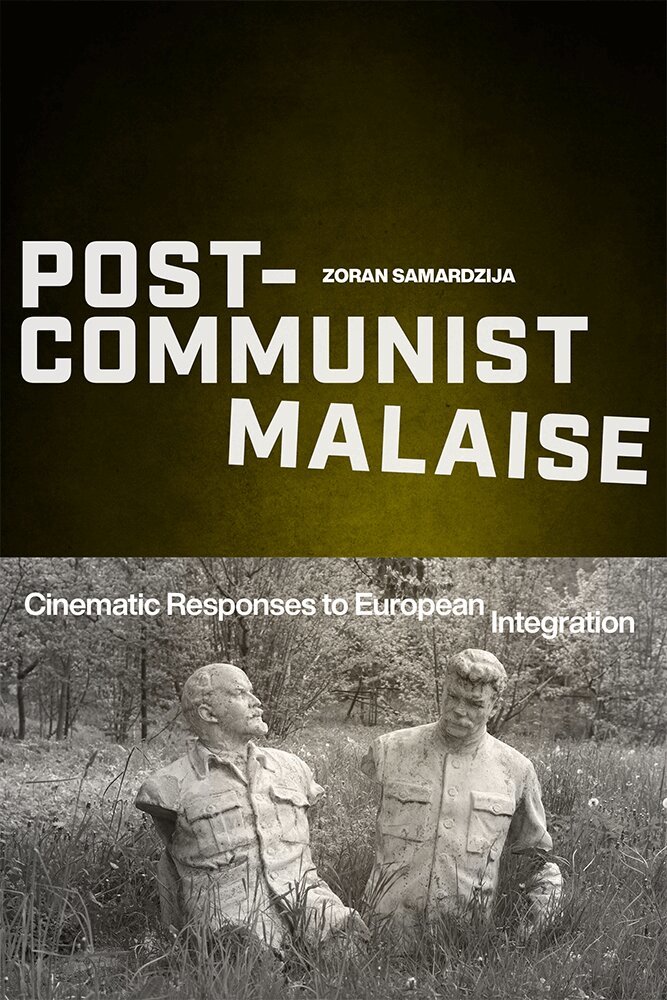
    Post-Communist Malaise

    Cinematic Responses to European Integration

    AvZoran Samardzija

    Inbunden, Engelska, 2020

    Del i serien Media Matters

    1 756 kr

    Beställningsvara. Skickas inom 5-8 vardagar. Fri frakt över 249 kr.

    Fler format och utgåvor

    Häftad

    402 kr

    Beskrivning

    The collapse of communism in the Soviet Union and Eastern Europe was supposed to bring about the "end of history" with capitalism and liberal democracy achieving decisive victories. Europe would now integrate and reconcile with its past. However, the aftershocks of the financial crisis of 2008—the rise in right-wing populism, austerity politics, and mass migration—have shown that the ideological divisions which haunted Europe in the twentieth century still remain. It is within this context that Post-Communist Malaise revives discourses of political modernism and revisits debates from Marxism and seventies film theory. Analyzing work of Theo Angelopoulos, Věra Chytilová, Srdjan Dragojević, Jean-Luc Godard,  Miklós Jancsó, Emir Kusturica, Dušan Makavejev, Cristi Puiu, Jan Švankmajer, Andrei Tarkovsky, and Béla Tarr, the book focuses on how select cinemas from Eastern Europe and the Balkans critique the neoliberal integration of Europe whose failures fuel the rise of nationalism and right-wing politics. By politicizing art cinema from the regions, Post-Communist Malaise asks fundamental questions about film, aesthetics, and ideology. It argues for the utopian potential of the materiality of cinematic time to imagine a new political and cultural organization for Europe.

    Produktinformation

    • Utgivningsdatum:2020-05-15
    • Mått:152 x 229 x 11 mm
    • Vikt:576 g
    • Format:Inbunden
    • Språk:Engelska
    • Serie:Media Matters
    • Antal sidor:220
    • Förlag:Rutgers University Press
    • ISBN:9780813587158

    Utforska kategorier

    • Europas historia inom Historia och arkeologi
    • Film inom Kultur
    • Marxism och kommunism inom Samhälle och politik

    Mer om författaren

    Zoran Samardzija is an associate professor in the Department of Cinema and Television Arts at Columbia College, Chicago. He is the author of essays on David Lynch, Andrei Tarkovsky, and Eastern European and Balkan cinemas.

    Recensioner i media

    "Forging upstream against critical currents, Samardzija's book stubbornly holds out for the principle of aesthetic hope, extracted from the carapace of political modernism with a set of sharp theoretical tools. Within the unique neither-quite-West-nor-anymore-East terrain of Europe's post-communist countries, he finds a set of films capable of giving shape to the 'post-communist malaise' by capturing and making visible the gap between the expired promises of universal utopia and the disenchantments and exclusions of neoliberal Euro markets. His ingenious close readings bring the revisionist contours of such latent hope to light."— Nataša Durovicová, co-editor of World Cinemas, Transnational Perspectives

    Innehållsförteckning

    • ContentsIntroduction   1          Eastern European New Waves and Political Modernism                    2          What Happens After the End of History?Part I  From Communism to CapitalismPart II From Capitalism to Nationalism3          Slow Cinema and The Escape From Capitalist RealismPart I The Materiality of Cinematic Time from Andrei Tarkovsky to Béla TarrPart II Cristi Puiu Between Slow Cinema and Transcendental Style4          Theo Angelopoulos, Greece, and The Ends of EuropePart I A New Collective DreamPart II Cinema As Past and FutureConclusion                   AcknowledgementsIndex