Media Matters - Böcker
Visar alla böcker i serien Media Matters. Handla med fri frakt och snabb leverans.
8 produkter
8 produkter
385 kr
Skickas inom 7-10 vardagar
The collapse of communism in the Soviet Union and Eastern Europe was supposed to bring about the "end of history" with capitalism and liberal democracy achieving decisive victories. Europe would now integrate and reconcile with its past. However, the aftershocks of the financial crisis of 2008—the rise in right-wing populism, austerity politics, and mass migration—have shown that the ideological divisions which haunted Europe in the twentieth century still remain. It is within this context that Post-Communist Malaise revives discourses of political modernism and revisits debates from Marxism and seventies film theory. Analyzing work of Theo Angelopoulos, Věra Chytilová, Srdjan Dragojević, Jean-Luc Godard, Miklós Jancsó, Emir Kusturica, Dušan Makavejev, Cristi Puiu, Jan Švankmajer, Andrei Tarkovsky, and Béla Tarr, the book focuses on how select cinemas from Eastern Europe and the Balkans critique the neoliberal integration of Europe whose failures fuel the rise of nationalism and right-wing politics. By politicizing art cinema from the regions, Post-Communist Malaise asks fundamental questions about film, aesthetics, and ideology. It argues for the utopian potential of the materiality of cinematic time to imagine a new political and cultural organization for Europe.
1 626 kr
Skickas inom 7-10 vardagar
The collapse of communism in the Soviet Union and Eastern Europe was supposed to bring about the "end of history" with capitalism and liberal democracy achieving decisive victories. Europe would now integrate and reconcile with its past. However, the aftershocks of the financial crisis of 2008—the rise in right-wing populism, austerity politics, and mass migration—have shown that the ideological divisions which haunted Europe in the twentieth century still remain. It is within this context that Post-Communist Malaise revives discourses of political modernism and revisits debates from Marxism and seventies film theory. Analyzing work of Theo Angelopoulos, Věra Chytilová, Srdjan Dragojević, Jean-Luc Godard, Miklós Jancsó, Emir Kusturica, Dušan Makavejev, Cristi Puiu, Jan Švankmajer, Andrei Tarkovsky, and Béla Tarr, the book focuses on how select cinemas from Eastern Europe and the Balkans critique the neoliberal integration of Europe whose failures fuel the rise of nationalism and right-wing politics. By politicizing art cinema from the regions, Post-Communist Malaise asks fundamental questions about film, aesthetics, and ideology. It argues for the utopian potential of the materiality of cinematic time to imagine a new political and cultural organization for Europe.
426 kr
Skickas inom 7-10 vardagar
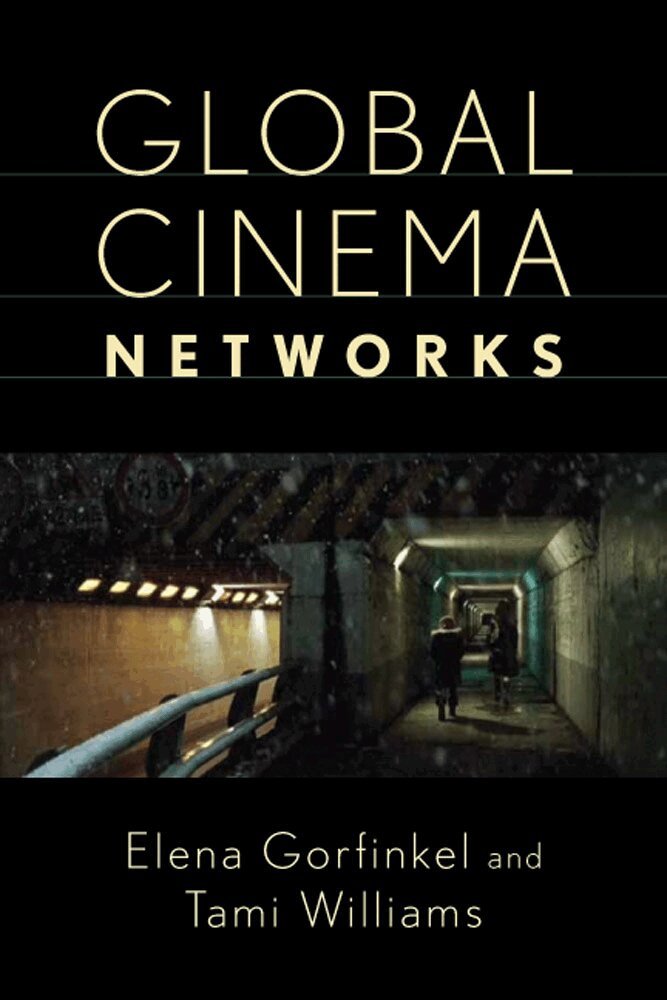
Global Cinema Networks investigates the evolving aesthetic forms, technological and industrial conditions, and social impacts of cinema in the twenty-first century. The collection’s esteemed contributors excavate sites of global filmmaking in an era of digital reproduction and amidst new modes of circulation and aesthetic convergence, focusing primarily on recent films made across Europe, Africa, Latin America, Asia, and the Middle East. Moving beyond the digital as a harbinger of transformation, the volume offers new ways of thinking about cinema networks in a historical continuum, from “international” to “world” to “transnational” to “global” frames.
1 579 kr
Skickas inom 7-10 vardagar
Global Cinema Networks investigates the evolving aesthetic forms, technological and industrial conditions, and social impacts of cinema in the twenty-first century. The collection’s esteemed contributors excavate sites of global filmmaking in an era of digital reproduction and amidst new modes of circulation and aesthetic convergence, focusing primarily on recent films made across Europe, Africa, Latin America, Asia, and the Middle East. Moving beyond the digital as a harbinger of transformation, the volume offers new ways of thinking about cinema networks in a historical continuum, from “international” to “world” to “transnational” to “global” frames.
387 kr
Skickas inom 7-10 vardagar
Since the 1970s, the field of Translation Studies has entered into dialogue with an array of other disciplines, sustaining a close but contentious relationship with literary translation. At Translation’s Edge expands this interdisciplinary dialogue by taking up questions of translation across sub-fields and within disciplines, including film and media studies, comparative literature, history, and education among others. For the contributors to this volume, translation is understood in its most expansive, transdisciplinary sense: translation as exchange, migration, and mobility, including cross-cultural communication and media circulation. Whether exploring the Universal Declaration of Human Rights or silent film intertitles, this volume brings together the work of scholars aiming to address the edges of Translation Studies while engaging with major and minor languages, colonial and post-colonial studies, feminism and disability studies, and theories of globalization and empire.
1 579 kr
Skickas inom 7-10 vardagar
Since the 1970s, the field of Translation Studies has entered into dialogue with an array of other disciplines, sustaining a close but contentious relationship with literary translation. At Translation’s Edge expands this interdisciplinary dialogue by taking up questions of translation across sub-fields and within disciplines, including film and media studies, comparative literature, history, and education among others. For the contributors to this volume, translation is understood in its most expansive, transdisciplinary sense: translation as exchange, migration, and mobility, including cross-cultural communication and media circulation. Whether exploring the Universal Declaration of Human Rights or silent film intertitles, this volume brings together the work of scholars aiming to address the edges of Translation Studies while engaging with major and minor languages, colonial and post-colonial studies, feminism and disability studies, and theories of globalization and empire.
290 kr
Skickas inom 7-10 vardagar
Monuments Askew: An Elliptical History of the Factory of the Eccentric Actor presents a cultural history of the Factory of the Eccentric Actor (FEKS), an avant-garde collective of Ukrainian artists whose unique approach to monumental history generated a new kind of cinema for a modernizing Soviet era. Often lost in the shuffle of this period, FEKS’s vibrant and experimental cinematic output initiated a youthful and cheeky overhaul of Soviet revolutionary culture. Monuments Askew reveals the foundational role of this understudied group of artists-including Grigori Kozintsev and Leonid Trauberg-and uses their own theoretical contributions to undo the “foundations” of our understanding of Soviet media and arts. As a counter to a solely cinema-focused conceptualization of this era, Corrigan develops a transnational media theory of eccentricity. Defining eccentric circles as warped, irregular orbits that force a realignment of centers, Monuments Askew shows how FEKS’s body of work inspires an eccentric realignment of the pillars of Soviet visual culture, and indeed of monumentality itself.
1 302 kr
Skickas inom 7-10 vardagar
Monuments Askew: An Elliptical History of the Factory of the Eccentric Actor presents a cultural history of the Factory of the Eccentric Actor (FEKS), an avant-garde collective of Ukrainian artists whose unique approach to monumental history generated a new kind of cinema for a modernizing Soviet era. Often lost in the shuffle of this period, FEKS’s vibrant and experimental cinematic output initiated a youthful and cheeky overhaul of Soviet revolutionary culture. Monuments Askew reveals the foundational role of this understudied group of artists-including Grigori Kozintsev and Leonid Trauberg-and uses their own theoretical contributions to undo the “foundations” of our understanding of Soviet media and arts. As a counter to a solely cinema-focused conceptualization of this era, Corrigan develops a transnational media theory of eccentricity. Defining eccentric circles as warped, irregular orbits that force a realignment of centers, Monuments Askew shows how FEKS’s body of work inspires an eccentric realignment of the pillars of Soviet visual culture, and indeed of monumentality itself.