• Fri frakt över 249 kr
  • •
  • Snabba leveranser
  • •
  • Billiga böcker
Kundservice

Du är på sajten för privatpersoner.

Företag, bibliotek eller offentlig verksamhet?

Du handlar på classic.bokus.com, där alla dina funktioner finns intakta.
Till classic.bokus.com
Bokus logotyp. Gå till startsidan.
  • Erbjudanden
  • Nyheter
  • Student
  • Topplistor
  • Barn & ungdom
  • Bokus Play
  • E-böcker
  • Pocketböcker
  • Spel & pussel

10% rabatt på allt med kod NYSTART10 →

Sidfot

Mina sidor

    Hjälp

    • Kundservice
    • Vanliga frågor och svar
    • Frakt och leverans
    • Retur vid ångerrätt
    • Reklamera vara
    • Betalning
    • Köpvillkor
    • Allmänna villkor
    • Information om webbplatsens tillgänglighet

    Om Bokus

    • Om oss
    • Pressrum
    • För studenter
    • För företag
    • För bibliotek och offentlig verksamhet
    • För leverantörer
    • Hållbarhet

    Populärt

    • Aktuella erbjudanden
    • Presentkort
    • Studentlitteratur
    • Nya böcker
    • Topplistor
    • Signerade böcker
    • Engelska böcker

    Inspiration

    • Boktips
    • BookTok
    • Populära bokserier
    • Barnbokskaraktärer
    • Populära författare
    Logotyp för Bokus
    Följ oss på Facebook (extern länk)Följ oss på Instagram (extern länk)Följ oss på YouTube (extern länk)Följ oss på TikTok (extern länk)
    bokus @ CookiesAnpassa cookiesIntegritetspolicyKöpvillkor
    Till Citymail hemsida (extern länk)Till Budbee hemsida (extern länk)Till Postnord hemsida (extern länk)Till Schenker hemsida (extern länk)Till Early Bird hemsida (extern länk)Till Walleys hemsida (extern länk)
    1. Naturvetenskap och teknik
    2. Teknik och industri
    3. Tillverkningsteknik

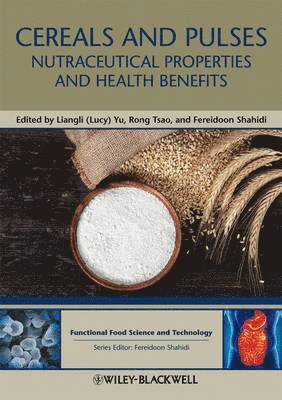
    Cereals and Pulses

    Nutraceutical Properties and Health Benefits

    AvLiangli L. Yu,Rong Tsao

    Inbunden, Engelska, 2012

    Del 12 i serien Hui: Food Science and Technology

    2 698 kr

    Beställningsvara. Skickas inom 5-8 vardagar. Fri frakt över 249 kr.

    Beskrivning

    Cereal and pulse crops are staple foods that provide essential nutrients to many populations of the world. Traditionally, whole grains were consumed but most current foods are derived from refined fractions of cereal and pulse crops. Consumption of processed or refined products may reduce the health benefits of food. In wheat-based processed foods, for example, the removed 40% of the grain (mainly the bran and the germ of the wheat grain) contains the majority of the health beneficial components. These components, particularly non-essential phytochemicals such as carotenoids, polyphenols, phytosterols/ stanols, and dietary fibers, have been shown to reduce the risk of major chronic diseases of humans, such as cancer, cardiovascular diseases, and Parkinson’s disease. Such bioactives are therefore good candidates for ingredients of nutraceuticals and functional foods. There are many factors that can affect the bioactive content of cereal and pulse-based food ingredients, including genetics, growing and storage conditions, post-harvest treatments, food formulation and processing. All of these factors ultimately affect human health and wellness. Bioavailability is also important for these compounds for exerting their protective roles.Cereals and Pulses: Nutraceutical Properties and Health Benefits provides a summary of current research findings related to phytochemical composition and properties of cereal and pulse crops. The nutraceutical properties of each major cereal and pulse are discussed. Coverage of cereals and pulse crops includes barley, oats, rice, rye, corn, adlay, wheat, buckwheat, psyllium, sorghum, millet, common beans, field peas, faba beans, chickpea, lentil and soybeans. Chapters for each crop discuss methods to improve crop utilization, nutraceutical components and properties, bioactive compositions, antioxidant properties, beneficial health effects, disease prevention activities, and areas for future research. Also included are two chapters that examine the beneficial health properties of dietary fibers and antioxidants. Edited and written by an international team of respected researchers, this book is a reference guide for scientists working in food ingredients, food product research and development, functional foods and nutraceuticals, crop breeding and genetics, human nutrition, post-harvest treatment and processing of cereal grains and pulses. It will enable them to effect value-added food innovation for health promotion and disease risk reduction.

    Produktinformation

    • Utgivningsdatum:2012-03-16
    • Mått:182 x 253 x 20 mm
    • Vikt:803 g
    • Format:Inbunden
    • Språk:Engelska
    • Serie:Hui: Food Science and Technology
    • Antal sidor:328
    • Förlag:John Wiley and Sons Ltd
    • ISBN:9780813818399

    Utforska kategorier

    • Tillverkningsteknik inom Naturvetenskap och teknik

    Mer om författaren

    Professor Liangli (Lucy) Yu, Department of Nutrition and Food Science, University of Maryland, USA Dr Rong Tsao, Guelph Food Research Center, Agriculture and Agri-Food Canada, Guelph, Ontario, CanadaProfessor Fereidoon Shahidi, Department of Biochemistry, Memorial University of Newfoundland, Canada

    Recensioner i media

    “Recommended.  Graduate students, researchers/faculty, and professionals/practitioners.”  (Choice, 1 December 2012)

    Innehållsförteckning

    • Contributors ix 1 Cereals and pulses – an overview 11.1 Introduction 11.2 Chemistry and nutraceutical compositions 21.3 Potential health beneficial effects 2References 52 Effects of barley consumption on cardiovascular and diabetic risk 72.1 Introduction 72.2 Barley β-glucan and risk of cardiovascular diseases, diabetes and colon carcinogenesis 72.3 Other nutraceutical components and properties in barley 112.4 Potential of hulless barley in health promotion and disease prevention 152.5 Future studies 15References 163 Nutraceutical properties and health benefits of oats 213.1 Introduction 213.2 Oat grain composition 223.3 The chemical and physical property of oat β-glucan 233.4 Effects of processing on oat β-glucan 253.5 Oat and health 263.6 Conclusions 31References 314 Nutraceutical properties and health benefits of rice 374.1 Introduction 374.2 Rice grain structure and nutritional composition distribution 384.3 Nutrient compositions and their health benefits 404.4 Biofortification of nutrients in rice grain to improve its health benefits 534.5 Health benefits of rice bran 544.6 Health benefits of whole rice grain consumption 554.7 Future trends 57References 575 Hypolipedemic effects of rice bran oil 655.1 Introduction 655.2 Chemical composition of rice bran oil (RBO) 655.3 Hypolipidemic effect of rice bran oil 665.4 Other beneficial effects of rice bran oil 685.5 Future studies 69References 706 Phenolic phytochemicals from rye ( Secale Cereale L .) 716.1 Introduction 716.2 Three classes of the phenolic compounds 726.3 Extraction methodology 726.4 Analysis methods 806.5 Bioactivity 816.6 Health beneficial effects of rye intake 826.7 Summary 82References 827 Bioactive compounds in corn 857.1 Introduction 857.2 Phytochemicals in corn and their health benefits 857.3 Corn resistant starch and bioactivities 967.4 Future studies 97References 988 Nutraceutical and health properties of adlay 1058.1 Introduction 1058.2 Health components of adlay 1058.3 Potential health beneficial properties 1078.4 Summary 111References 1119 Antioxidant and health promoting properties of wheat ( Triticum spp .) 1139.1 Introduction 1139.2 Evidence of wheat’s health promoting properties 1139.3 The antioxidant contents of wheat 1149.4 Reported antioxidant and other health promoting properties of wheat 1179.5 Bioavailability of phenolic acids in wheat 1199.6 Use of post-harvest treatments to improve the bioaccessabilty of antioxidant in wheat-based ingredients 1209.7 Effects of processing on antioxidants in wheat-based food systems 123References 12610 Buckwheat: A novel pseudocereal 13110.1 Introduction of buckwheat 13110.2 Nutritional composition of buckwheat 13310.3 Unique health components of buckwheat 13610.4 Allergens in buckwheat 14410.5 Research trends of buckwheat nutritional and functional properties 145References 14611 Nutraceutical and health properties of psyllium 14911.1 Introduction 14911.2 Health beneficial effects of psyllium 15011.3 Potential in controlled delivery of bioactives 15811.4 Possible adverse effects 159References 16012 Nutraceutical and health properties of sorghum and millet 16512.1 Introduction 16512.2 Phytochemicals in sorghum and millet grains and fractions 16712.3 Antioxidant properties of sorghum and millet grain and components 17312.4 Potential beneficial effects of sorghum and millet consumption in human health 17612.5 Perspectives 182References 18213 Nutraceutical and health properties of common beans ( Phaseolus vulgaris ) 18713.1 Introduction 18713.2 Health beneficial effects of Phaseolus vulgaris 18713.3 Possible adverse effects 19413.4 Conclusion 194References 19414 Health benefits and bioactive compounds in field peas, faba beans, and chickpeas 19914.1 Introduction 19914.2 Phenolic compounds in field peas, chickpeas, and faba beans 20014.3 Health benefits of compounds in field peas, chickpeas, and faba beans 20214.4 Antinutritional factors in peas, chickpeas, and faba beans 20914.5 Bioactive peptides 210References 21215 Bioactives and health benefits of lentils (Lens culinaris L.) 21715.1 Introduction 21715.2 Epidemiology: pulses and chronic diseases 21715.3 Health effects of pulse carbohydrates 22115.4 Health promoting vitamins and minerals in lentils 22215.5 Health promoting phenolic compounds in lentils 222References 22516 Soy isoflavones and bone health 22916.1 Introduction 22916.2 Biosynthesis and composition of isoflavones in soybeans 23016.3 Separation, characterization, and analysis of isoflavones 23116.4 Soy isoflavones and bone health 23216.5 Summary 237References 23817 Effects of dietary soy on the prevention of cardiovascular disease 24317.1 Introduction 24317.2 Soy foods and serum cholesterol 24317.3 Soy and inhibition of LDL oxidation 24917.4 Soy and inflammation 25217.5 Soy and hypertension 25217.6 Soy and endothelial function 25317.7 Conclusions 253References 25418 Dietary fiber and human health 26118.1 Introduction 26118.2 Dietary fiber and metabolic syndrome 26118.3 Dietary fiber and cancer 26418.4 Dietary fiber and cardiovascular diseases 26718.5 Potential undesirable effects 26818.6 Summary 269References 26919 Antioxidants and human health 27319.1 Introduction 27319.2 Anti-inflammatory capacity of antioxidants 27419.3 Antioxidants and metabolic syndrome 27819.4 Antioxidants and cancer 28519.5 Antioxidants and cardiovascular diseases 29019.6 Summary and conclusions 295References 295Index 309