• Fri frakt över 249 kr
  • •
  • Snabba leveranser
  • •
  • Billiga böcker
Kundservice

Du är på sajten för privatpersoner.

Företag, bibliotek eller offentlig verksamhet?

Du handlar på classic.bokus.com, där alla dina funktioner finns intakta.
Till classic.bokus.com
Bokus logotyp. Gå till startsidan.
  • Erbjudanden
  • Nyheter
  • Student
  • Topplistor
  • Barn & ungdom
  • Bokus Play
  • E-böcker
  • Pocketböcker
  • Spel & pussel

10% rabatt på allt med kod NYSTART10 →

Sidfot

Mina sidor

    Hjälp

    • Kundservice
    • Vanliga frågor och svar
    • Frakt och leverans
    • Retur vid ångerrätt
    • Reklamera vara
    • Betalning
    • Köpvillkor
    • Allmänna villkor
    • Information om webbplatsens tillgänglighet

    Om Bokus

    • Om oss
    • Pressrum
    • För studenter
    • För företag
    • För bibliotek och offentlig verksamhet
    • För leverantörer
    • Hållbarhet

    Populärt

    • Aktuella erbjudanden
    • Presentkort
    • Studentlitteratur
    • Nya böcker
    • Topplistor
    • Signerade böcker
    • Engelska böcker

    Inspiration

    • Boktips
    • BookTok
    • Populära bokserier
    • Barnbokskaraktärer
    • Populära författare
    Logotyp för Bokus
    Följ oss på Facebook (extern länk)Följ oss på Instagram (extern länk)Följ oss på YouTube (extern länk)Följ oss på TikTok (extern länk)
    bokus @ CookiesAnpassa cookiesIntegritetspolicyKöpvillkor
    Till Citymail hemsida (extern länk)Till Budbee hemsida (extern länk)Till Postnord hemsida (extern länk)Till Schenker hemsida (extern länk)Till Early Bird hemsida (extern länk)Till Walleys hemsida (extern länk)
    1. Samhälle och politik
    2. Samhälle och kultur
    3. Kultur och medier
    4. Kulturvetenskap

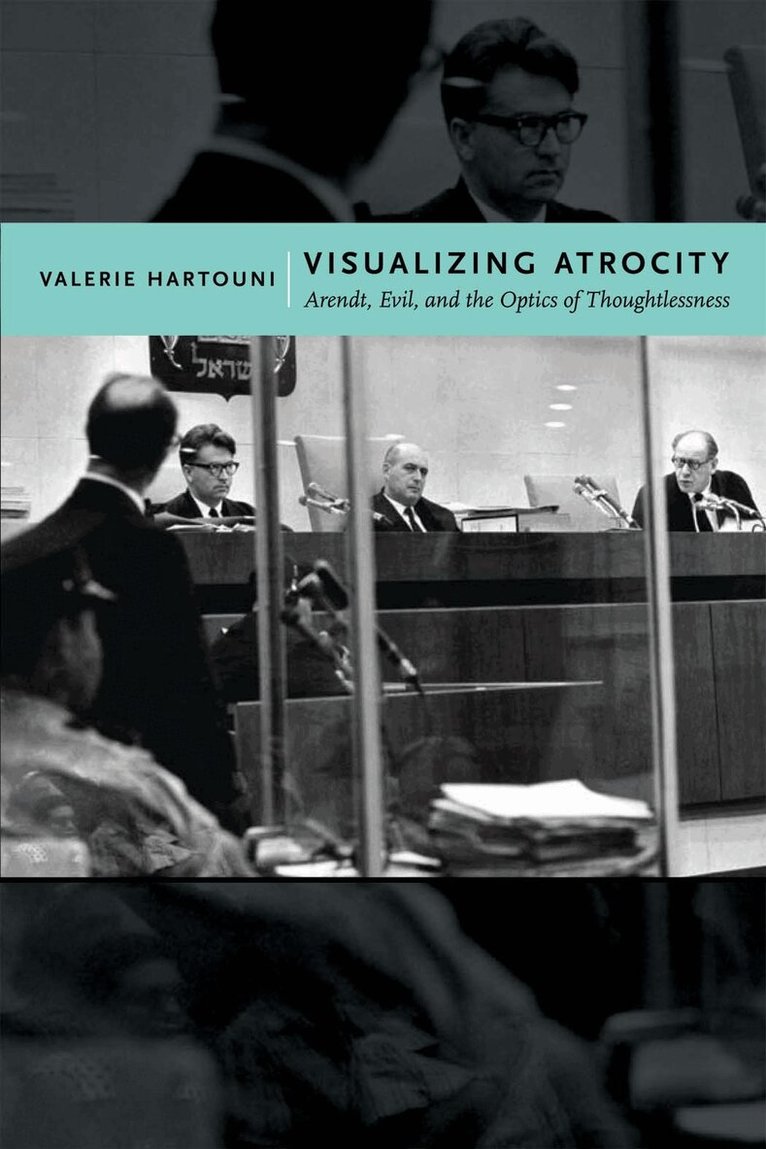
    Visualizing Atrocity

    Arendt, Evil, and the Optics of Thoughtlessness

    AvValerie Hartouni

    Inbunden, Engelska, 2012

    Del i serien Critical Cultural Communication

    908 kr

    Beställningsvara. Skickas inom 10-15 vardagar. Fri frakt över 249 kr.

    Fler format och utgåvor

    Häftad

    374 kr

    Beskrivning

    Visualizing Atrocity takes Hannah Arendt's provocative and polarizing account of the 1961 trial of Nazi official Adolf Eichmann as its point of departure for reassessing some of the serviceable myths that have come to shape and limit our understanding both of the Nazi genocide and totalitarianism's broader, constitutive, and recurrent features. These myths are inextricably tied to and reinforced viscerally by the atrocity imagery that emerged with the liberation of the concentration camps at the war's end and played an especially important, evidentiary role in the postwar trials of perpetrators. At the 1945 Nuremberg Tribunal, particular practices of looking and seeing were first established with respect to these images that were later reinforced and institutionalized through Eichmann's trial in Jerusalem as simply part of the fabric of historical fact. They have come to constitute a certain visual rhetoric that now circumscribes the moral and political fields and powerfully assists in contemporary mythmaking about how we know genocide and what is permitted to count as such. In contrast, Arendt's claims about the "banality of evil" work to disrupt this visual rhetoric. More significantly still, they direct our attention well beyond the figure of Eichmann to a world organized now as then by practices and processes that while designed to sustain and even enhance life work as well to efface it.

    Produktinformation

    • Utgivningsdatum:2012-08-20
    • Mått:153 x 229 x 16 mm
    • Vikt:448 g
    • Format:Inbunden
    • Språk:Engelska
    • Serie:Critical Cultural Communication
    • Antal sidor:205
    • Förlag:New York University Press
    • ISBN:9780814738498

    Utforska kategorier

    • Kulturvetenskap inom Samhälle och politik
    • Medievetenskap inom Samhälle och politik
    • Folkmord och etnisk rensning inom Historia och arkeologi

    Mer om författaren

    Valerie Hartouni is Professor of Communication at the University of California, San Diego, and author of Cultural Conceptions: On Reproductive Technologies and the Remaking of Life.

    Recensioner i media

    "Valerie Hartounis volume reinterprets Hannah Arendts controversial reflections on political evil in the twentieth century. [] It should be apparent that there is a great of continuity in Arendts thought in regard to her conception of the system of rule that rendered human beings superfluous. And it is in this regard that Hartouni makes her greatest contribution, both stressing and reinterpreting Arendts insight that & totalitarian solutions did not end with the demise of the German totalitarian dictatorship and that & the Nazi projecthad changed the conditions of the lifeworld or the living-together of people." (Holocaust and Genocide Studies) "By relating the visual to the criminal and political issues of the Nazi genocide, Eichmann, and Arendt, Hartouni poses critical questions on justice and morality that resonant in other genocides and in our time." - Lia Deromedi (Dialogues on Historical Justice and Memory) "Hartouni provides simply the finest analysis of the issues involved in Arendts reading of Eichmann and the failure of the trial to recognize a new crime, the crime of the bureaucracy and & the optics of thoughtlessness.Visualizing Atrocityis a masterful accomplishment and should take its place as the leading work at the intersection of political and normative judgement with visual projection." - Wayne Morrison (Theoretical Criminality) "A compelling and broad-reaching manuscript that will be of great interest not only to scholars of Arendt and Eichmann, but to those who want to think more generally about the interrelationship of political judgment and visual culture." - Judith Butler,University of California, Berkeley "Visualizing Atrocity is a masterful accomplishment and should take its place as the leading work at the intersection of political and normative judgement with visual projection." (Theoretical Crimonology)

    Innehållsförteckning

    • 1 Arendt and the Trial of Adolf Eichmann: Contextualizing the Debate 2 Ideology and Atrocity 3 Thoughtlessness and Evil 4 "Crimes against the Human Status": Nuremberg and the Image of Evil 5 The Banality of Evil