• Fri frakt över 249 kr
  • •
  • Snabba leveranser
  • •
  • Billiga böcker
Kundservice

Du är på sajten för privatpersoner.

Företag, bibliotek eller offentlig verksamhet?

Du handlar på classic.bokus.com, där alla dina funktioner finns intakta.
Till classic.bokus.com
Bokus logotyp. Gå till startsidan.
  • Erbjudanden
  • Student
  • Topplistor
  • Barn & ungdom
  • Bokus Play
  • E-böcker
  • Ljudböcker
  • Pocketböcker
  • Spel & pussel

Upp till 25% på utvalda nyheter →

Sidfot

Mina sidor

    Hjälp

    • Kundservice
    • Vanliga frågor och svar
    • Frakt och leverans
    • Retur vid ångerrätt
    • Reklamera vara
    • Betalning
    • Köpvillkor
    • Allmänna villkor
    • Information om webbplatsens tillgänglighet

    Om Bokus

    • Om oss
    • Pressrum
    • För studenter
    • För företag
    • För bibliotek och offentlig verksamhet
    • För leverantörer
    • Hållbarhet

    Populärt

    • Aktuella erbjudanden
    • Presentkort
    • Studentlitteratur
    • Nya böcker
    • Topplistor
    • Signerade böcker
    • Engelska böcker

    Inspiration

    • Boktips
    • BookTok
    • Populära bokserier
    • Barnbokskaraktärer
    • Populära författare
    Logotyp för Bokus
    Följ oss på Facebook (extern länk)Följ oss på Instagram (extern länk)Följ oss på YouTube (extern länk)Följ oss på TikTok (extern länk)
    bokus @ CookiesAnpassa cookiesIntegritetspolicyKöpvillkor
    Till Citymail hemsida (extern länk)Till Budbee hemsida (extern länk)Till Postnord hemsida (extern länk)Till Schenker hemsida (extern länk)Till Early Bird hemsida (extern länk)Till Walleys hemsida (extern länk)
    1. Samhälle och politik
    2. Samhälle och kultur
    3. Kultur och medier
    4. Kulturvetenskap

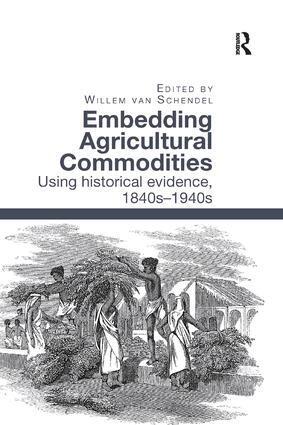
    Embedding Agricultural Commodities

    Using historical evidence, 1840s–1940s

    AvWillem van Schendel

    Häftad, Engelska, 2017

    759 kr

    Beställningsvara. Skickas inom 10-15 vardagar. Fri frakt över 249 kr.

    Beskrivning

    Over the past 500 years westerners have turned into avid consumers of colonial products and various production systems in the Americas, Africa and Asia have adapted to serve the new markets that opened up in the wake of the "European encounter". The effects of these transformations for the long-term development of these societies are fiercely contested. How can we use historical source material to pinpoint this social change? This volume presents six different examples from countries in which commodities were embedded in existing production systems - tobacco, coffee, sugar and indigo in Indonesia, India and Cuba - to shed light on this key process in human history. To demonstrate the effectiveness of using different types of source material, each contributor presents a micro-study based on a different type of historical source: a diary, a petition, a "mail report", a review, a scientific study and a survey. As a result, the volume offers insights into how historians use their source material to construct narratives about the past and offers introductions to trajectories of agricultural commodity production, as well as much new information about the social struggles surrounding them.

    Produktinformation

    • Utgivningsdatum:2017-10-13
    • Mått:156 x 234 x 11 mm
    • Vikt:453 g
    • Format:Häftad
    • Språk:Engelska
    • Antal sidor:204
    • Förlag:Taylor & Francis Inc
    • ISBN:9780815366843

    Utforska kategorier

    • Kulturvetenskap inom Samhälle och politik
    • Kolonialism och imperialism inom Historia och arkeologi
    • Socialhistoria och kulturhistoria inom Historia och arkeologi

    Mer om författaren

    Willem van Schendel has served as Professor of Modern Asian History at the University of Amsterdam and as head of the South Asia Department, International Institute of Social History. Among his recent books are The Camera as Witness: A Social History of Mizoram, Northeast India (with Joy Pachuau); A History of Bangladesh and Global Blue: Indigo and Espionage in Colonial Bengal. Recent co-edited volumes are Labour Migration and Human Trafficking in Southeast Asia: Critical Perspectives and The Bangladesh Reader: History, Culture, Politics.

    Innehållsförteckning

    • Embedding Agricultural Commodities:Using Historical Evidence, 1840s-1940sTable of ContentsList of FiguresContributors1. Embedding Agricultural Commodities – An Introduction Willem van Schendel2. Staying Embedded: The Rocky Existence of an Indigo Maker in Bengal Willem van Schendel3. Multatuli, the Liberal Colonialists and their Attacks on the Patrimonial Embedding of Commodity Production in JavaUlbe Bosma4. Smallholdings versus European Plantations: The Beginnings of Coffee in Nineteenth-Century Mysore (India)Bhaswati Bhattacharya5. ‘Keeping Land and Labour under Control?’ Reporting on Tobacco-Shed Burnings in Besoeki (Java)Ratna Saptari6. Embedding Cigarette Tobacco in Colonial Bihar (India): A Multi-Dimensional TaskKathinka Sinha-Kerkhoff7. Cuba, Sugarcane and the Reluctant Embedding of Scientific Method: Agete’s La Caña de Azúcar en CubaJonathan Curry-Machado8. Globalization’s Agricultural Roots: Some Final ConsiderationsMarcel van der LindenIndex