• Fri frakt över 249 kr
  • •
  • Snabba leveranser
  • •
  • Billiga böcker
Kundservice

Du är på sajten för privatpersoner.

Företag, bibliotek eller offentlig verksamhet?

Du handlar på classic.bokus.com, där alla dina funktioner finns intakta.
Till classic.bokus.com
Bokus logotyp. Gå till startsidan.
  • Erbjudanden
  • Nyheter
  • Student
  • Topplistor
  • Barn & ungdom
  • Bokus Play
  • E-böcker
  • Pocketböcker
  • Spel & pussel

10% studentrabatt med kod TERM26

Sidfot

Mina sidor

    Hjälp

    • Kundservice
    • Vanliga frågor och svar
    • Frakt och leverans
    • Retur vid ångerrätt
    • Reklamera vara
    • Betalning
    • Köpvillkor
    • Allmänna villkor
    • Information om webbplatsens tillgänglighet

    Om Bokus

    • Om oss
    • Pressrum
    • För studenter
    • För företag
    • För bibliotek och offentlig verksamhet
    • För leverantörer
    • Hållbarhet

    Populärt

    • Aktuella erbjudanden
    • Presentkort
    • Studentlitteratur
    • Nya böcker
    • Topplistor
    • Signerade böcker
    • Engelska böcker

    Inspiration

    • Boktips
    • BookTok
    • Populära bokserier
    • Barnbokskaraktärer
    • Populära författare
    Logotyp för Bokus
    Följ oss på Facebook (extern länk)Följ oss på Instagram (extern länk)Följ oss på YouTube (extern länk)Följ oss på TikTok (extern länk)
    bokus @ CookiesAnpassa cookiesIntegritetspolicyKöpvillkor
    Till Citymail hemsida (extern länk)Till Budbee hemsida (extern länk)Till Postnord hemsida (extern länk)Till Schenker hemsida (extern länk)Till Early Bird hemsida (extern länk)Till Walleys hemsida (extern länk)
    1. Samhälle och politik
    2. Samhälle och kultur
    3. Kultur och medier
    4. Kulturvetenskap

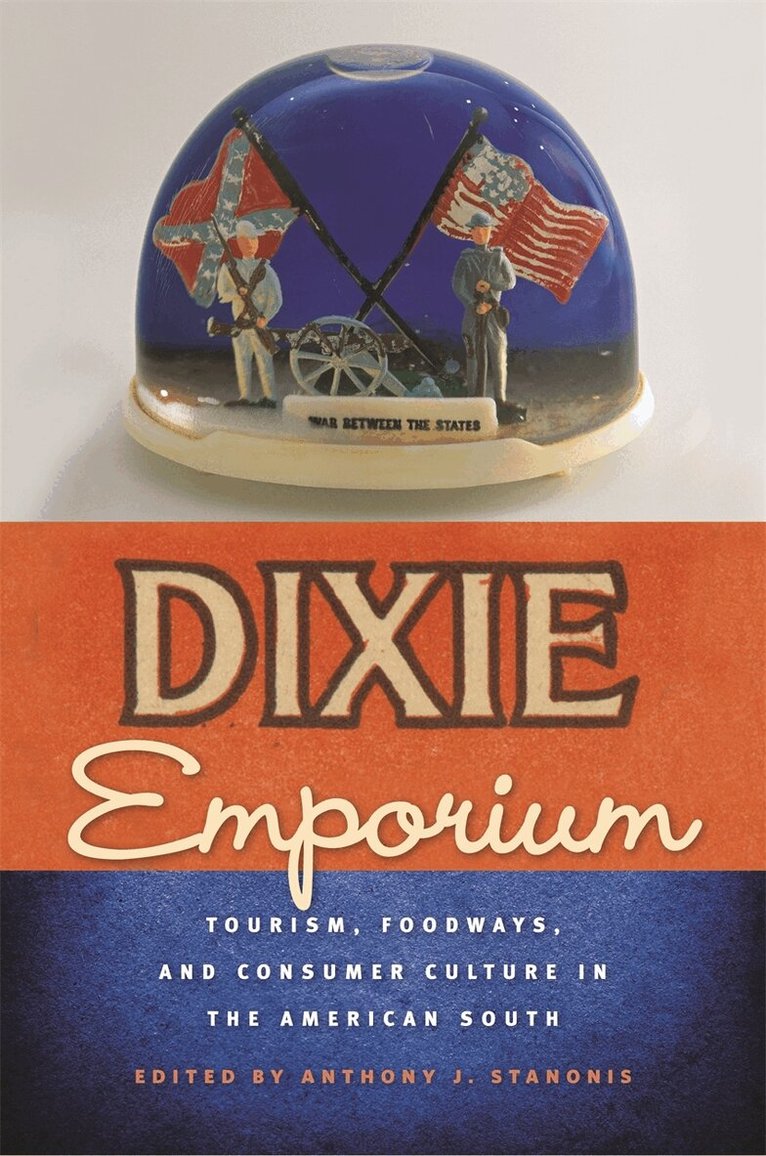
    Dixie Emporium

    Tourism, Foodways, and Consumer Culture in the American South

    AvAnthony J. Stanonis

    Häftad, Engelska, 2008

    512 kr

    Beställningsvara. Skickas inom 5-8 vardagar. Fri frakt över 249 kr.

    Beskrivning

    This collection of ten essays focuses on how southerners have marketed themselves to outsiders. The cultural ironies and contradictions that have arisen from southerners' efforts to commodify their identity reveal regional anxieties about consumerism, tourism, and memory.The book's first section looks at southern souvenirs as abstractions of regional culture. Essays on such topics as Confederate imagery on consumer goods and the tacky figurine known as the Horny Hillbilly unpack the often incongruous meanings bestowed on souvenirs by their owners. Locales like Branson, Missouri, and the South of the Border tourist complex in South Carolina are discussed in the second section's essays, which consider how tourist sites can both exploit and depend on local culture. Recognizing the deep cultural meanings associated with food and eating, the final group of essays looks at the Krispy Kreme doughnut franchise, the themed Baltimore eatery Café Hon, and other manifestations of southern foodways.Viewing a region often at odds with itself on matters like race and religion, Dixie Emporium identifies spaces, services, and products that construct various Souths that exaggerate, refute, or self-consciously safeguard elements of southernness.

    Produktinformation

    • Utgivningsdatum:2008-10-15
    • Mått:156 x 235 x 20 mm
    • Vikt:567 g
    • Format:Häftad
    • Språk:Engelska
    • Antal sidor:312
    • Förlag:University of Georgia Press
    • ISBN:9780820331690

    Utforska kategorier

    • Kulturvetenskap inom Samhälle och politik
    • Servicesektorn inom Ekonomi och Ledarskap

    Mer om författaren

    ANTHONY J. STANONIS is a lecturer in modern U.S. history at Queens University, Belfast. He is the editor of Dixie Emporium: Tourism, Foodways, and Consumer Culture in the American South and author of Creating the Big Easy: New Orleans and the Emergence of Modern Tourism, 1918–1945 (both Georgia).

    Recensioner i media

    These engaging essays provide a unique and timely perspective on efforts to understand how the South achieved an imaginative unity as a distinctive place. They open up more fully than before the ways that tourists and investors have stimulated regional self-definition. The volume reveals fascinating new understandings of the commercializations of the southern identity.