• Fri frakt över 249 kr
  • •
  • Snabba leveranser
  • •
  • Billiga böcker
Kundservice

Du är på sajten för privatpersoner.

Företag, bibliotek eller offentlig verksamhet?

Du handlar på classic.bokus.com, där alla dina funktioner finns intakta.
Till classic.bokus.com
Bokus logotyp. Gå till startsidan.
  • Erbjudanden
  • Nyheter
  • Student
  • Topplistor
  • Barn & ungdom
  • Bokus Play
  • E-böcker
  • Pocketböcker
  • Spel & pussel

10% rabatt på allt med kod: NYSTART10 →

Sidfot

Mina sidor

    Hjälp

    • Kundservice
    • Vanliga frågor och svar
    • Frakt och leverans
    • Retur vid ångerrätt
    • Reklamera vara
    • Betalning
    • Köpvillkor
    • Allmänna villkor
    • Information om webbplatsens tillgänglighet

    Om Bokus

    • Om oss
    • Pressrum
    • För studenter
    • För företag
    • För bibliotek och offentlig verksamhet
    • För leverantörer
    • Hållbarhet

    Populärt

    • Aktuella erbjudanden
    • Presentkort
    • Studentlitteratur
    • Nya böcker
    • Topplistor
    • Signerade böcker
    • Engelska böcker

    Inspiration

    • Boktips
    • BookTok
    • Populära bokserier
    • Barnbokskaraktärer
    • Populära författare
    Logotyp för Bokus
    Följ oss på Facebook (extern länk)Följ oss på Instagram (extern länk)Följ oss på YouTube (extern länk)Följ oss på TikTok (extern länk)
    bokus @ CookiesAnpassa cookiesIntegritetspolicyKöpvillkor
    Till Citymail hemsida (extern länk)Till Budbee hemsida (extern länk)Till Postnord hemsida (extern länk)Till Schenker hemsida (extern länk)Till Early Bird hemsida (extern länk)Till Walleys hemsida (extern länk)
    1. Samhälle och politik
    2. Samhälle och kultur
    3. Sociala grupper och identitet
    4. Genusvetenskap

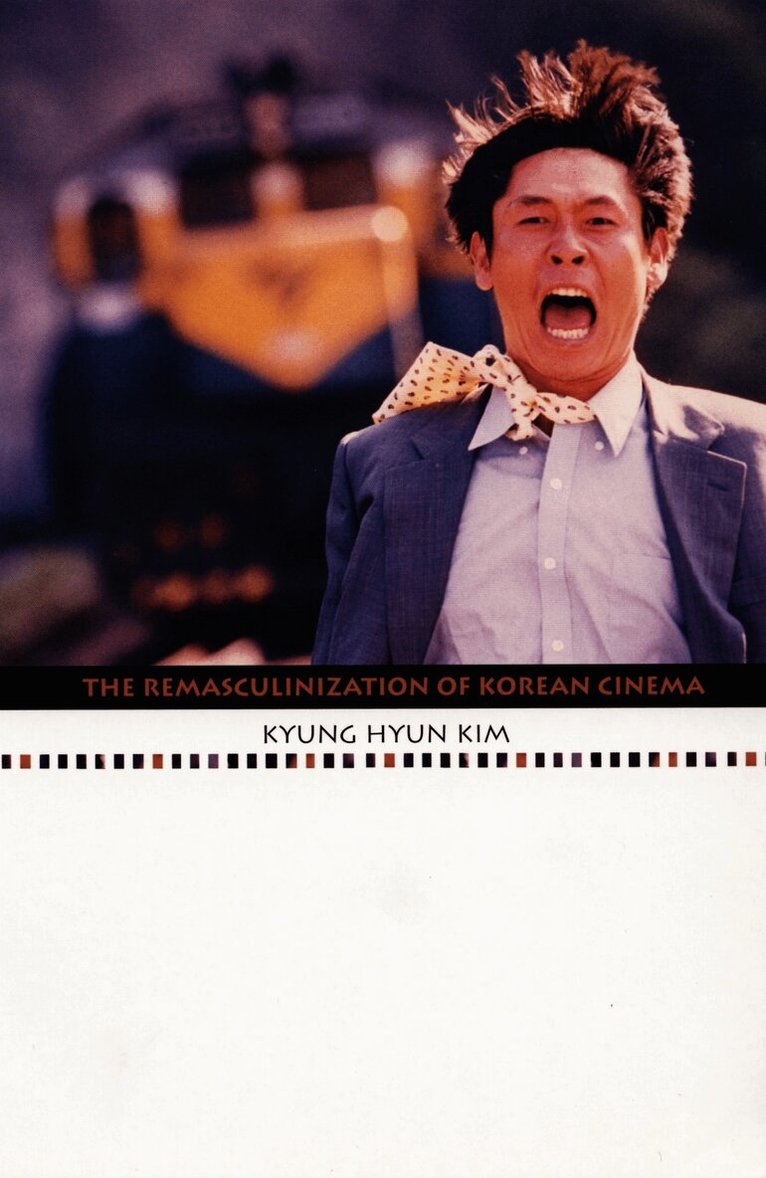
    Remasculinization of Korean Cinema

    AvKyung Hyun Kim

    Häftad, Engelska, 2004

    Del i serien Asia-Pacific: Culture, Politics, and Society

    376 kr

    Beställningsvara. Skickas inom 5-8 vardagar. Fri frakt över 249 kr.

    Fler format och utgåvor

    E-bok

    568 kr

    Beskrivning

    In one of the first English-language studies of Korean cinema to date, Kyung Hyun Kim shows how the New Korean Cinema of the past quarter century has used the trope of masculinity to mirror the profound sociopolitical changes in the country. Since 1980, South Korea has transformed from an insular, authoritarian culture into a democratic and cosmopolitan society. The transition has fueled anxiety about male identity, and amid this tension, empowerment has been imagined as remasculinization. Kim argues that the brutality and violence ubiquitous in many Korean films is symptomatic of Korea’s on-going quest for modernity and a post-authoritarian identity.Kim offers in-depth examinations of more than a dozen of the most representative films produced in Korea since 1980. In the process, he draws on the theories of Jacques Lacan, Slavoj Zizek, Gilles Deleuze, Rey Chow, and Kaja Silverman to follow the historical trajectory of screen representations of Korean men from self-loathing beings who desire to be controlled to subjects who are not only self-sufficient but also capable of destroying others. He discusses a range of movies from art-house films including To the Starry Island (1993) and The Day a Pig Fell into the Well (1996) to higher-grossing, popular films like Whale Hunting (1984) and Shiri (1999). He considers the work of several Korean auteurs-Park Kwang-su, Jang Sun-woo, and Hong Sang-su. Kim argues that Korean cinema must begin to imagine gender relations that defy the contradictions of sexual repression in order to move beyond such binary struggles as those between the traditional and the modern, or the traumatic and the post-traumatic.

    Produktinformation

    • Utgivningsdatum:2004-03-08
    • Mått:156 x 235 x 22 mm
    • Vikt:494 g
    • Format:Häftad
    • Språk:Engelska
    • Serie:Asia-Pacific: Culture, Politics, and Society
    • Antal sidor:344
    • Förlag:Duke University Press
    • ISBN:9780822332671

    Utforska kategorier

    • Genusvetenskap inom Samhälle och politik
    • Film inom Kultur

    Mer om författaren

    Kyung Hyun Kim is Associate Professor of East Asian Languages and Literatures at the University of California, Irvine.

    Recensioner i media

    “Kyung Hyun Kim’s book is a roller coaster ride through modern South Korean masculinity in the cinema. At once unflinching and sympathetic, Kim’s groundbreaking study traces Korean permutations on the gendered imagery of castration and rape and the impossible condition of postcolonial masculinity, caught between incommensurable values and demands.”-Chris Berry, coeditor of Mobile Cultures: New Media in Queer Asia “This is an important book. There is a long tradition of scholarship investigating the representation of women in Asian cinema. This has included some consideration of Korean film, which more often than not finds the representations of Korean women wanting in one way or another. It took Kyung Hyun Kim’s writing to turn my attention to the rich complexity of the men. His focus on masculinity-coinciding with the turn to the issue by major feminist film theorists-simply makes perfect sense. His is a particularly compelling contribution to the study of Asian cinema, but is simultaneously in dialogue with all manner of gender studies.”-AbÉ Mark Nornes, University of Michigan

    Innehållsförteckning

    • Acknowledgments ix Introduction: Hunting for the Whale 1 1: GENRES OF POST-TRAUMA At the Edge of Metropolis in A Fine, Windy Day and Green Fish 312 Nowhere to Run: Disenfranchised Men on the Road in The Man with Three Coffins, Sopyonje, and Out to the World 523 “Is This How the War Is Remembered?”: Violent Sex and the Korean War in Silver Stallion, Spring in My Hometown, and The Taebaek Mountains 77 4 Post-Trauma and Historical Remembrance in A Single Spark and A Petal 1072: NEW KOREAN CINEMA AUTEURS 5 Male Crisis in the Early Films of Park Kwang-su 136 6 Jang Sun-woo’s Three “F” Words: Familism, Fetishism, and Fascism 1627 Too Early/Too Late: Temporality and Repetition in Hong Sang-su’s Films 2033: FIN-DE-SIECLE ANXIETIES 8 Lethal Work: Domestic Space and Gender Troubles in Happy End and The Housemaid 2339 “Each Man Kills the Thing He Loves”: Transgressive Agents, National Security, and Blockbuster Aesthetics in Shiri and Joint Security Area 259Notes 277Select Filmography of Major Directors of the New Korean Cinema 313Index 321