• Fri frakt över 249 kr
  • •
  • Snabba leveranser
  • •
  • Billiga böcker
Kundservice

Du är på sajten för privatpersoner.

Företag, bibliotek eller offentlig verksamhet?

Du handlar på classic.bokus.com, där alla dina funktioner finns intakta.
Till classic.bokus.com
Bokus logotyp. Gå till startsidan.
  • Erbjudanden
  • Nyheter
  • Student
  • Topplistor
  • Barn & ungdom
  • Bokus Play
  • E-böcker
  • Pocketböcker
  • Spel & pussel

10% rabatt på allt med kod: NYSTART10 →

Sidfot

Mina sidor

    Hjälp

    • Kundservice
    • Vanliga frågor och svar
    • Frakt och leverans
    • Retur vid ångerrätt
    • Reklamera vara
    • Betalning
    • Köpvillkor
    • Allmänna villkor
    • Information om webbplatsens tillgänglighet

    Om Bokus

    • Om oss
    • Pressrum
    • För studenter
    • För företag
    • För bibliotek och offentlig verksamhet
    • För leverantörer
    • Hållbarhet

    Populärt

    • Aktuella erbjudanden
    • Presentkort
    • Studentlitteratur
    • Nya böcker
    • Topplistor
    • Signerade böcker
    • Engelska böcker

    Inspiration

    • Boktips
    • BookTok
    • Populära bokserier
    • Barnbokskaraktärer
    • Populära författare
    Logotyp för Bokus
    Följ oss på Facebook (extern länk)Följ oss på Instagram (extern länk)Följ oss på YouTube (extern länk)Följ oss på TikTok (extern länk)
    bokus @ CookiesAnpassa cookiesIntegritetspolicyKöpvillkor
    Till Citymail hemsida (extern länk)Till Budbee hemsida (extern länk)Till Postnord hemsida (extern länk)Till Schenker hemsida (extern länk)Till Early Bird hemsida (extern länk)Till Walleys hemsida (extern länk)
    1. Medicin
    2. Medicin: allmänt
    3. Medicinhistoria

    Afterlife of Images

    Translating the Pathological Body Between China and the West

    AvAri Larissa Heinrich

    Häftad, Engelska, 2008

    Del i serien Body, Commodity, Text

    345 kr

    Beställningsvara. Skickas inom 5-8 vardagar. Fri frakt över 249 kr.

    Fler format och utgåvor

    E-bok

    520 kr

    Beskrivning

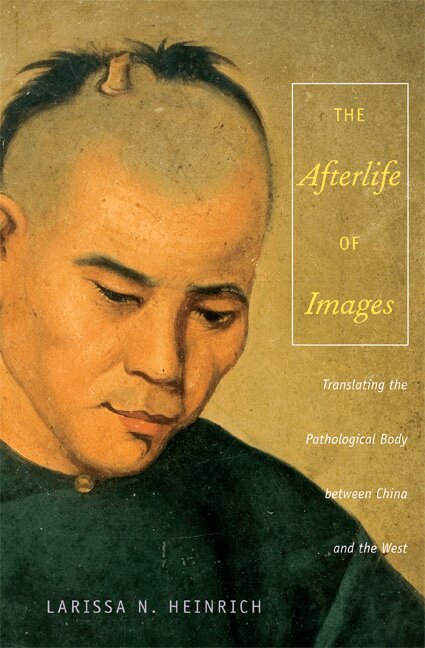
    In 1739 China’s emperor authorized the publication of a medical text that included images of children with smallpox to aid in the diagnosis and treatment of the disease. Those images made their way to Europe, where they were interpreted as indicative of the ill health and medical backwardness of the Chinese. In the mid-nineteenth century, the celebrated Cantonese painter Lam Qua collaborated with the American medical missionary Peter Parker in the creation of portraits of Chinese patients with disfiguring pathologies, rendered both before and after surgery. Europeans saw those portraits as evidence of Western medical prowess. Within China, the visual idiom that the paintings established influenced the development of medical photography. In The Afterlife of Images, Ari Larissa Heinrich investigates the creation and circulation of Western medical discourses that linked ideas about disease to Chinese identity beginning in the eighteenth century.Combining literary studies, the history of science, and visual culture studies, Heinrich analyzes the rhetoric and iconography through which medical missionaries transmitted to the West an image of China as “sick” or “diseased.” He also examines the absorption of that image back into China through missionary activity, through the earliest translations of Western medical texts into Chinese, and even through the literature of Chinese nationalism. Heinrich argues that over time “scientific” Western representations of the Chinese body and culture accumulated a host of secondary meanings, taking on an afterlife with lasting consequences for conceptions of Chinese identity in China and beyond its borders.

    Produktinformation

    • Utgivningsdatum:2008-02-20
    • Mått:155 x 235 x 17 mm
    • Vikt:367 g
    • Format:Häftad
    • Språk:Engelska
    • Serie:Body, Commodity, Text
    • Antal sidor:248
    • Förlag:Duke University Press
    • ISBN:9780822341130

    Utforska kategorier

    • Medicinhistoria inom Medicin
    • Referensverk och tvärvetenskap inom Samhälle och politik

    Mer om författaren

    Ari Larissa Heinrich is Professor of Chinese Literature and Media at the Australian National University. He is the author of Chinese Surplus: Biopolitical Aesthetics and the Medically Commodified Body, also published by Duke University Press, and coeditor of Embodied Modernities: Corporeality and Representation in Chinese Cultures.

    Recensioner i media

    “This book is exemplary for doing what very few works of scholarship on Chinese history have done-privileging visual sources over textual ones. . . . [T]he effect of the book is remarkable, and The Afterlife of Images achieves its larger goals of pushing analysis of images to the forefront of the historical agenda, challenging us to look beyond written sources for the origins of thediscourse of China’s pathology.” - David Luesink, China Perspectives “In The Afterlife of Images, Larissa Heinrich not only achieves the difficult task of incorporating the epistemological significance of ‘ocular evidence’ into her historical analysis (p. 4), but she also addresses the cross-cultural dynamics in the history of conceptions of pathology between China and the West.” - Howard H. Chiang, Social History of Medicine “Very well illustrated, this work demonstrates how valuable the study of images and photographs is for rethinking modern Chinese history and literary change.” - Benjamin A. Elman, The International History Review “The Afterlife of Images opens a new window through which scholars and students can see and debate how Western medicine and science participated in shaping modern Chinese conceptions of the body, the self, and the nation, as well as the Chinese imagination of modernity.” - Yanhua Zhang, China Review International “This is such a beautifully written, easy to understand, excellent book; I think Heinrich’s unwillingness to be bounded by the parochial limits of disciplines is a huge factor in the strength and success of her arguments. . . . Heinrich also makes clear through implication how easily the supposedly rational and objective discourses of science and medicine are repurposed and deployed for tendentious, politicized, even imperialistic purposes; in some ways the imposition of modern science and medicine on China, more or less with the threat of military force implicit in its background, mirrors the imposition at gunpoint of the supposedly universal and transcendent of international law discussed by James Hevia and Lydia Liu: chilling. If the topic sounds at all interesting to you, I can't recommend this book enough.” - Andrea J. Horbinski, Cognitive Resonance blog “Heinrich's book is an important addition to a growing interest in medical images in China. . . . Heinrich's work shows that the cultural importance of such images and their history transcends the boundary of clinical medical practice and helped shape the very nature of expression in China in the twentieth and twenty-first centuries.” - Sander L. Gilman, Visual Resources “The Afterlife of Images is a fascinating and important study of the ways that Western medicine participated in the formation of ideas of race, the discrete body, the autonomous self, the nation, and a modernist literary imagination in China. Well written, carefully researched, and loaded with subtle and persuasive interpretations, it is the kind of historical study needed to demonstrate the aesthetic and ontological constructions-the naturalizing powers of medical representation-that have given us our complex modern ‘nature.’”-Judith Farquhar, author of Appetites: Food and Sex in Post-Socialist China “Larissa N. Heinrich deftly weaves a range of materials-including prints, painting, photography, and literature-into a fascinating narrative of the ways visual and linguistic tropes formed and reinforced certain eighteenth- and nineteenth-century Western understandings of China. Furthermore, she is attentive to the dialectics of the relationship, especially the way that Western knowledge and ways of seeing shaped certain Chinese concepts about China and its problems, especially in the latter half of the nineteenth century and the early twentieth.”-Stanley K. Abe, author of Ordinary Images “The Afterlife of Images opens a new window through which scholars and students can see and debate how Western medicine and science participated in shaping modern Chinese conceptions of the body, the self, and the nation, as well as the Chinese imagination of modernity.” - Yanhua Zhang (China Review International) “Heinrich's book is an important addition to a growing interest in medical images in China. . . . Heinrich's work shows that the cultural importance of such images and their history transcends the boundary of clinical medical practice and helped shape the very nature of expression in China in the twentieth and twenty-first centuries.” - Sander L. Gilman (Visual Resources) “In The Afterlife of Images, Larissa Heinrich not only achieves the difficult task of incorporating the epistemological significance of ‘ocular evidence’ into her historical analysis (p. 4), but she also addresses the cross-cultural dynamics in the history of conceptions of pathology between China and the West.” - Howard H. Chiang (Social History of Medicine) “This book is exemplary for doing what very few works of scholarship on Chinese history have done-privileging visual sources over textual ones. . . . [T]he effect of the book is remarkable, and The Afterlife of Images achieves its larger goals of pushing analysis of images to the forefront of the historical agenda, challenging us to look beyond written sources for the origins of thediscourse of China’s pathology.” - David Luesink (China Perspectives) “This is such a beautifully written, easy to understand, excellent book; I think Heinrich’s unwillingness to be bounded by the parochial limits of disciplines is a huge factor in the strength and success of her arguments. . . . Heinrich also makes clear through implication how easily the supposedly rational and objective discourses of science and medicine are repurposed and deployed for tendentious, politicized, even imperialistic purposes; in some ways the imposition of modern science and medicine on China, more or less with the threat of military force implicit in its background, mirrors the imposition at gunpoint of the supposedly universal and transcendent of international law discussed by James Hevia and Lydia Liu: chilling. If the topic sounds at all interesting to you, I can't recommend this book enough.” - Andrea J. Horbinski (Cognitive Resonance blog) “Very well illustrated, this work demonstrates how valuable the study of images and photographs is for rethinking modern Chinese history and literary change.” - Benjamin A. Elman (International History Review)

    Innehållsförteckning

    • List of Illustrations ixAcknowledgments xiiiIntroduction 11. How China Became the "Cradle of Smallpox": Transformations in Discourse 152. The Pathological Body: Lam Qua's Medical Portraiture 393. The Pathological Empire: Early Medical Photography in China 734. "What's Hard for the Eye to See": Anatomical Aesthetics from Benjamin Hobson to Lu Xun 113Epilogue: Through the Microscope 149Notes 157Bibliography 197Index 213